
What to Do After a Storm Damages Your Roof
Storm roof repair is urgent — the steps you take in the first 24 to 48 hours after a storm can be the difference between a manageable repair and a costly structural rebuild. If you need immediate assistance, contacting a trusted local roofing contractor is the safest way to protect your home.
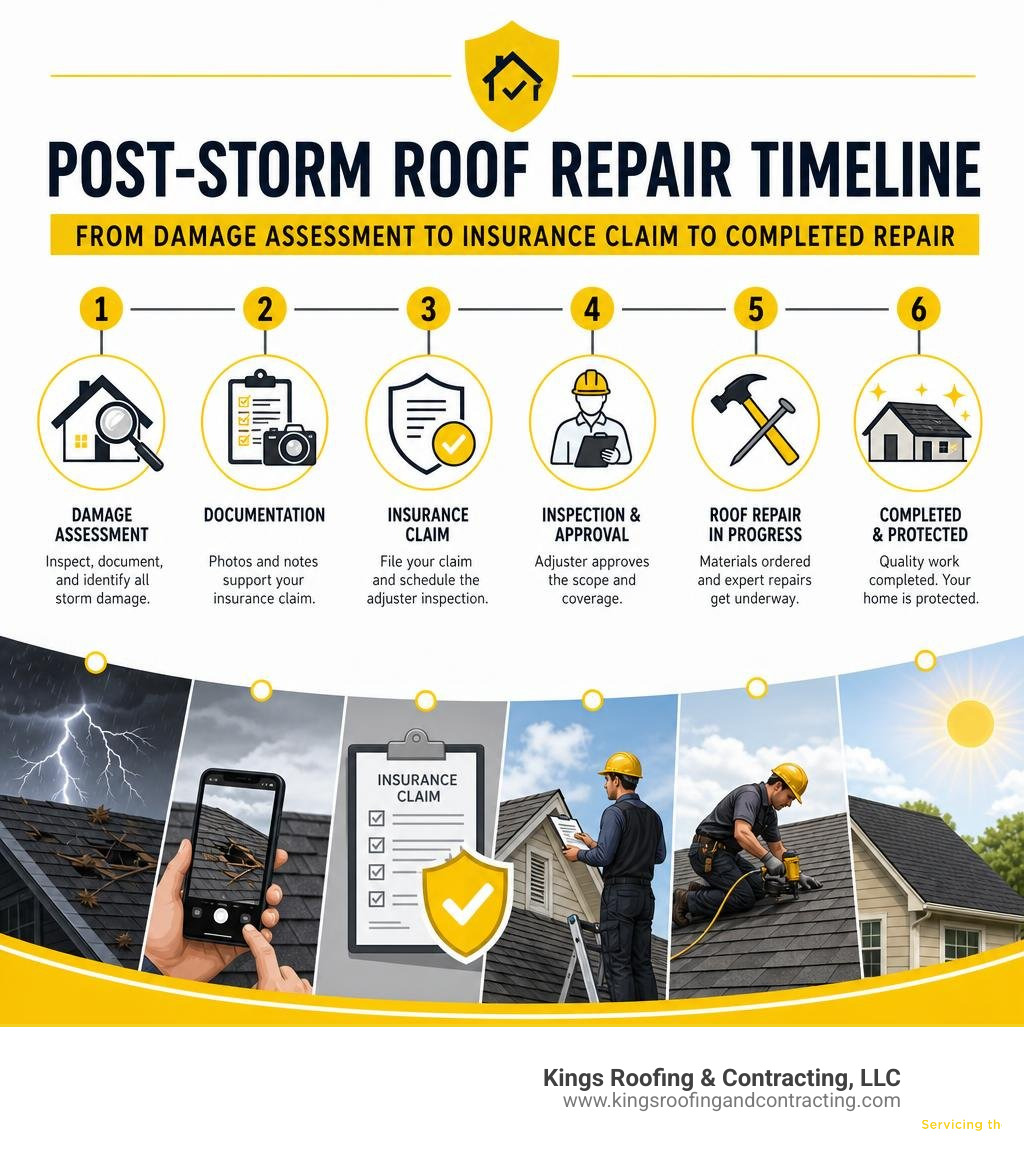
Here’s what to do right away:
- Stay off the roof. Wet shingles and loose materials are a serious fall hazard.
- Check inside first. Look for ceiling stains, damp insulation, or daylight in the attic.
- Document everything. Take photos of all visible damage from the ground before anything changes.
- Stop active water intrusion. Use towels, buckets, or a shop vac on indoor water immediately.
- Call a licensed roofing contractor. Schedule a professional inspection as soon as possible — ideally within 24 hours.
- Contact your insurance company. Most policies give you one year to file, but acting fast strengthens your claim.
Storms in Boise and the Treasure Valley can shift fast. One hour it’s clear, and by morning your roof has taken a beating from hail, high winds, or falling debris — often while you’re asleep. The damage isn’t always obvious from the ground. Missing shingles, hail bruising, and wind-lifted seals can hide for weeks before a leak shows up inside your home.
That uncertainty is stressful. You’re not sure how bad the damage is, whether insurance will cover it, or who to call. As a local expert serving Boise, Meridian, Nampa, and the broader Treasure Valley, Kings Roofing & Contracting, LLC built this guide to walk you through every step — from the moment the storm clears to the day your roof is fully restored.
I’m Ryan Santoro, owner of Kings Roofing & Contracting, LLC, and with 24 years of hands-on construction experience — including storm roof repair across dozens of Treasure Valley homes — I’ve seen how quickly small storm damage turns into major structural problems when left unaddressed. This guide gives you the honest, practical information you need to protect your home and make confident decisions.
Storm roof repair terms at a glance:
Immediate Post-Storm Action Plan: Safety and Mitigation
When a severe storm rolls through the Treasure Valley, the immediate aftermath can feel chaotic. However, taking a structured, safety-first approach is the best way to prevent a stressful situation from turning into an expensive disaster. Your primary objective right after a storm is to protect your family and stabilize your home’s interior from secondary water damage.
Immediate Steps for Emergency Storm Roof Repair
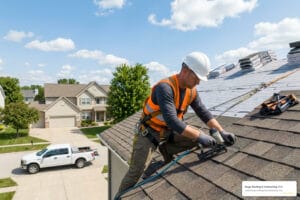
The very first rule of post-storm recovery is simple: stay off the roof. We know the temptation is strong to grab a ladder and climb up to see what happened, but wet shingles, loose granules, and compromised decking are incredibly dangerous. Leave the high-altitude assessments to the professionals who have specialized fall-protection gear.
Instead, focus your energy on interior water mitigation:
- Drain standing water: If you have active leaks dripping into your living space, use buckets to catch the water. If water is pooling on a ceiling, carefully poke a small hole in the center of the sag with a screwdriver to drain the water into a bucket, preventing the entire ceiling from collapsing.
- Dry wet areas: Wear waterproof footwear and use a wet/dry shop vac to extract water from carpets and floors. Run high-powered fans and dehumidifiers continuously to dry out wet drywall and framing. This is critical for mold prevention, which can begin in as little as 24 to 48 hours.
- Keep all receipts: If you purchase tarps, buckets, storage bins, or hire emergency water extraction services, save every single receipt. According to FEMA emergency mitigation guidelines, and standard insurance practices, homeowners are required to take reasonable steps to prevent further damage, and these mitigation expenses are typically reimbursable under your policy.
For immediate structural protection, you will want to arrange for emergency roof repair services to install temporary tarping over exposed areas of the roof deck, preventing subsequent rain or melting snow from entering your home.

The IOU Method for Safe Damage Assessment
To safely and systematically assess your home after a storm without stepping foot on your shingles, we recommend using the IOU Method (Inside, Outside, Up the ladder):
- I – Inside (Attic Check): During the daytime, grab a flashlight and head up to your attic. Look for signs of water intrusion, such as damp insulation, dark water stains on the plywood rafters, or active drips. If you see shafts of daylight peeking through the roof boards, you have a clear opening that needs immediate attention.
- O – Outside (Ground Walk-Around): Take a walk around the entire perimeter of your home. Use a pair of binoculars or your smartphone camera zoomed in to inspect the roof from the safety of the ground. Look for missing shingles, dented metal flashing, cracked chimney caps, or fallen tree branches resting on the roof.
- U – Up the ladder (Safety First): If you are comfortable using a ladder, you can climb high enough so your head clears the roofline to get a closer look. Do not step off the ladder onto the roof. Ensure your ladder is placed on level, stable ground and secured at a safe angle.
If you notice any red flags during this process, it is time to schedule comprehensive roof inspections to get an exact, professional diagnosis of the damage.
Identifying Visible and Hidden Roof Damage
Storm damage is not always as obvious as a giant tree branch puncturing your living room ceiling. In fact, some of the most destructive storm damage is completely invisible to the untrained eye.
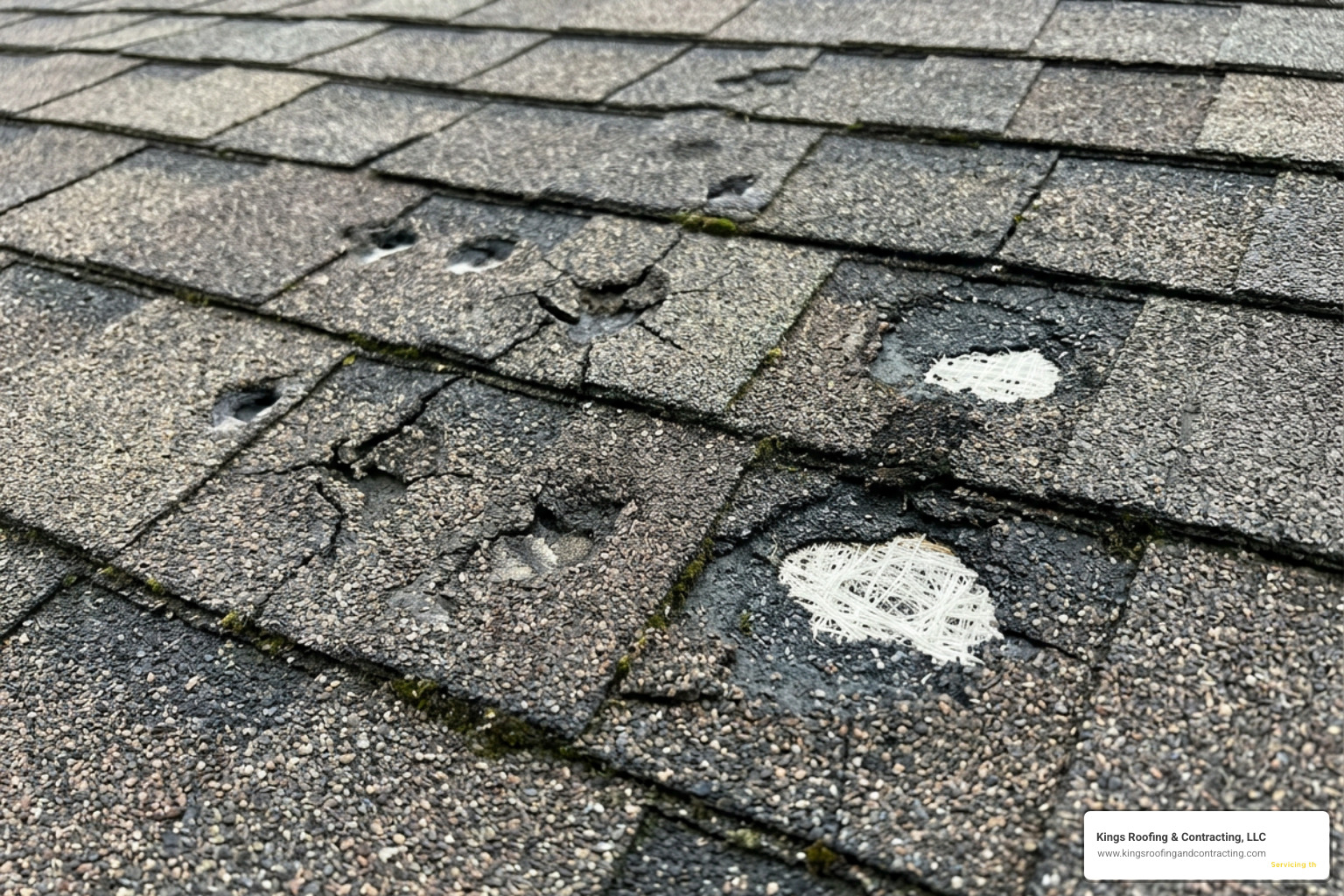
Ground-Level Signs of Storm Damage
While you should always get a professional on-foot inspection, there are several common signs of storm damage you can easily spot from the safety of the ground:
- Missing or torn shingles: High winds can easily rip entire shingles off your roof, leaving the dark underlayment or bare wood decking exposed to the elements.
- Dented gutters and downspouts: Hail impacts leave distinct round dents in metal gutters, downspouts, and valley metal. If your gutters look like a golf ball hit them, your shingles likely took a similar beating.
- Excessive granule loss: Check your gutter downspout runouts. If you see piles of dark, sand-like granules accumulating, it is a major warning sign. Granules protect asphalt shingles from UV rays; when hail knocks them loose, the underlying asphalt degrades rapidly.
- Water stains on interior ceilings: Any new brown, yellow, or bubbling water stains on your ceilings or walls are direct evidence of a storm-induced roof leak.
If you suspect hail has rolled through your neighborhood, read our guide on spotting hail damage to learn exactly what to look for on different parts of your property.
Hidden Structural Damage Missed Without an Inspection
Many homeowners assume that if their roof isn’t actively leaking, it must be fine. This is a dangerous assumption. Severe weather causes hidden structural issues that slowly deteriorate your home’s defenses over time.
- Hail Bruising: When hail strikes an asphalt shingle, it creates a subtle fracture or “bruise” on the underside of the shingle. This impact breaks the fiberglass matting inside. While it looks like a harmless dark spot from the ground, the shingle’s water-shedding capability is permanently compromised. Water will slowly seep through these micro-fractures, rotting your roof decking months before a leak becomes visible inside.
- Wind Lift: High-velocity wind gusts create a pressure differential as they sweep up and over your roof. This wind lift can break the adhesive tar strips sealing your shingles together. Even if the shingles lay back down flat and look perfectly normal, they are no longer sealed. The next minor windstorm will easily pull them up, allowing driving rain to blow directly underneath.
Because these issues are so difficult to detect, our Boise roof inspection guide highlights why professional evaluations are necessary. We inspect all roofs in accordance with the National Roofing Contractors Association (NRCA) inspection standards to ensure no hidden vulnerability is overlooked.
When to Choose Storm Roof Repair vs. Full Replacement
Deciding whether to patch up your roof or invest in a complete replacement is one of the most critical decisions you will make after a storm. Making the wrong choice can lead to “chasing leaks” for years, which ultimately costs far more than doing the job right the first time.
| Criteria | Choose Roof Repair | Choose Roof Replacement |
|---|---|---|
| Damage Extent | Localized (isolated to one slope or a small area) | Widespread (affects multiple slopes, valleys, and ridges) |
| Roof Age | Under 10–12 years old with pliable shingles | Over 15 years old, brittle, or near end-of-life |
| Decking Condition | Solid, dry, and structurally sound | Soft spots, rot, or widespread water saturation |
| Financial Threshold | Repair cost is under 25% of replacement cost | Repair cost exceeds 30–50% of replacement cost |
| System Integrity | Underlayment and flashing are fully intact | Underlayment is compromised; widespread wind lift |
When you are dealing with localized damage — like a few blown-off shingles on an otherwise healthy, young roof — a targeted asphalt shingle storm repair is usually the most logical and cost-effective path.
The 25-30% and 50% Financial Rules
To take the guesswork out of this decision, we use two industry-standard financial thresholds:
- The 25–30% Rule: If the cost to repair the storm damage rises to about 25% to 30% of the cost of a total roof replacement, investing in a full replacement starts to make much better long-term financial sense.
- The 50% Rule: If the repair estimates exceed 50% of the replacement cost, a full replacement is almost always the smarter decision. Patching half a roof still leaves you with an aging, mismatched system that will likely fail in the next major storm.
When weighing these costs, consult the Insurance Information Institute (III) guidelines to understand how insurance companies calculate actual cash value versus replacement cost value, and explore your roof replacement options to see what fits your long-term budget.
The Impact of Roof Age and Material
The physical age of your roof plays a massive role in the repair-versus-replace equation. As shingles age, they lose their natural oils and become brittle. If your roof is over 15 years old and suffers significant storm damage, attempting to repair it is often counterproductive. Prying up old, brittle shingles to slide new ones in often damages the surrounding shingles, creating a domino effect of new leaks.
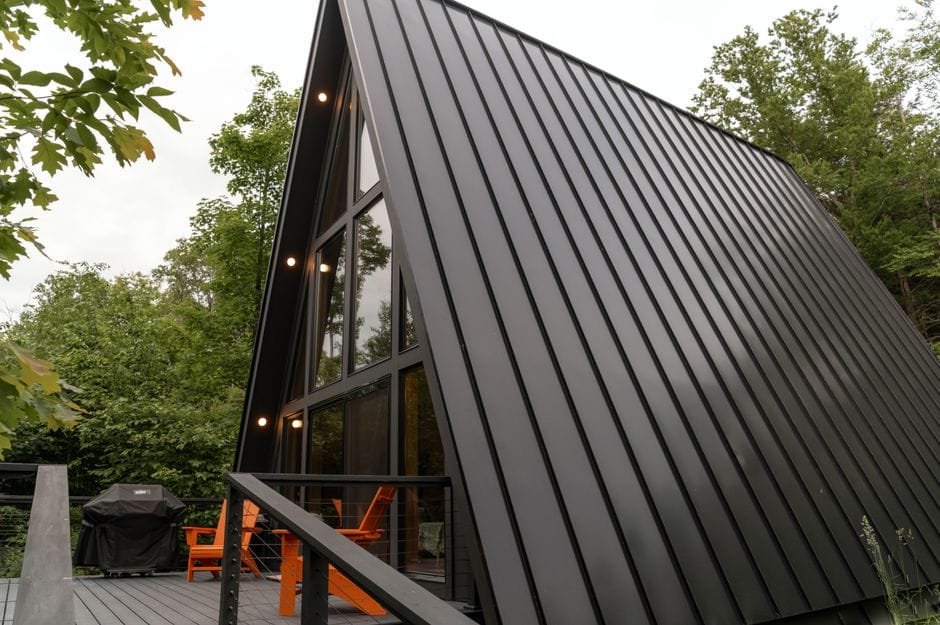
Furthermore, different materials handle storm damage differently. A metal roof can often sustain minor hail denting without losing its structural integrity, whereas an asphalt shingle roof will fail rapidly once its granule layer is compromised. If your roof decking has sustained water damage or structural sagging from heavy snow loads, you will need a structural roof repair to restore the underlying frame before any new roofing material can be installed.
Navigating the Homeowners Insurance Claims Process
Dealing with insurance companies after a major storm can feel like learning a completely new language. However, understanding how the claims process works can save you thousands of dollars in out-of-pocket expenses.
How to File a Successful Storm Damage Claim
The success of your insurance claim depends entirely on the quality of your documentation.
- Document the date and details: Write down the exact date and approximate time the storm hit your home. You can cross-reference this with the NOAA storm event database to provide official meteorological proof of the severe weather in your zip code.
- Take comprehensive photos: Photograph everything. Take wide shots of your entire house, close-ups of damaged shingles, dented gutters, and any interior water damage.
- Get an independent professional estimate: Before you call your insurance company, have a certified roofing contractor inspect the roof and provide a detailed, written estimate. This ensures you have an expert on your side who knows exactly what it will cost to restore your home to its pre-storm condition.
For a step-by-step breakdown of how to handle this process without the stress, utilize our professional insurance claims assistance to ensure your paperwork is filed correctly.
Maximizing Payouts and Working with Adjusters
The average insurance payout for a storm damage claim on a residential roof is estimated to be approximately $12,000. However, many homeowners end up settled with far less because they rely solely on the insurance adjuster’s quick visual inspection.
Adjusters are often busy, especially after a widespread storm event, and they can easily miss hidden issues like wind lift or micro-fractures in the shingles. The best way to protect your claim is to have your roofing contractor present on-site when the adjuster visits your home. We will walk the roof alongside the adjuster, pointing out hard-to-see damage and advocating on your behalf.
If your claim is initially denied, do not panic. You have the right to appeal and request a re-inspection. By presenting a detailed, photo-documented inspection report from a trusted local contractor, we can often help you overturn a denial. For more tips on finding a contractor who excels at this advocacy, read our restoration contractors guide.
Selecting a Trustworthy Contractor and Upgrading for the Future
After a severe storm, “storm chasers” — out-of-state contractors who follow bad weather to make a quick buck — often flood affected neighborhoods. They offer cheap, fast repairs, but they frequently use sub-standard materials, ignore local building codes, and vanish long before their short warranties expire.
How to Avoid Scams and Find Certified Storm Roof Repair Contractors
To protect your home and your wallet, always look for a contractor with a strong local reputation and deep roots in the community.
- Verify local licensing and insurance: Ensure the contractor is fully licensed to work in Idaho and carries comprehensive liability and workers’ compensation insurance.
- Check for safety certifications: Working with an OSHA-certified roofing contractor ensures the crew adheres to strict safety protocols, protecting you from potential job site liability.
- Look for manufacturer credentials: Certified contractors (such as GAF-certified roofers) are authorized to offer the strongest manufacturer warranties, which can cover your shingles for up to 50 years.
When you are ready to choose, use our checklist on choosing the right roofing contractor to ensure you are working with a business that will be around to honor their warranties for decades to come. For the ultimate storm-resilient standard, look into building to IBHS FORTIFIED Home™ standards, which are specifically designed to withstand severe weather.
Upgrading to Impact-Resistant Materials for Future Protection
If you need a partial or full roof replacement after a storm, it is the perfect opportunity to upgrade your home’s defenses against future weather events.
Installing Class 3 or Class 4 impact-resistant shingles is one of the smartest upgrades you can make. These shingles undergo rigorous UL 2218 testing, where steel balls are dropped from high distances to simulate extreme hail impacts. GAF offers premier Class 4 impact-resistant shingles that can withstand severe hail storms without cracking or losing their protective granules.
Best of all, upgrading to Class 3 or Class 4 shingles can qualify you for up to a 20% discount on your homeowners insurance premiums. Over time, these premium savings can easily pay for the cost of the upgrade. If you want the ultimate in storm durability, you can also explore the benefits of metal roofing durability, which naturally resists high winds and heavy impact.
Frequently Asked Questions About Storm Roof Repair
How quickly should I schedule a professional roof inspection after a storm?
You should schedule a professional roof inspection as quickly as possible — ideally within 24 to 48 hours after the storm passes. Even if your roof is not actively leaking, high winds can compromise your shingle seals, and hail can create micro-fractures that will lead to rot and mold over time. Getting an inspection early also ensures you document the damage while the evidence is fresh, making the insurance claims process much smoother. If you live in the Treasure Valley, contact our team for immediate Boise storm damage repair support.
Does homeowners insurance typically cover storm damage roof repair?
Yes, most standard homeowners insurance policies cover storm roof repair and replacement if the damage was caused by a sudden, accidental weather event like hail, high winds, or a fallen tree. However, insurance does not cover damage caused by gradual wear and tear or a lack of basic maintenance. You will be responsible for paying your policy’s deductible, but the insurance carrier typically covers the rest of the restoration cost. For detailed guidance on your specific situation, check our hail damage roof repair page.
What should I do if my insurance claim is denied?
If your insurance claim is denied, do not panic. Many initial denials occur because the insurance adjuster missed hidden structural issues or lacked sufficient photographic evidence. You have the right to request a second opinion and a re-inspection. Have a certified local roofing contractor perform a highly detailed inspection, compile a comprehensive photo report, and present this evidence directly to your insurance company. Our team regularly assists homeowners with appeals through our wind damage roof repair services.
Conclusion
Recovering from storm damage can be an overwhelming experience, but you do not have to navigate it alone. By taking immediate safety precautions, documenting the damage, and partnering with a trusted local professional, you can restore your home’s safety and beauty with absolute peace of mind.
At Kings Roofing & Contracting, LLC, we are proud to serve homeowners across Boise, Meridian, Nampa, Caldwell, Eagle, Kuna, and Garden City, ID. We bring GAF-certified workmanship, transparent pricing, and 24/7 emergency availability to every project we touch. Whether you need a minor shingle patch or a complete, impact-resistant roof replacement, our team is ready to deliver the quality and care your family deserves.
Don’t wait for a small leak to turn into a major structural headache. Get in touch with us today to secure your home and protect your investment.
- Get started with a free roof quote online.