What Does a Shingle Roof Installation Actually Cost in 2026?
Understanding shingles roof installation cost is the first step to budgeting your project without getting blindsided by a quote. When planning a roof replacement, partnering with a trusted Boise roofing contractor ensures you get accurate pricing and quality workmanship. Here’s a fast answer before we dig into the details:
| Home Size | Typical Total Cost (2026) |
|---|---|
| ~1,000 sq ft | $4,500 – $11,000 |
| ~1,700 sq ft | $9,000 – $14,500 |
| ~2,000 sq ft | $9,000 – $22,000 |
| ~3,000 sq ft | $13,500 – $36,000 |
Quick facts:
- National average for a full replacement: $14,500
- Typical range: $8,000 – $36,000
- Cost per square foot: $4.25 – $25, depending on shingle type
- Labor accounts for roughly 60% of total project cost
Most Treasure Valley homeowners land somewhere in the $10,000 – $18,000 range for a standard architectural shingle roof. The wide spread comes down to roof size, pitch, material choice, and what the crew finds once the old shingles come off.
Getting an accurate number means understanding what actually drives the price — and that’s exactly what this guide covers. Whether you’re dealing with storm damage, an aging roof, or just planning ahead, Kings Roofing & Contracting breaks it all down so you can walk into any contractor conversation informed.
I’m Ryan Santoro, owner of Kings Roofing & Contracting, LLC, and with 24 years of hands-on construction experience across residential and commercial roofing systems, I’ve helped hundreds of Treasure Valley homeowners navigate shingles roof installation cost — from the first estimate to the final nail. Let’s walk through every factor that shapes your number so there are no surprises.

Average Shingles Roof Installation Cost in 2026
In 2026, the national average cost to replace an asphalt shingle roof settles around $14,500, with most projects ranging between $8,000 and $36,000. This pricing reflects the stabilization of building material supplies alongside ongoing labor market adjustments. When you receive a bid from a professional contractor, it is rarely structured as a single flat rate. Instead, it is calculated using “roofing squares” and a precise division of labor and materials.
Labor is the single largest component of your estimate, typically accounting for 60% of the total cost of a roof replacement. The remaining 40% covers physical materials, disposal fees, permits, and equipment. For a standard 2,000-square-foot home, the material expenses average around $4,200, while professional labor, safety equipment, and mobilization make up the rest. This is why attempting a DIY installation to save on labor is highly discouraged; professional installation ensures structural safety, local code compliance, and the preservation of manufacturer warranties.
When planning your budget, it is helpful to reference trusted benchmarks like Fixr’s 2026 Roof Shingle Guide to understand baseline pricing. For homeowners in the Treasure Valley, securing professional roof replacement services ensures your estimate aligns with local market rates and specific regional climate demands.
Cost Per Square Foot Breakdown
Roofing contractors do not measure projects by standard square footage alone; they use a unit called a “square.” One roofing square is equal to 100 square feet of roof surface.
Replacing roof shingles typically costs between $4.25 and $25 per square foot. Here is how that breaks down by unit cost:
- 3-Tab Asphalt Shingles: $3.50 to $6.00 per square foot installed ($350 to $600 per square).
- Architectural Shingles: $4.50 to $8.00 per square foot installed ($450 to $800 per square).
- Premium or Impact-Resistant Shingles: $7.50 to $11.00 per square foot installed ($750 to $1,100 per square).
- Luxury Asphalt / Synthetic Shingles: $12.00 to $25.00+ per square foot installed ($1,200 to $2,500+ per square).
Pure labor costs generally run between $1.80 and $3.50 per square foot, depending on the complexity of the roof. The remaining square-foot cost represents the shingles, underlayment, starter strips, ridge caps, nails, and sealants.
Average Total Cost by Home Size
Your home’s footprint is not the same as your roof’s total square footage. Due to the roof’s slope (pitch) and overhangs, your roof surface area is always larger than your home’s interior square footage. Additionally, contractors must add a 10% to 15% “waste factor” to account for shingles that must be cut to fit valleys, hips, and gables.
Below is a cost comparison table based on actual roof surface area, including standard tear-off, materials, and professional labor:
| Roof Surface Area (with Waste Factor) | 3-Tab Shingles (Installed) | Architectural Shingles (Installed) | Premium / Luxury Shingles (Installed) |
|---|---|---|---|
| 1,000 sq ft (10 Squares) | $3,500 – $6,000 | $4,500 – $8,000 | $7,500 – $16,000 |
| 1,500 sq ft (15 Squares) | $5,250 – $9,000 | $6,750 – $12,000 | $11,250 – $24,000 |
| 2,000 sq ft (20 Squares) | $7,000 – $12,000 | $9,000 – $16,000 | $15,000 – $32,000 |
| 2,500 sq ft (25 Squares) | $8,750 – $15,000 | $11,250 – $20,000 | $18,750 – $40,000 |
| 3,000 sq ft (30 Squares) | $10,500 – $18,000 | $13,500 – $24,000 | $22,500 – $48,000 |
Key Factors That Influence Your Roofing Estimate
Two identical-looking homes on the same street can receive roof replacement estimates that differ by thousands of dollars. This variation occurs because several hidden cost drivers affect the speed, safety, and material requirements of the project. To ensure estimate accuracy, professional roofers evaluate the physical characteristics of your roof deck, the layout of your property, and local municipal requirements.
Roof Pitch and Architectural Complexity
The steepness of your roof, known as the pitch, has a major impact on labor costs. Roof pitch is expressed as a ratio of vertical rise to horizontal run (for example, a 6/12 pitch rises 6 inches for every 12 inches of run).
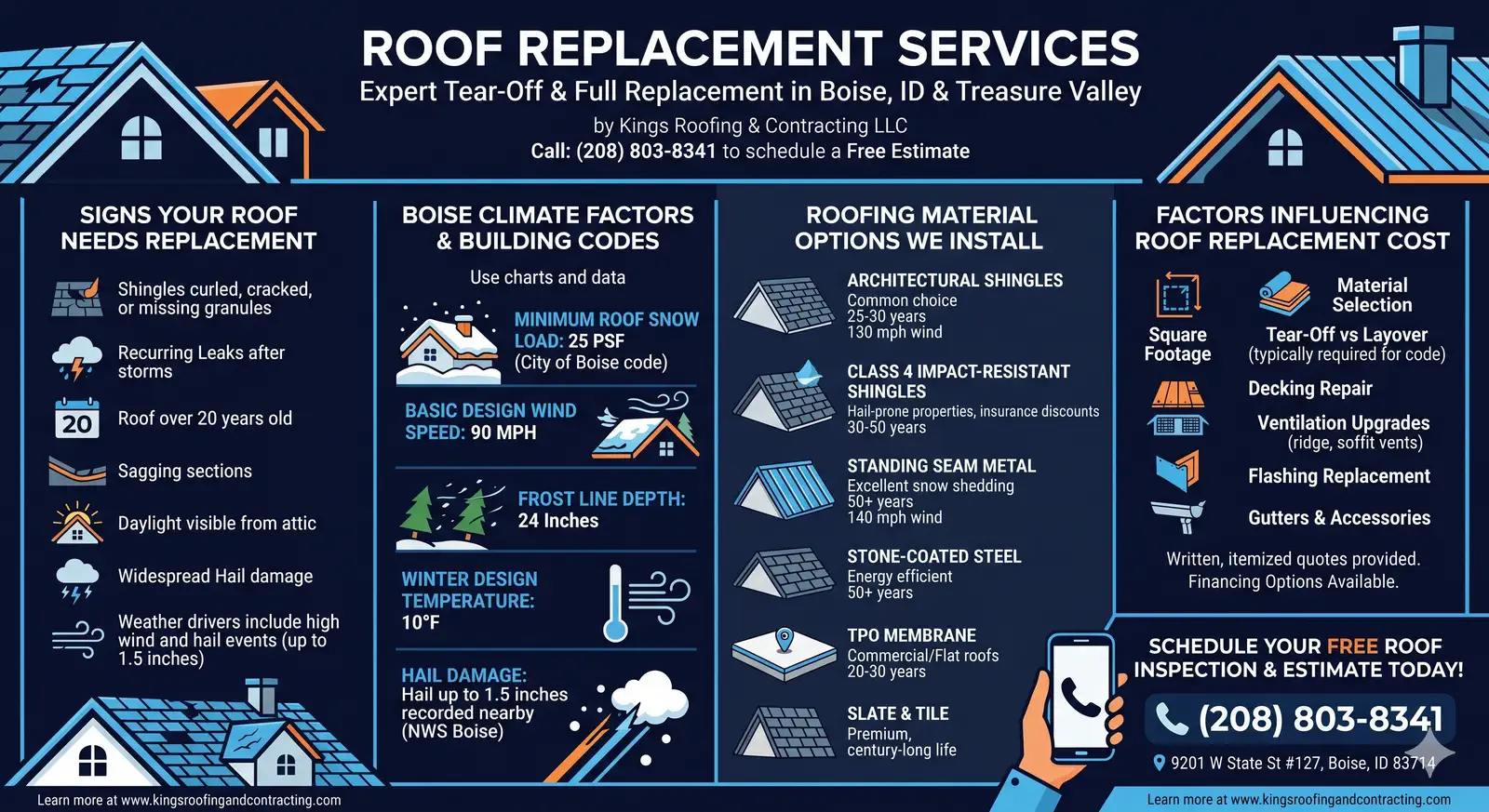
- Walkable Roofs (6/12 pitch or lower): These are easier and faster to install, keeping labor rates on the lower end of the spectrum.
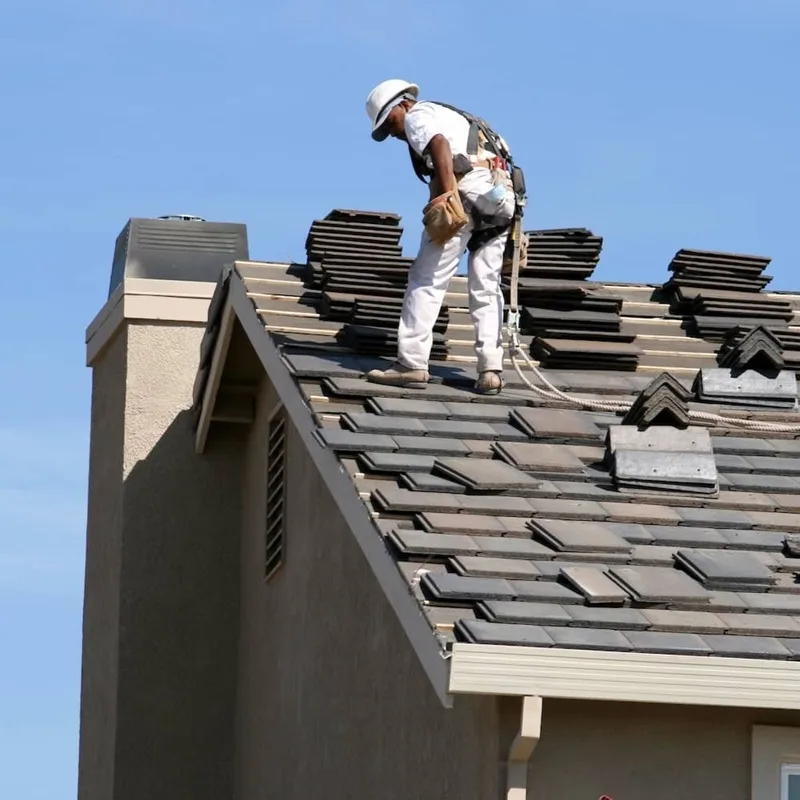
- Non-Walkable Roofs (7/12 pitch or steeper): These require specialized safety equipment, staging, and harness systems. Crew members must move more slowly and cautiously, which increases labor times and can raise the overall installation cost by 10% to 35%.
Architectural complexity also plays a role. A simple gable roof with two flat planes is highly efficient to install. However, a roof with multiple valleys, dormers, chimneys, skylights, and intersecting rooflines requires custom flashing, extra underlayment, and meticulous hand-cutting. This complexity increases both material waste and highly skilled labor hours.
Labor Rates and Regional Price Variations
Labor rates vary significantly based on regional cost-of-living indices and local market demand. In the Pacific Northwest and Mountain West regions, labor rates reflect local overhead, licensing, and insurance requirements.
For homeowners in the Treasure Valley, understanding local market pricing is key to evaluating bids. You can review regional labor and material benchmarks in the ProMatcher Meridian ID Roofing Cost Report.
Pricing also fluctuates across municipal lines due to differing local permit fees and waste disposal costs:
- For projects in Nampa, check the specific Nampa roof replacement costs to see how local permit structures affect the bottom line.
- If you live in Caldwell, reviewing Caldwell roof replacement costs helps establish a localized budget.
- Homeowners in Kuna can refer to Kuna roof replacement costs to compare regional averages.
- For high-end residential areas, utilizing tailored Eagle roofing services or specialized Garden City roofing solutions ensures compliance with local homeowner association (HOA) guidelines and specific municipal building codes.
Tear-Off vs. Overlay Decisions
When replacing your roof, you must choose between tearing off the old shingles or installing new ones directly over the existing layer (an overlay).
- Tear-Off (Recommended): This involves removing all old shingles, underlayment, and nails down to the bare wood deck. It costs between $1.00 and $2.25 per square foot but allows our team to inspect the decking for dry rot and structural damage.
- Overlay (Roof-Over): Installing a second layer of shingles directly over the first saves $1,000 to $3,000 in immediate labor and disposal costs. However, most building codes permit a maximum of two layers. Overlays trap heat, which can shorten the lifespan of the new shingles by up to 25%, and they prevent us from identifying hidden deck rot. Over time, an overlay often costs more because future replacement requires tearing off two layers of material, doubling disposal fees.
Comparing Shingle Materials: Lifespan vs. Value
The material you select determines both your upfront shingles roof installation cost and the long-term value of your investment. Balancing initial costs against wind resistance, fire ratings, and expected lifespan is essential to making an informed decision. Before selecting a product, we recommend exploring our comprehensive guide on asphalt shingle roofing options to compare performance metrics.
3-Tab Shingles Roof Installation Cost
Three-tab shingles are the most basic and economical asphalt option on the market. They consist of a single, flat layer of fiberglass-reinforced asphalt cut into three distinct tabs.
- Average Cost: $3.50 to $5.00 per square foot installed.
- Lifespan: 15 to 20 years under ideal conditions.
- Wind Rating: Typically rated up to 60 or 70 mph.
- Pros & Cons: They offer the lowest upfront cost, making them popular for rental properties or tight budgets. However, they are thin, prone to wind uplift, and carry shorter manufacturer warranties. For a detailed comparison, read our head-to-head analysis in the Great Shingle Showdown: 3-Tab vs Architectural.
Architectural Shingles Roof Installation Cost
Also known as dimensional or laminated shingles, architectural shingles are the industry standard for modern homes. They feature two or more layers of asphalt bonded together to create a textured, three-dimensional look that mimics wood shake or slate.
- Average Cost: $4.50 to $8.00 per square foot installed.
- Lifespan: 25 to 30 years with proper attic ventilation.
- Wind Rating: Rated for winds up to 110 to 130 mph.
- Pros & Cons: They cost roughly 20% to 30% more than 3-tab shingles, but they last up to 10 years longer, provide superior wind resistance, and offer significantly better curb appeal. This makes them the highest-value option for most residential properties. Learn more about their construction and benefits on our dedicated asphalt shingle roofing page.
Luxury and Impact-Resistant Options
Luxury (or designer) shingles are thick, heavyweight laminates designed to replicate natural slate or hand-split wood shakes. Impact-resistant shingles are modified with SBS polymer (rubberized asphalt) to withstand severe weather.
- Average Cost: $7.50 to $16.00+ per square foot installed.
- Lifespan: 30 to 50 years.
- Wind & Hail Rating: Class 4 impact rating (the highest level of protection against hail damage).
- Pros & Cons: While the upfront cost is higher, Class 4 impact-resistant shingles can qualify you for a 15% to 35% discount on your homeowners insurance premiums in storm-prone regions, helping to offset the initial investment over time.
Additional Roof Components and Hidden Expenses
The shingles themselves represent only a portion of your total roofing system. A reliable roof requires several layers of protection working together to shed water, manage ice dams, and vent attic moisture. If these components are neglected during installation, even the highest-quality shingles can fail prematurely.
Decking Repairs and Underlayment Upgrades
When the old shingles are removed, we inspect the wood decking underneath. If moisture has bypassed the old shingles, the wood can rot, compromising its structural integrity.
- Decking Replacement: Replacing damaged plywood sheathing typically costs between $75 and $150 per 4×8 sheet.
- Underlayment: This is the water-resistant barrier installed directly over the wood deck. While traditional 15-pound felt was once the standard, we recommend upgrading to synthetic underlayment. Synthetic materials are highly tear-resistant, do not absorb moisture, and provide superior long-term protection.
- Ice and Water Shield: In cold climates, an ice and water shield is essential. This self-adhering, waterproof membrane is installed along eaves, valleys, and penetrations to prevent water from backing up under shingles due to ice dams. For a complete look at keeping your home dry, read No More Leaks: The Ultimate Guide to Asphalt Shingles in Boise.
Ventilation, Flashing, and Permits
Proper attic ventilation is critical to maintaining your roof’s warranty. Without balanced intake and exhaust ventilation, attic heat can cook shingles from the inside out, leading to premature granule loss and curling. Upgrading to a balanced ridge vent system during replacement typically adds $400 to $900 but can extend your shingles’ lifespan by 20% to 35%.
- Flashing: Metal flashing must be installed in high-risk water runoff areas, such as chimney bases, valleys, skylights, and where roof planes meet walls. Replacing worn flashing during a reroof prevents leaks in these vulnerable areas.
- Permits: Most local municipalities require a building permit for a full roof replacement. Permit fees generally range from $150 to $500, depending on your city and the overall scope of the project.
Repair vs. Replacement: The 25% Rule
Deciding whether to patch a leak or invest in a full replacement comes down to the age of your roof, the extent of the damage, and financial feasibility. To help homeowners make this decision, contractors and insurance adjusters often use the “25% Rule.”
- The 25% Rule: If more than 25% of your total roof surface or a major continuous slope is damaged, a full replacement is generally more cost-effective than a partial repair.
- Why? Repairing small, isolated sections of an aging roof can lead to mismatched shingle colors due to weathering. Additionally, the labor required to weave new shingles into old, brittle sections can cause further damage to the surrounding roof.
If your roof is under 15 years old and has minor wind or storm damage in a single area, localized repairs are usually the best choice. For those situations, we offer targeted professional roof repair services to restore your roof’s integrity. However, if the roof is approaching 20 years of age or has widespread leaks, investing in a full replacement is the most reliable way to protect your home.
Frequently Asked Questions About Shingle Roofs
How long does a standard asphalt shingle roof last?
In typical climates, a standard 3-tab asphalt shingle roof lasts 15 to 20 years, while high-quality architectural shingles last 25 to 30 years. The actual lifespan depends on proper attic ventilation, regular maintenance (such as keeping gutters clean and removing moss), and exposure to severe weather events like heavy snow or high winds.
Can I install a new shingle roof over an existing one?
While most local building codes allow up to two layers of shingles, we do not recommend a roof-over. An overlay prevents us from inspecting the wood deck for rot, traps heat (which shortens the lifespan of the new shingles), and adds significant weight to your home’s structural framing. A complete tear-off is always the best practice for long-term reliability.
Does a new shingle roof increase home resale value?
Yes. A new asphalt shingle roof provides a strong return on investment (ROI), typically recouping 60% to 70% of its cost at resale. Furthermore, homes with a brand-new roof sell faster because buyers appreciate knowing they won’t face a major home improvement expense immediately after moving in. Transferable manufacturer warranties also add significant value for potential buyers.
Conclusion
Investing in a new roof is one of the most important decisions you will make for your home. While the upfront shingles roof installation cost can seem significant, understanding the components of your estimate helps you choose the right materials and contractor for your budget.
At Kings Roofing & Contracting, LLC, we believe in transparent pricing, GAF-certified workmanship, and reliable communication. We are proud to serve homeowners across Boise, Caldwell, Eagle, Garden City, Nampa, Meridian, and Kuna. Whether you need an emergency repair, storm damage restoration, or a complete roof replacement, our team is available 24/7 to protect your home.
Ready to get an accurate estimate for your home? Schedule a Free Roof Quote with us today to speak directly with our local roofing experts.