Your home is your sanctuary, and the roof is its first line of defense. In the Treasure Valley, homeowners face a unique set of weather challenges. From heavy winter snow to intense summer UV rays, your roof takes a beating year-round. Kings Roofing & Contracting LLC specializes in providing expert asphalt shingle roofing services that combine aesthetic appeal with long-term durability.
As local roofing contractors in Boise, we know that choosing the right roofing material is about more than just color. It is about choosing a system that protects your family and your largest financial investment. We provide high-quality residential roofing solutions tailored to the Idaho climate, ensuring your home stays dry and energy-efficient for decades to come.
Asphalt shingles are the most popular roofing choice in America. They offer a versatile, cost-effective, and durable solution for almost any home style. In Boise, the climate can be particularly tough on building materials. According to US Climate Data, Boise averages about 206 sunny days per year. While the sunshine is great for outdoor activities, high UV exposure can degrade lower-quality roofing shingles quickly. The Asphalt Roofing Manufacturers Association (ARMA) recommends UV-resistant granule coatings as the single most important factor in shingle longevity in high-sun climates like the Treasure Valley.
When you choose Kings Roofing & Contracting LLC, you aren’t just getting a crew of installers; you are getting a team of Boise roofers dedicated to craftsmanship. A new roof is a complex system of interconnected parts.
If your roof is over 20 years old or shows signs of wear, it may be time for a full roof replacement. Our process begins with a thorough teardown of the old roofing materials. We inspect the underlying wood deck for rot or structural issues before laying down the new system. This ensures your roof installation starts on a solid foundation.
Small leaks lead to big problems like mold or structural rot. We offer expert asphalt shingle roofing services that include roof maintenance checks. We look for missing granules, cracked shingles, and failing flashing. Statistics from the International Association of Certified Home Inspectors (InterNACHI) suggest that annual inspections can extend a roof’s life by up to 25% by catching minor flaws before they escalate.
We believe a roof is only as good as the materials used to build it. We partner with industry leaders like Atlas and GAF to provide excellent shingles that last.
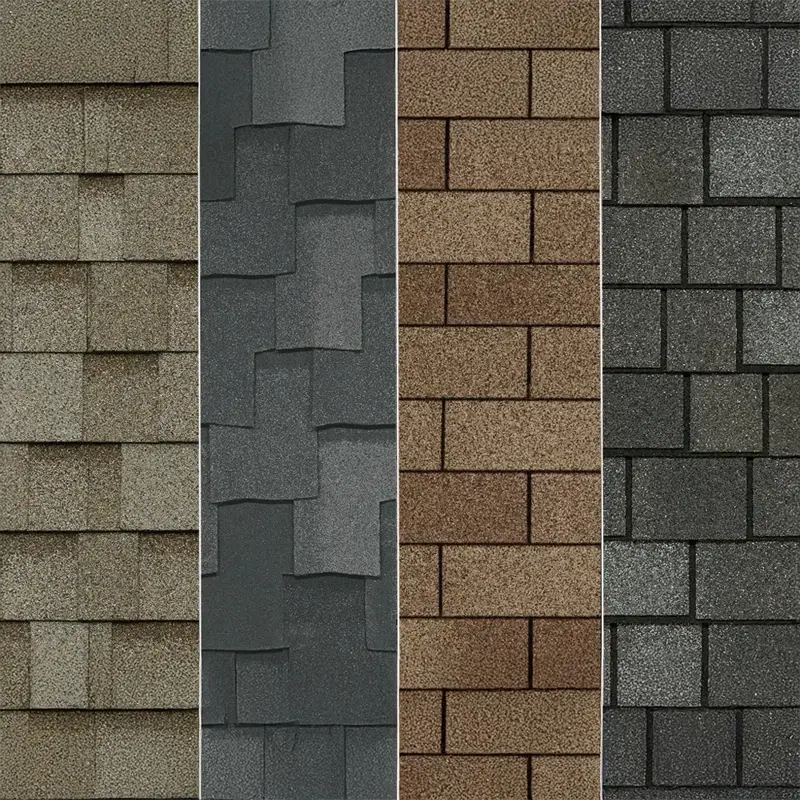
The Pinnacle® Pristine shingles are a top-tier choice for Boise homeowners. These architectural shingles feature Scotchgard™ Protector, which prevents the black streaks caused by algae. In humid spring conditions, algae can thrive on roofs, but these shingles come with a lifetime limited warranty against those unsightly stains.
The Timberline HDZ® and UHDZ® shingles are famous for their “LayerLock” technology. This creates a mechanical bond between shingles, allowing for a StrikeZone™ that is the industry’s widest. This means faster, more accurate installation and better wind resistance for your asphalt shingle roofing services. These shingles are often rated to withstand wind gusts up to 130 MPH, providing peace of mind during heavy Boise windstorms.
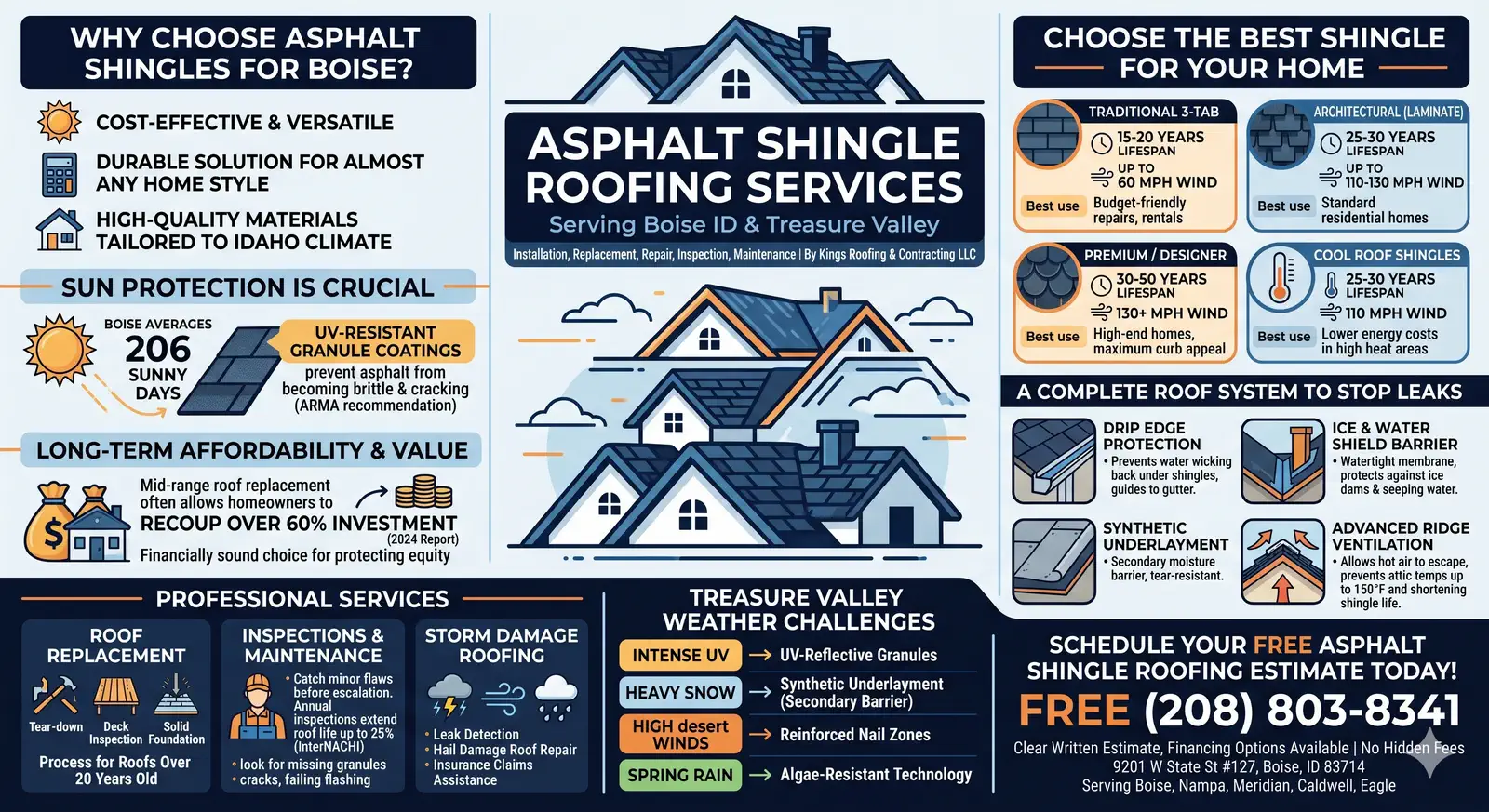
Selecting the right material is the first step in ensuring your home stays protected for decades. Use the table below to compare the different types of asphalt shingles we offer.
| Shingle Category | Average Lifespan | Wind Resistance | Best Use Case |
| Traditional 3-Tab | 15–20 Years | Up to 60 MPH | Budget-friendly repairs or rental properties. |
| Architectural (Laminate) | 25–30 Years | Up to 110–130 MPH | Standard residential homes needing durability and style. |
| Premium / Designer | 30–50 Years | Up to 130+ MPH | High-end homes requiring maximum curb appeal. |
| Cool Roof Shingles | 25–30 Years | Up to 110 MPH | Homes in high-heat areas looking to lower energy costs. |
A roof is more than just the shingles you see from the street. At Kings Roofing & Contracting LLC, we focus on the “hidden” details that many other roofing contractors in Boise might overlook.
This table highlights how our expert asphalt shingle roofing services address the specific environmental challenges of the Treasure Valley.
| Treasure Valley Weather Challenge | Shingle Protection Feature | Long-Term Benefit for Homeowners |
| Intense UV Exposure | UV-Reflective Granules | Prevents the asphalt from becoming brittle and cracking. |
| Heavy Winter Snow | Synthetic Underlayment | Offers a secondary waterproof barrier under heavy snow. |
| High Desert Winds | Reinforced Nail Zones | Keeps the roof intact during microbursts and wind events. |
| Spring Rain | Algae-Resistant Tech | Prevents black streaks and moss growth. |
Idaho weather can be unpredictable. From spring hail to autumn windstorms, your roof is often in the line of fire. If your home has been hit by a storm, we provide comprehensive storm damage roofing services.
Our team can assist with:


Kings Roofing & Contracting LLC delivers expert asphalt shingle roofing installations, replacements, and repairs to homeowners across the Treasure Valley. Our service areas include: Boise, Nampa, Meridian, Caldwell, Eagle, and surrounding communities. Explore our complete list of coverage zones on our Service Areas page.
Whether you are upgrading to architectural shingles on a Boise home, replacing storm-damaged three-tab shingles in Nampa, selecting impact-resistant Class 4 shingles for a Meridian property, or investing in a luxury shingle system in Caldwell or Eagle, our GAF-certified team helps you choose the right shingle grade, color, and wind resistance rating for Idaho’s demanding climate, backed by enhanced manufacturer warranty coverage and honest written pricing on every project.
Whether you are replacing an aging shingle roof, repairing storm damage, or selecting a new shingle system for a custom build across Boise, Nampa, Meridian, Caldwell, or Eagle, Kings Roofing & Contracting LLC is ready to help you make the right decision with confidence. Our GAF-certified team walks your roof, explains your shingle options in plain language, and delivers a clear written estimate with no pressure and no hidden fees. Financing options are available to make your shingle roofing project manageable on any budget.
Call us today at (208) 803-8341 or request a free asphalt shingle roofing estimate online and let Boise’s trusted local roofing contractor put a shingle system over your home that is built to handle everything Idaho’s climate delivers.
Address: 9201 W State St #127, Boise, ID 83714
Email Address: kingsroofingandcontracting@gmail.com
Phone Number: (208) 803-8341
Business Hours:
Monday: Open 24 hours
Tuesday: Open 24 hours
Wednesday: Open 24 hours
Thursday: Open 24 hours
Friday: Open 24 hours
Saturday: Open 24 hours
Sunday: Open 24 hours
In the Boise and Treasure Valley area, a high-quality asphalt shingle roofing system typically lasts between 20 and 30 years. However, our local climate features extreme temperature swings, from below freezing in the winter to over 100°F in the summer. These cycles cause shingles to expand and contract, which can lead to cracking over time. Choosing architectural shingles with a higher wind and impact rating can help push your roof’s lifespan toward the 30-year mark.
Because Boise averages over 200 sunny days a year, UV protection is critical. We recommend Pinnacle® Sun roof shingles or cool roof technology options. These shingles contain specialized granules that reflect solar energy rather than absorbing it. This prevents the asphalt from becoming “cooked” and brittle, which is the leading cause of premature roof failure in Idaho.
Yes. Every city in the Treasure Valley, from Boise to Nampa and Caldwell, has different building codes and permit requirements. As your roofing contractors in Boise, we manage the entire permit process for you. We ensure that your new roof meets all local safety regulations, including specific requirements for ice barriers and wind resistance.
We can install a new roof during the winter as long as the weather is dry and the temperature is high enough for the shingle’s adhesive strip to activate. In fact, many homeowners take advantage of our winter discounts. If we install in colder weather, our crew uses specialized “hand-sealing” techniques to ensure every shingle is secure until the spring sun can fully bond the roof system together.
In Treasure Valley, keep an eye out for “granule loss” in your gutters, which looks like heavy sand. This is a sign that the sun has broken down the shingles’ protective layer. Other signs include curling edges on shingles, which often happens due to poor attic ventilation in older Boise homes, or water spots on your ceiling after the spring snowmelt.
The cost of a roof installation and replacement varies based on the size and steepness of your roof. For a standard home in the Treasure Valley, prices typically range depending on the grade of material you choose, such as standard GAF shingles versus premium UHDZ® shingles. We offer a free roof quote to give you an exact price tailored to your home’s specific needs.
Asphalt shingles are generally more affordable and easier to repair than metal roofing. While metal roofs last longer, asphalt shingles provide excellent protection and come in a wider variety of styles to match traditional Boise neighborhoods. If you are looking for the best balance of cost and performance, high-quality architectural shingles are usually the winner.
If your roof was damaged by a recent storm, it is highly likely that your homeowner’s insurance will cover the roof repair or replacement. Hail damage can be hard to see from the ground, often appearing as small “bruises” on the shingles. We offer insurance claims assistance to help you document the damage and speak with your adjuster to ensure you get a fair settlement.
Call us today at (208) 803-8341 or schedule your free roof estimate online, and let Kings Roofing & Contracting LLC put a roof over your head that's built to last.