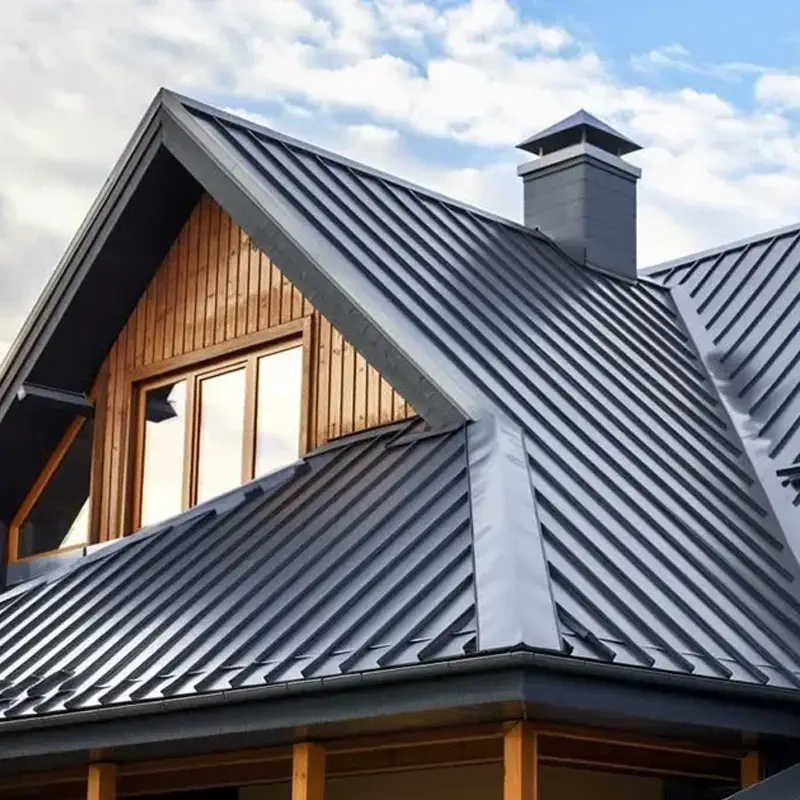
What You Need to Know Before You Buy Standing Seam Metal Roof Panels
For Treasure Valley homeowners planning a long-term metal roof upgrade, Kings Roofing & Contracting recommends verifying panel profile, gauge, roof slope, fastening system, and warranty coverage before ordering materials. If you’re ready to buy standing seam metal roof panels, here’s what matters most before you spend a dollar:
| Factor | What to Know |
|---|---|
| Panel Profile | Snap lock or mechanical lock — snap lock is easier to install |
| Seam Height | Ranges from 1 inch to 1.75 inches depending on the product |
| Coverage Width | Typically 12, 14, 16, or 18 inches per panel |
| Gauge | 24-gauge is stronger; 26-gauge is lighter and cheaper |
| Minimum Roof Slope | 3:12 for most snap lock systems; 1:12 over solid decking |
| Price Range | Starting around $5.50 per linear foot for steel panels |
| Panel Length | Custom cut from 3 ft up to 40–52 ft depending on supplier |
| Material | Steel (Galvalume), aluminum, copper, or weathering steel (Corten) |
Standing seam metal roofing is one of the most durable and weather-resistant roofing systems available. But the panel market is fragmented, technical, and easy to get wrong — the wrong gauge, the wrong slope, or the wrong fastener system can turn a smart investment into a costly headache.
Treasure Valley homeowners dealing with winter ice, hail, and rising repair bills are increasingly turning to metal roofing as a long-term fix. At Kings Roofing & Contracting, we see it every season — homeowners who bought the wrong panels or skipped key accessories end up spending more on repairs than they saved upfront.
Kings Roofing field checklist: the four purchase variables that most often determine standing seam roof performance are metal gauge, minimum slope rating, clip compatibility, and accessory completeness. A standing seam order is incomplete if it does not include the clips, trims, underlayment, sealants, and flashings required by the selected panel profile.
I’m Ryan Santoro, owner of Kings Roofing & Contracting LLC, and with 24 years of construction experience across residential and commercial roofing systems, I’ve helped hundreds of Boise-area property owners navigate the process to buy standing seam metal roof panels that actually perform. This guide gives you the straight facts — no upselling, no confusion.

Essential Buyer’s Checklist Before You Buy Standing Seam Metal Roof Panels

The correct standing seam panel is the one matched to the roof’s slope, structural deck, weather exposure, and attachment method. When you begin evaluating suppliers to buy standing seam metal roof panels, the sheer number of choices can feel overwhelming. Metal panels are not a one-size-fits-all commodity. Understanding panel geometry, metal thickness, and seam attachment methods is critical to avoiding structural failures, persistent leaks, or premature replacement. If your existing roof is near the end of its service life, coordinate panel selection with a professional roof replacement plan before ordering materials.
Snap Lock vs. Mechanical Lock Standing Seam Profiles
The two primary mechanical designs for standing seam systems are snap lock and mechanical lock panels.

- Snap Lock Panels: Snap lock systems feature male and female edges that interlock naturally. When installed over roof decking or open framing, one panel snaps directly over the adjacent panel’s raised rib, concealing the mounting clip beneath. Systems like LokSeam standing seam panels utilize vertical ribs ranging from 1 inch to 1-3/4 inches tall. Snap lock panels are ideal for residential roofs and steep-slope commercial applications. Because they require no special field-seaming machines, installation labor costs are significantly lower.
- Mechanical Lock Panels: Mechanical lock panels require a specialized power seamer tool on-site to bend adjacent panel ribs together. They come in single-lock (90-degree fold) or double-lock (180-degree fold) configurations. Double-lock profiles are necessary for low-slope roofs (under 2:12 pitch) or buildings exposed to severe weather, heavy snow buildup, and standing water.
For most residential applications in Boise, Eagle, and Meridian, snap lock panels offer superior efficiency, aesthetic appeal, and lower overall installation costs without sacrificing weather tightness.
Dimensions, Gauges, and Minimum Roof Slopes
Understanding technical panel specifications protects your structure from water intrusion and wind uplift. Before finalizing a purchase for your roof installation, verify these key dimensions:
- Coverage Width: Standard standing seam coverage widths are 12 inches, 14 inches, 16 inches, and 18 inches. A 16-inch width balance structural integrity with visual aesthetic on residential homes. Wider panels (such as 18 inches) install faster over large surface areas but can be more prone to visible surface waving (oil canning) if installed improperly.
- Metal Gauge (Thickness): Metal thickness is measured in gauges, where a lower number indicates a thicker metal. Standard steel choices include 24-gauge (0.024 inch) and 26-gauge (0.018 inch). 24-gauge steel is the gold standard for residential standing seam roofing because it provides superior rigidity, impact resistance, and oil-canning resistance. 26-gauge steel is lighter and economical, but requires careful handling and ideal deck flatness. Heavy-duty commercial applications sometimes utilize 22-gauge panels.
- Seam / Rib Height: Seam height typically ranges between 1 inch and 1.75 inches. Higher rib heights (such as 1.75 inches) offer enhanced water handling capacity during heavy precipitation or snowmelt.
- Minimum Roof Slope Requirements: Minimum slope thresholds vary by manufacturer and panel profile:
- 3:12 Slope and Greater: Standard requirement for most snap-together standing seam systems over open framing or solid substructures.
- 1:12 Slope: Allowed for specific clip-mounted panels (like 1.75-inch snap seam profiles) when installed over solid decking with high-temperature underlayment and factory-applied rib sealant.
Material Options and Climate Suitability

The best standing seam material is the substrate that matches the building’s climate risk. Choosing the correct substrate material ensures your roof withstands the local environment. When reviewing types of roofing, consider these primary material options:
- Galvalume® Steel (AZ50 / AZ55): A steel core coated with a protective alloy of 55% aluminum and 45% zinc. Galvalume delivers outstanding strength, fire resistance (Class A UL 790 rating), and top-tier impact resistance (Class 4 UL 2218 rating against hail). It is the most popular, cost-effective choice for homes across Treasure Valley.
- Aluminum (.032-inch to .040-inch thickness): Aluminum is naturally rustproof and lightweight. It is the premier choice for coastal environments subject to salt spray. However, aluminum expands and contracts almost twice as much as steel, requiring precise hidden clip spacing.
- Solid Copper: Copper is a premium, lifetime architectural material. It requires no paint, naturally patinas over time, and can be soldered at complex valleys, chimneys, and dormers to create completely watertight transitions.
- Weathering Steel (Corten / A606-4): Weathering steel develops a rustic, protective outer layer of rust. Options like Corten standing seam panels arrive unrusted with a dull gray finish and naturally age upon exposure to outdoor moisture. Note: Corten requires a minimum 3:12 slope, high-temperature underlayment, stainless steel fasteners, and comes without factory warranties due to the organic nature of bare steel oxidation.
Choosing Materials for Coastal vs. High-Snow Climates
Climate dictates material selection. In coastal regions exposed to atmospheric salt, Kynar-coated steel can experience accelerated edge corrosion, making aluminum mandatory.
In high-snow areas like Caldwell, Boise, and Kuna, snow load durability and thermal movement take priority. Galvalume steel in 24-gauge thickness provides the structural stiffness required to shed heavy snow sheets without buckling panel seams. If an existing roof has impact marks, punctures, or storm-related leaks, schedule hail damage roof repair before installing new standing seam panels. Additionally, choosing architectural colors such as dark bronze standing seam metal roofs absorbs solar heat during winter months, accelerating snowmelt and preventing severe ice damming along eaves.
Fastening Systems, Accessories, and Warranties
A standing seam roof stays watertight because its fasteners are concealed and its panels are allowed to move with temperature changes. A metal roof system is only as reliable as its fastening method. Corrugated metal roofing uses exposed screws driven straight through the metal face. In contrast, standing seam panels rely entirely on hidden fastening systems.
When you purchase clip-mounted standing seam panels, concealed clips are anchored to the roof deck using flat-head fasteners, and the panel seam snaps or locks directly over the clip.

Because zero fasteners penetrate the exposed surface of the panel, concealed clip systems eliminate open screw holes and rubber washer degradation — the primary cause of leaks on exposed-fastener roofs. Furthermore, clips provide vital clearance for the metal to expand and contract freely during extreme temperature shifts, which drastically reduces panel stress and visual oil canning. Homeowners comparing exposed-fastener and hidden-fastener systems can use professional metal roofing guidance to match panel type to roof pitch, budget, and expected service life.
Essential Accessories for a Leak-Proof System
Never buy just the flat roof panels. A complete standing seam installation requires specialized trim and accessory components:
- Concealed Roof Clips & Fasteners: Heavy-duty standard or UL 90 wind-uplift-rated clips designed specifically for your panel’s male lock profile.
- Eave & Drip Edge Trims: Prefabricated flashings that secure panel bottom hem edges to prevent wind uplift and water backup.
- Ridge Caps & Z-Flashing: Metal ridge caps combined with solid Z-closures and butyl tape seal upper panel edges against wind-driven rain and snow.
- High-Temperature Synthetic Underlayment: Polymer-modified self-adhering (ice and water) underlayment capable of resisting temperatures up to 240°F under dark metal surfaces.
- Butyl Mastic Sealant & Polyurethane Caulk: Non-curing butyl tape placed inside trims, flashings, and panel laps to form air- and water-tight seals.
- Specialized Installation Tools: Hand seamers, duckbill folding pliers, and panel notchers for folding bottom panel hems around eave cleats.
Understanding Paint, Substrate, and Fade Warranties
When evaluating manufacturer guarantees, ensure you review three distinct warranty components:
- Paint Finish Warranty: Premium standing seam panels feature high-performance PVDF (Polyvinylidene Fluoride, commonly branded as Kynar 500® or Hylar 5000®) coatings. Superior panel lines—such as Hardy Clip 100 panels—typically offer up to a 50-year paint finish warranty.
- Substrate Protection Warranty: Guarantees that the Galvalume steel substrate will not rupture, fail, or perforate from normal atmospheric corrosion for up to 45 to 50 years.
- Fade and Chalk Warranty: Measures paint integrity under intense UV exposure. Standard high-end coatings feature a 30-year warranty against excessive color chalking or pigment fading.
Pricing, Lengths, and Shipping Logistics
Understanding pricing models and freight logistics prevents unexpected expenses at checkout. Metal panels are sold by the linear foot (length of single panel) or by the square (100 square feet of roof coverage).
Factors That Impact Cost When You Buy Standing Seam Metal Roof Panels
Base prices for 24-gauge steel snap lock panels generally start around $5.50 per linear foot. Key factors influencing total cost include:
- Material Substrate: Galvalume steel is the standard base line. Aluminum typically adds a 15% to 30% price premium, while copper costs significantly more based on global commodity pricing.
- Gauge Upgrades: Upgrading from 26-gauge steel to 24-gauge steel increases raw material cost by roughly 10% to 20%, but delivers substantial structural strength and oil-canning resistance.
- Paint System and Texture: Standard SMP (Silicone-Modified Polyester) paints are less expensive, whereas top-tier PVDF/Kynar coatings or specialized quartz-textured low-gloss finishes command higher prices due to superior durability.
- Custom Length Precision: Most panel roll-formers offer custom precision cutting from 1 foot up to 40 or 52 feet, minimizing scrap waste on-site.
Shipping vs. Local Pickup Limits When You Buy Standing Seam Metal Roof Panels
Panels over 20 feet in length present unique freight and handling challenges. Freight carriers enforce strict length limits for standard flatbed deliveries:
| Logistic Parameter | Standard Freight Shipping | Local Pickup / On-Site Rolling |
|---|---|---|
| Minimum Order Quantity | 100 lineal feet (typical) | Varies by roll-former |
| Minimum Panel Length | 1 to 3 feet | 1 to 3 feet |
| Maximum Length Limit | 20 feet max for standard freight | Up to 40–52 feet (with specialized stretch-trailers) |
| Flat-Rate Delivery Cost | $249+ (for orders over $500 threshold) | Local delivery / jobsite drop-off |
| Unloading Requirement | Buyer must supply fork truck / manual labor | On-site crane / boom truck unloading |
When roof runs exceed 20 to 25 feet, ordering pre-cut shipped panels can result in damage during transport. Working with a established contractor allows panels to be roll-formed directly on the jobsite from continuous metal coils, completely eliminating panel lap joints.
Frequently Asked Questions About Buying Standing Seam Panels
What is the minimum roof slope required for snap lock standing seam panels?
For standard snap lock panels installed over solid wood decking with self-adhered synthetic underlayment, the recommended minimum roof slope is 3:12 (a 3-inch vertical rise for every 12 inches of horizontal run). Select 1.75-inch clip-mounted profiles with factory-applied rib sealant can be installed on slopes down to 1:12 over solid substrates. The final slope requirement must match the specific panel manufacturer’s installation manual and the planned roof installation assembly.
What accessories are required for a complete standing seam roof installation?
A complete, code-compliant standing seam roof system requires:
- Concealed mounting clips and flat-head wood screws
- High-temperature ice and water shield underlayment
- Eave drip edge cleats and gable rake trim
- Z-closures, ridge cap flashings, and sidewall/counter flashings
- Tube butyl sealant, butyl tape, and color-matched pop rivets
- Hand seamers and panel folding tools
Panels without matching trims, closures, clips, and sealants are not a complete roofing system; they are only one component of the assembly.
How do concealed clip fasteners prevent roof leaks and oil canning?
Concealed clip fasteners anchor metal panels underneath raised seams without piercing the exterior face, eliminating vulnerable screw penetrations. Because metal expands in summer heat and contracts in winter cold, clips allow panels to slide micro-millimeters thermally without buckling. This thermal movement clearance relieves internal stress and significantly reduces visual wave distortion (oil canning).
Conclusion
When you buy standing seam metal roof panels, getting maximum return on your roofing investment requires selecting the right panel gauge, slope profile, clip system, and weatherproofing accessories. Skipping crucial details or purchasing cut-rate panels without proper warranties leads to premature leaks and expensive repairs down the road.
At Kings Roofing & Contracting, LLC, we bring transparent pricing, GAF-certified workmanship, and 24/7 reliability to every project in Boise ID, Meridian, Nampa, Caldwell, Eagle, and across Treasure Valley. Whether you are upgrading your home’s curb appeal with sleek metal roofing, planning a complete roof replacement, or require expert boise roof repair, our team is here to guide you every step of the way.
Ready to secure a long-lasting, leak-proof metal roof for your property? Contact Kings Roofing & Contracting today for your free roof quote!