Why Copper Standing Seam Panels Stand Apart
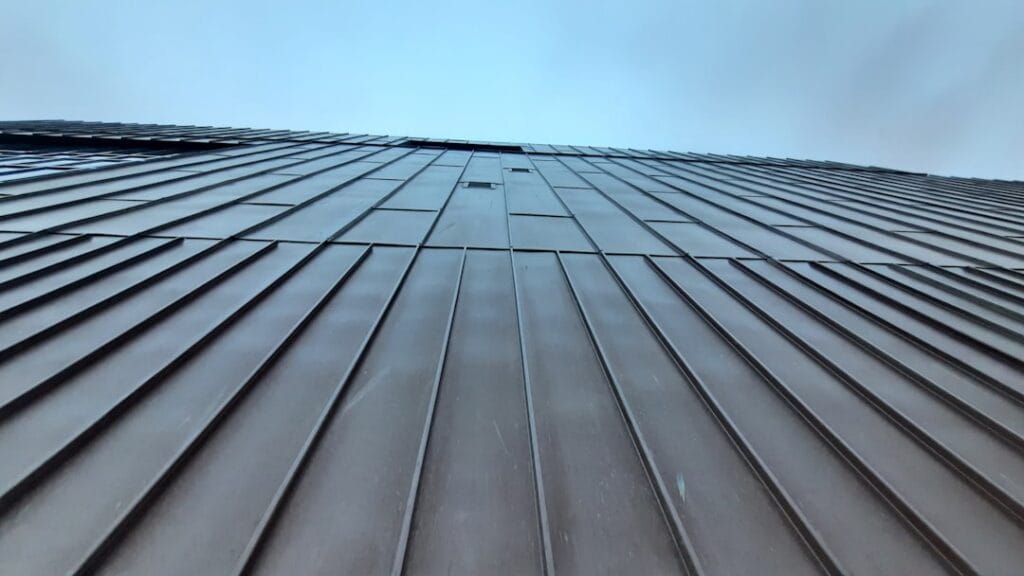
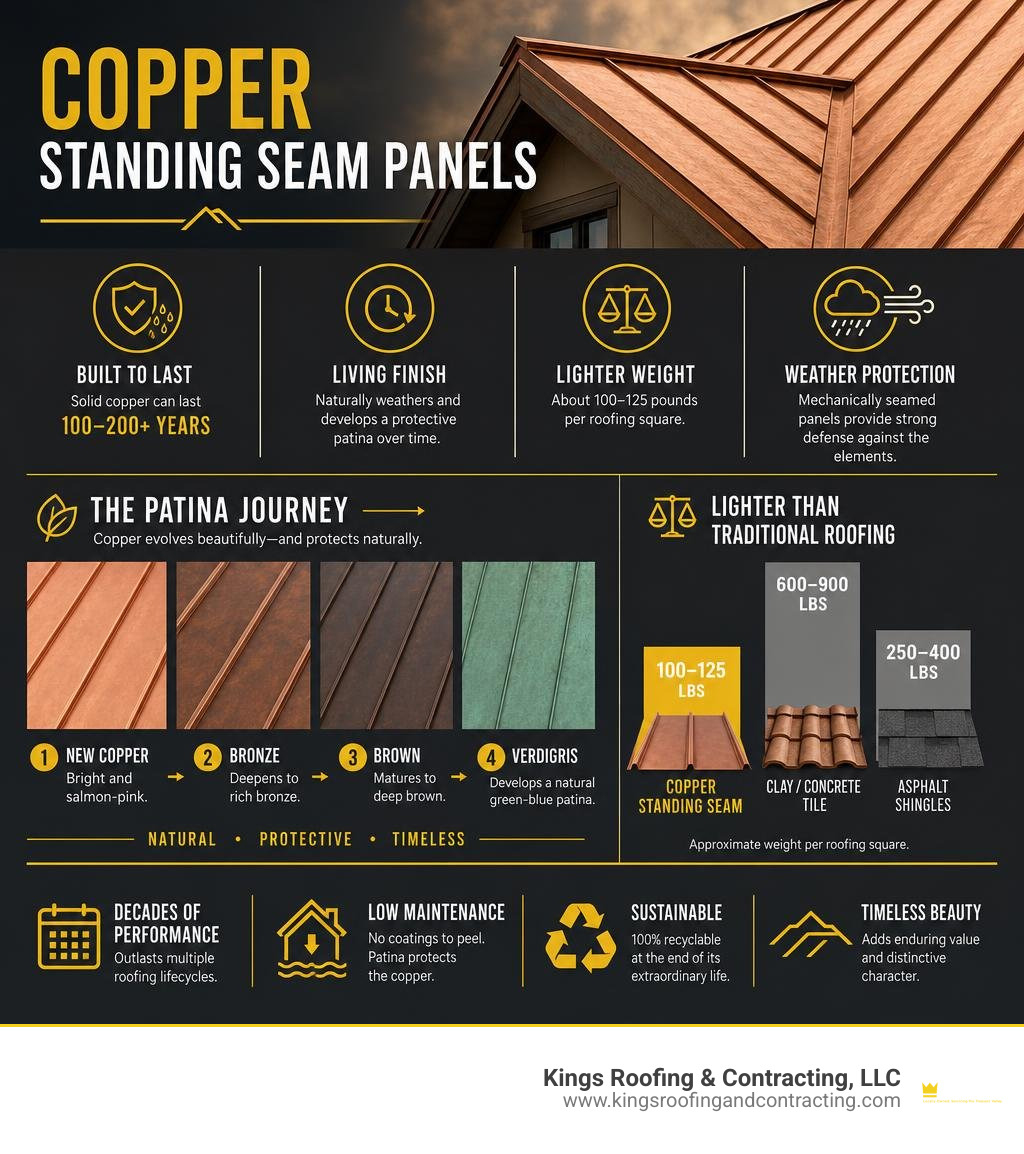
Copper standing seam panels are premium metal roof panels with raised, concealed seams and no exposed fasteners across the roof surface. They deliver a distinctive look that changes from bright copper to deep brown and, over time, green-blue patina, while offering a documented service life of 100 years or more when properly detailed and maintained.
| What homeowners should know | Quick answer |
|---|---|
| Best for | Long-term homes, architectural accents, and homeowners who want a living metal finish |
| Durability | Solid copper can last 100 to 200+ years |
| Winter performance | Mechanically seamed systems offer strong weather protection for low-slope and snow-prone roofs |
| Weight | About 100 to 125 pounds per roofing square, making copper lighter than tile |
| Appearance | Starts salmon-pink, then darkens to bronze and brown before developing verdigris |
| Main tradeoff | Copper costs far more upfront than painted copper-look steel |
At Kings Roofing & Contracting, we help homeowners compare roofing systems based on real building conditions, not just curb appeal. Copper is not a painted finish. It is a natural material that forms a protective patina as it weathers, which is why it can outlast several cycles of asphalt shingles, painted steel panels, and even solar equipment mounted above it. For Treasure Valley homeowners weighing storm exposure, winter leaks, and long-term repair costs, the key is choosing the panel profile and installation details that fit the roof’s slope, drainage, and surrounding materials.
I am Ryan Santoro, and my 24 years in commercial and residential construction, remodeling, and roofing inform a practical approach to evaluating copper standing seam panels and the details that protect them for the long haul.
Copper standing seam panels terms to learn:
What Makes Copper Standing Seam Roofing Superior to Steel?
Solid copper standing seam panels outperform painted steel panels primarily because copper is a non-ferrous metal that cannot rust. When exposed to oxygen and ambient moisture, copper develops a passivating oxide layer—the natural patina—that insulates the underlying metal from ongoing atmospheric corrosion.
While high-grade Galvalume steel coated in polyvinylidene fluoride (PVDF or Kynar 500) offers a respectable service life of 40 to 70 years, its longevity is ultimately limited by the lifespan of its synthetic paint film. Once the factory paint coat chalks, fades, micro-cracks, or suffers hail damage, the exposed steel edge is vulnerable to corrosion. In contrast, solid architectural copper (C11000 grade, conforming to ASTM B370) carries an intrinsic service life of 100 to 200+ years.
Beyond lifespan, copper offers key mechanical and safety benefits:
- Inherent Fire Resistance: Copper has a melting point of 1,984°F and qualifies as a non-combustible building material under ASTM E136, providing an inherent Class A fire protection rating without relying on fire-retardant chemical sub-layers.
- Class 4 Impact Resistance: Copper standing seam panels pass UL 2218 Class 4 hail impact testing, meaning severe hail strikes may dent the soft metal without breaching the panel integrity or compromising leak resistance.
- Superior Malleability: Solid copper allows precise hand-folding and custom soldering at valleys, dormers, and chimney transitions, creating a seamless watertight envelope that rigid steel panels cannot match.
- Aesthetic Evolution: Homeowners seeking rich earthy tones often evaluate a Dark Bronze Standing Seam Metal Roofs: A Timeless Choice for Modern Homes profile, but real copper provides an ever-changing living finish that transitions naturally from metallic bronze to deep chocolate brown and eventually vibrant verdigris.
System Types and Specifications for Copper Standing Seam Panels
Choosing the right standing seam system profile dictates how well your roof manages extreme winter snow, ice dams, and severe wind uplift across the Treasure Valley. Because copper is softer and more malleable than steel or aluminum, panel geometry and locking mechanisms require deliberate engineering.
Snap Lock vs Mechanically Seamed Copper Standing Seam Panels
Standing seam copper panels are installed using two primary panel interlocking formats: snap lock systems and mechanically seamed systems.
Snap lock panels feature factory-formed male and female legs that snap together under direct downward pressure during installation, using concealed clips attached to the roof deck. Snap lock panels work exceptionally well on residential roof slopes of 3/12 or steeper. However, because copper is a soft, ductile metal, snap lock legs must be carefully engineered to prevent unintended unsnapping under heavy wind suction or dynamic snow movement.
Mechanically seamed copper panels feature vertical legs that overlap and are manually or electrically folded using a motorized field seamer tool. Mechanically seamed profiles come in two varieties:
- Single Lock (90-Degree Fold): The female leg is folded once over the male leg at a right angle. This provides excellent weatherproofing for standard slopes.
- Double Lock (180-Degree Fold): The seam is folded twice, completely locking the panels into a watertight mechanical seam.
Contractors specify double-lock mechanical seams for low-slope roofs (down to a 1/12 pitch) and high-load snow zones because the continuous folded joint prevents water from backing up under melting snow. You can explore exact profile dimensions at Mechanically Seamed Copper Standing Seam Roofing Panels.
Key Product Specifications and Slopes for Copper Standing Seam Panels
Architectural copper panels are specified by weight per square foot rather than traditional steel gauges:
- 16 oz Copper (0.0216″ thickness): The standard specification for most residential roofs, accent dormers, and bay windows. Weighs approximately 100 lbs per roofing square (100 sq ft).
- 20 oz Copper (0.0270″ thickness): A heavier architectural weight recommended for wide panel pans, low-slope applications, snow country roofs, and heavy-gauge gutter linings. Weighs approximately 125 lbs per square.
Standard panel widths for copper standing seam are 14 inches and 18 inches (with custom panel widths ranging from 12 to 20 inches). Vertical rib heights range from 1.0 inch to 2.0 inches. To explore panel width options and wall cladding profiles, review 1″ Copper Standing Seam Panel for Roof & Wall Applications.
Because flat sheet metal naturally exhibits “oil canning”—a visible waviness in the flat pan caused by thermal expansion stress—contractors recommend ordering panels manufactured with stiffening ribs, pencil ribs, or striations. These subtle longitudinal folds break up light reflection, disguising waviness without altering panel water shedding.
| Profile / Metric | Minimum Pitch | Seam Height | Standard Widths | Recommended Weight |
|---|---|---|---|---|
| Snap Lock | 3/12 (25%) | 1.5″ – 1.75″ | 14″, 18″ | 16 oz or 20 oz |
| Single Lock Mechanical | 3/12 (25%) | 1.0″ – 1.5″ | 14″, 18″ | 16 oz |
| Double Lock Mechanical | 1/12 (8.3%) | 1.5″ – 2.0″ | 12″, 16″, 18″ | 20 oz |
Critical Installation Guidelines and System Requirements
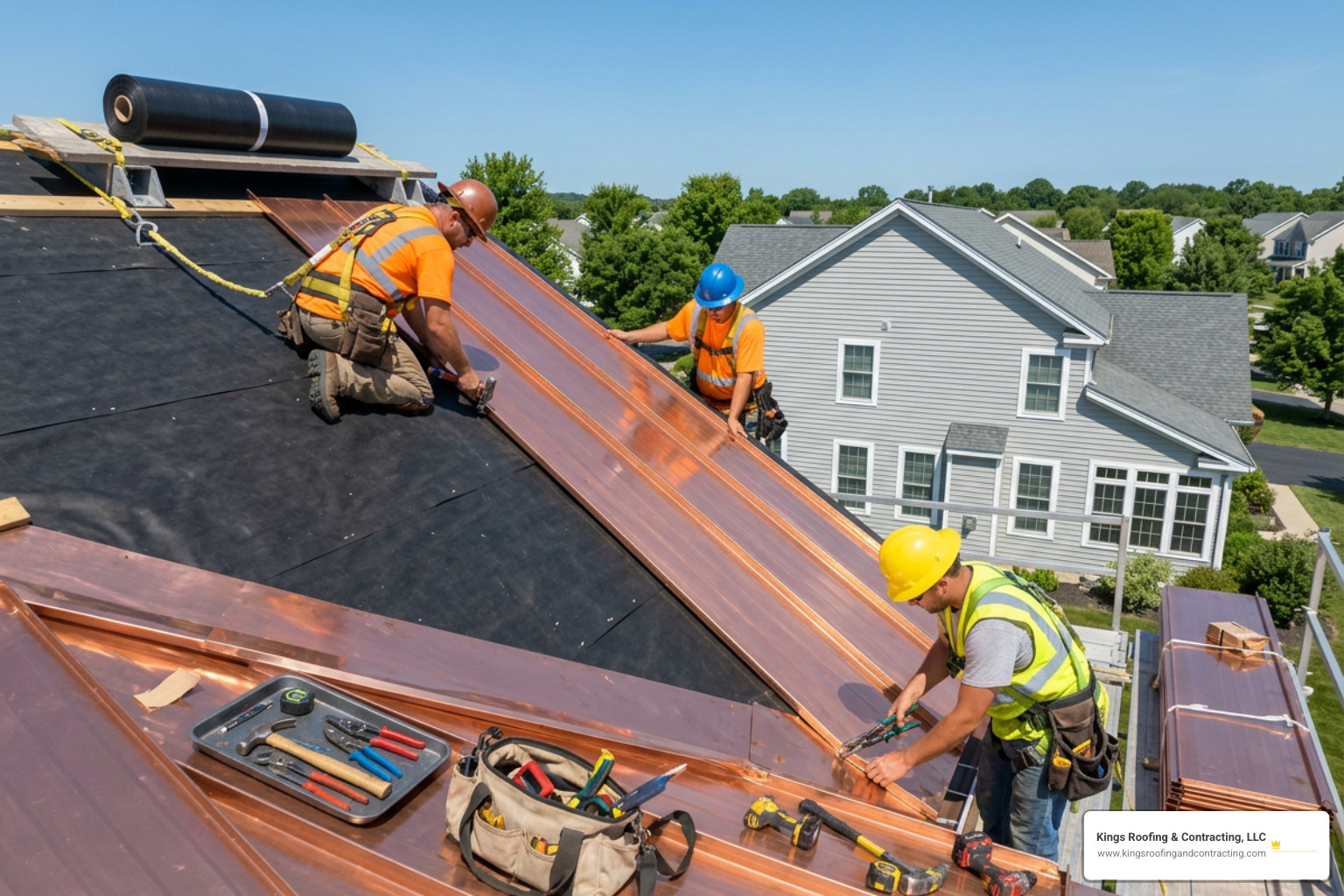
Installing a long-lasting copper roof requires technical precision, specialized tools, and strict adherence to metal isolation guidelines. Proper execution of our professional Roof Installation services ensures your investment remains leak-free across decades of severe weather.
Underlayment and Fasteners for Copper Standing Seam Panels
Copper absorbs and conducts solar radiation quickly, raising underdeck thermal temperatures higher than standard asphalt shingles. Standard rubberized asphalt self-adhering membranes can soften or melt under hot copper panels, leading to panel sticking, tearing, or asphalt dripping.
To avoid catastrophic underlayment failure:
- Apply High-Temperature Underlayment: Use a self-adhering elastomeric membrane specifically rated to withstand thermal conditions up to 250°F+.
- Install a Slip Sheet: Lay a layer of un-waxed building paper (rosin paper) directly over the high-temp membrane. The rosin paper acts as a friction-free slip sheet, allowing the copper panels to expand and contract freely during daily temperature swings without binding or tearing the membrane beneath.
When securing panels, never drive fasteners directly through the face of the panel. Concealed sliding clips must be locked into the seam and screwed down to the roof deck. Always use solid stainless steel clips or copper-plated stainless fasteners to allow for thermal movement. If you want to dive deeper into securing panel fasteners properly, read our breakdown on how to avoid critical mistakes when you Don’t Get Screwed When You Buy Standing Seam Metal Roof Panels.
Preventing Dissimilar Metal Corrosion and Runoff Staining
Galvanic corrosion occurs when two dissimilar metals come into contact in the presence of an electrolyte (such as rain or snowmelt). Copper has a high noble potential; when coupled directly with aluminum, zinc, Galvalume, or bare steel, the less noble metal corrodes rapidly.
To eliminate galvanic failure:
- Use only stainless steel or heavy copper clips, copper nails, and stainless screws.
- Isolate copper flashings from aluminum trim, steel purlins, or galvanized valley supports using neoprene or bitumen barriers.
- Prevent water runoff from copper panels from spilling directly onto unprotected cedar shingles, light-colored brick, stucco, or limestone. Copper salts in rainwater produce green verdigris staining on porous masonry down-drainage. Route runoff through dedicated copper gutters or non-porous drainage paths. Architectural drainage details can be cross-referenced at Architectural Details: Roofing Systems – Standing Seam Roofing.
Financial Investment, Warranties, and Solar PV Integration
Building owners evaluating copper standing seam panels must balance upfront capital outlay against century-long life expectancy and ongoing property value appreciation.
| Feature / Consideration | Real Solid Copper | Painted ‘Aged Copper’ Steel |
|---|---|---|
| Material Base | 99.9% Pure Architectural Copper (C11000) | 24-Gauge Galvalume Steel |
| Material Cost Comparison | Baseline (100%) | 60% to 75% Lower Material Cost |
| Finish / Coating | None (Living Natural Patina) | Factory PVDF / Kynar 500 Paint Print |
| Manufacturer Finish Warranty | None (Raw metal patinas naturally) | 30-Yr Chalk/Fade, 40-Yr Paint Peel |
| Documented Lifespan | 100 to 200+ Years | 40 to 70 Years |
| Runoff Staining Risk | Yes (Requires copper/plastic drainage) | No (Synthetic paint print won’t leach) |
| Fire & Wind Resistance | Class A Fire / 120 mph Wind Warranted | Class A Fire / 120 mph Wind Warranted |
| Recyclability | 100% High Scrap Value | 100% Standard Steel Scrap Value |
Because raw copper is an unpainted natural element that passivates through natural atmospheric exposure, primary metal mills do not issue standard paint finish warranties on solid copper sheets. Homeowners who insist on a written 30-to-40-year paint warranty often select pre-painted ‘Aged Copper’ PVDF Galvalume panels. These painted steel panels provide a 60% to 75% material cost savings while mimicking the visual look of aged copper without runoff staining risks.
For homeowners investing in solid copper, condensation control beneath metal decks is critical to ensuring subdeck longevity. Learn how to manage underdeck humidity by reading Sweating Bullets: How to Stop Your Metal Roof from Condensing.
If you plan to add solar energy, standing seam copper provides an exceptional mounting platform:
- Vertical standing seam ribs allow solar PV racking clamps (such as non-penetrating S-5! aluminum or stainless seam clamps) to lock directly onto the standing seam leg.
- Zero roof deck penetrations are required for solar installation, preserving the watertight integrity of the copper roof.
- Because copper roof panels last 100+ years, the roof easily outlasts two to three consecutive generations of solar photovoltaic panels without requiring a roof tear-off during solar equipment replacement.
Frequently Asked Questions About Copper Standing Seam Roofing
What is the minimum slope required for copper standing seam roof installation?
The minimum recommended roof slope for snap lock copper standing seam panels is 3/12 (3 inches of vertical rise per 12 inches of horizontal run). For low-slope roofs down to a 1/12 pitch, you must specify mechanically seamed copper panels with a double-lock (180-degree) folded seam combined with continuous butyl sealant in the seam pocket to guarantee absolute watertight performance.
How long does it take for copper standing seam panels to turn green?
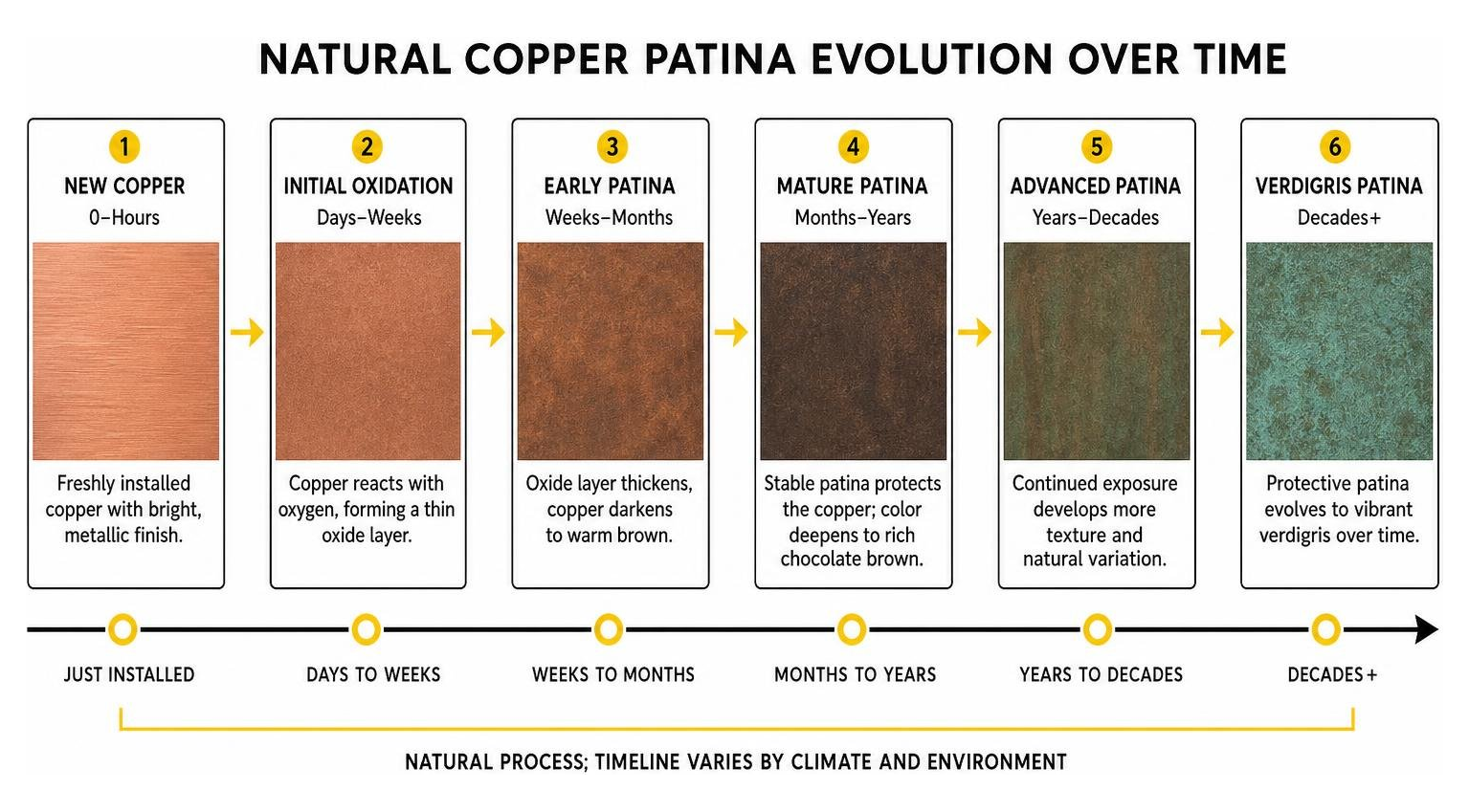
Natural patina evolution depends entirely on ambient humidity, rainfall, airborne sulfur compounds, and proximity to salt air. Newly installed bright salmon-pink copper turns dark bronze or deep brown within 1 to 3 years. The characteristic verdigris green-blue patina typically begins emerging in 7 to 15 years, reaching full mature verdigris coverage in 30 to 35 years. In dryer semi-arid climates like the Treasure Valley, copper remains in the rich chocolate brown and dark bronze stages significantly longer before developing full green hues.
Can solar panels be installed on a copper standing seam roof without penetrating panels?
Yes. The vertical-rib geometry of standing seam panels allows heavy-duty solar racking clamps to attach mechanically to the raised seam leg using stainless steel set screws. This non-penetrating mounting process leaves the solid copper surface completely unpunctured, preserving your leak protection and thermal movement capabilities while supporting full solar arrays.
Conclusion
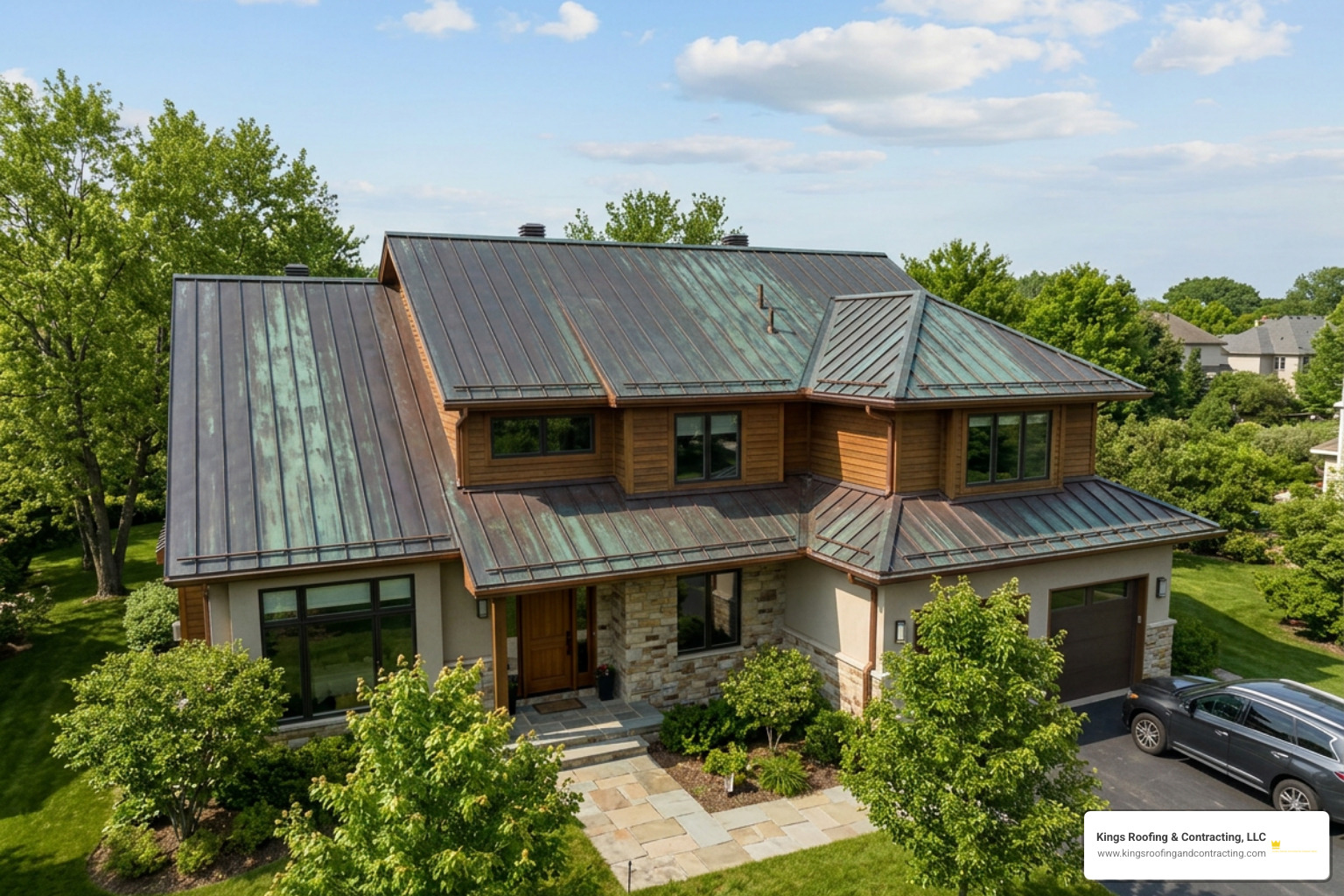
Investing in copper standing seam panels provides unmatched generational durability, Class A fire protection, and an evolving architectural finish that no synthetic roofing material can duplicate. While the initial capital cost is higher than asphalt or painted steel, copper’s 100+ year service life eliminates recurring tear-off and replacement costs, delivering exceptional long-term total cost of ownership.
Whether you are designing a custom architectural build in Eagle or replacing a storm-damaged roof in Boise, selecting the proper copper panel weight, standing seam height, high-temp underlayment, and stainless clip assembly is essential to protecting your home.
At Kings Roofing & Contracting, LLC, our team brings decades of local hands-on expertise to every residential and commercial project. Contact our specialists today to explore our complete line of custom Metal Roofing options or request your complimentary, detailed project evaluation by visiting our Free Roof Quote page.