Slate Roofing: A Complete 2026 Guide to Natural and Composite Options
Slate roofing is one of the oldest and most durable roofing systems in the world — and in 2026, it remains a top choice for homeowners who want a roof that lasts a lifetime. Here’s what you need to know at a glance:
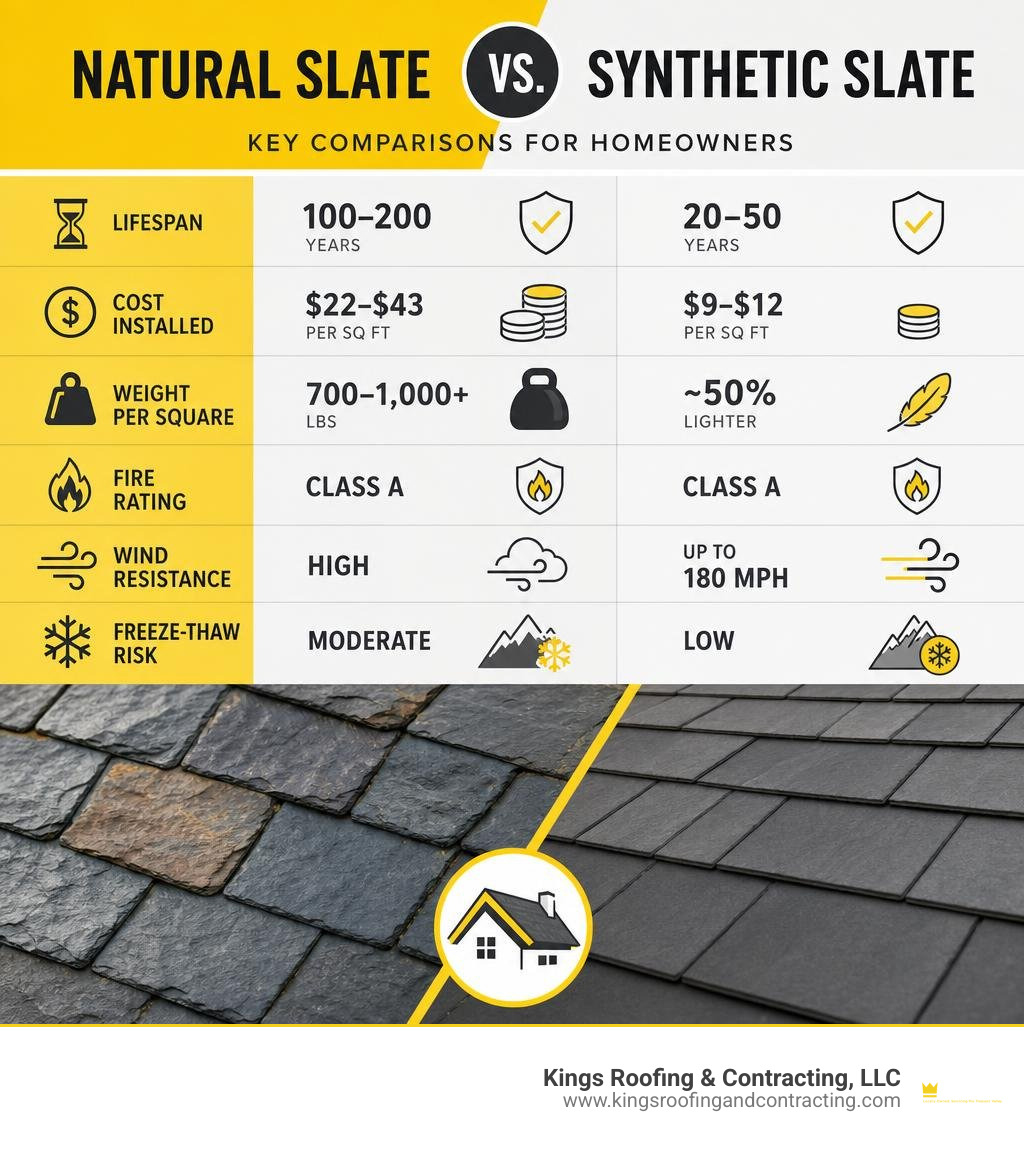
| Natural Slate | Synthetic/Composite Slate | |
|---|---|---|
| Lifespan | 100–200 years | 20–50 years |
| Cost Installed | $22–$43 per sq ft | $9–$12 per sq ft |
| Weight per Square | 700–1,000+ lbs | ~50% lighter |
| Fire Rating | Class A | Class A |
| Wind Resistance | High | Up to 180 mph |
| Freeze-Thaw Risk | Moderate | Low |
Whether you’re weighing the timeless appeal of natural quarried stone or the practical advantages of modern composite tiles, this guide covers everything — costs, installation, maintenance, and how to choose the right option for your home.
The Romans were the first to mine and install standard-sized slate on roofs, and the material has been proven reliable for over 1,000 years. That track record is hard to ignore. But today’s homeowners have more choices than ever, and the right choice depends on your budget, your roof structure, and where you live.
If you’re in the Treasure Valley and want expert guidance on your roofing options, the experienced roofing contractors at Kings Roofing & Contracting can help you make a confident, informed decision.
I’m Ryan Santoro, owner of Kings Roofing & Contracting LLC, and with 24 years of construction experience — including hands-on work with natural slate, composite slate, and a full range of roofing systems — I’ve put together this guide to cut through the noise and give you straight answers. Read on for everything you need to know before investing in a slate roofing system for your home.
What Is Natural Slate and How Is It Manufactured?
Natural slate is a fine-grained metamorphic rock formed deep within the earth over millions of years. It starts as clay or volcanic ash deposited on ancient ocean floors, which hardens into shale. Under intense geological heat and pressure, that shale transforms into dense slate rich in minerals like chlorite, mica, and quartz.
What makes slate unique for roofing is its naturally occurring cleavage planes. These geological fault lines allow skilled craftsmen to split massive boulders of stone into smooth, flat tiles with remarkably sharp precision.
Despite modern advancements in construction technology, authentic roofing slate is still hand-carved using traditional hammers and chisels. The manufacturing journey moves through several precise phases:
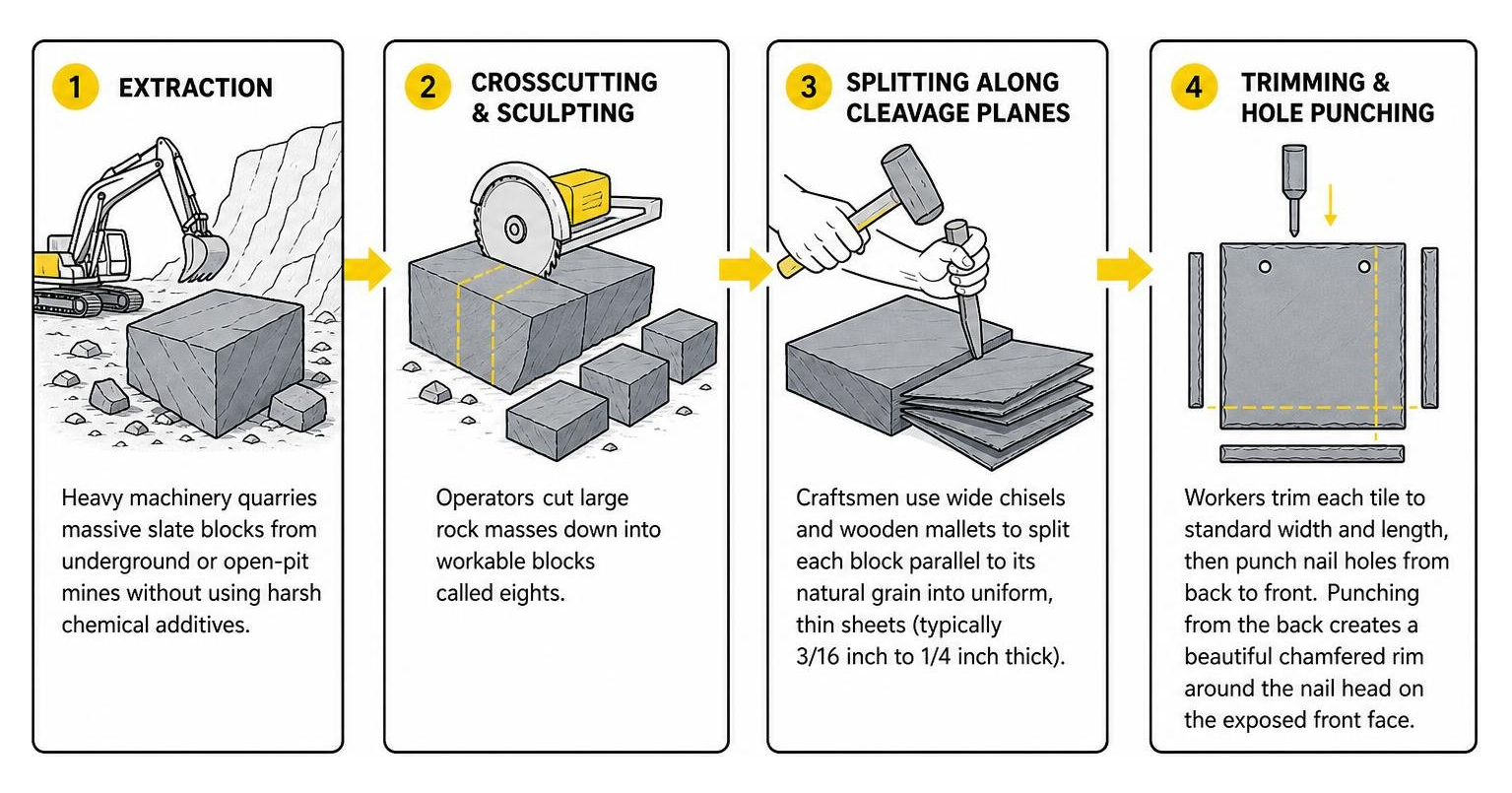
- Extraction: Heavy machinery quarries massive slate blocks from underground or open-pit mines without using harsh chemical additives.
- Crosscutting & Sculpting: Operators cut large rock masses down into workable blocks called eights.
- Splitting Along Cleavage Planes: Craftsmen use wide chisels and wooden mallets to split each block parallel to its natural grain into uniform, thin sheets (typically 3/16 inch to 1/4 inch thick).
- Trimming & Hole Punching: Workers trim each tile to standard width and length, then punch nail holes from back to front. Punching from the back creates a beautiful chamfered rim around the nail head on the exposed front face.
When struck with a finger or slate hammer, high-density natural slate emits a clear, bell-like ringing sound. That chime lets roofer specialists know the interior structure is solid and completely free from hidden micro-cracks or delamination.
Global Slate Production and Sourcing Regions
While natural slate covers roofs across the globe, its production is concentrated in specific geographic corridors. Spain reigns as the undisputed powerhouse of global slate extraction, producing over 580,000 tonnes annually—valued at nearly $380 million—making it the world’s largest producer, followed by China and Brazil. France leads global consumption, with the United Kingdom, United States, and Germany following close behind.
In North America, active quarries located in Vermont, New York, Pennsylvania, Virginia, and Quebec produce some of the highest-rated roofing slates in existence:
- Vermont Slates: Famous for producing rich, distinct natural shades ranging from unfading green and royal purple to mottled red and semi-weathering sea green. Many of these products meet rigid ASTM S-1 Vermont Slate Specifications for multi-generational durability.
- Pennsylvania & Virginia Slates: Pennsylvania’s historical Peach Bottom quarries and Virginia’s Buckingham black quarries produced deep blue-black slates renowned for centuries of color retention.
- Quebec Unfading Black: Highly sought after for historical restorations across North America because of its precise visual match to classical domestic black slates.
Understanding Slate Roofing Types and Architectural Styles

Natural slate roofing is far more than a single uniform product. It offers dynamic design options through distinct layout patterns and installation styles. Selecting the right pattern defines your home’s curb appeal, structural balance, and historical authenticity.
Standard, Patterned, and Random Width Layouts
For homeowners seeking classic elegance or creative personal touches, standard field layouts offer three versatile approaches:
- Standard (Uniform) Slate Roofs: The most traditional pattern in American architecture. Slates of identical length and width are laid in clean, horizontal courses with vertical joints aligned in alternating fashion. Standard slates usually range from 1/4 inch to 3/8 inch in thickness.
- Patterned Slate Roofs: Incorporates slates of contrasting colors to weave custom geometric shapes, floral motifs, dates, initials, or heraldic emblems directly into the roof landscape.
- Random Width Slate Roofs: Utilizes slates of identical length and thickness but varying widths across each course. This style creates a subtle rhythm across large expanses of roof deck without compromising uniform horizontal lines.
If you are exploring custom home upgrades, browsing our comprehensive guide to Residential Roofing Options will help you evaluate how different layout styles fit your building design.
Graduated, Textural, and Hang-Down Styles
Beyond standard layouts, custom historical practices give roofs depth, texture, and rustic grandeur:
- Graduated Length & Thickness Roofs: This historic installation technique originated when quarries shipped whatever slate sizes were available. Longest, widest, and thickest tiles (up to 1 inch thick or more) are placed near the eaves where runoff volume is heaviest. As courses move toward the ridge, slate length, width, and thickness gradually decrease down to 3/16 inch tiles. This creates a visual illusion of greater roof pitch and height.
- Textural Slate Roofs: Combines slates with uneven thicknesses and rough-hewn surface textures adjacent to one another. Missing butt corners and varied shadow lines yield a bold, rugged finish.
- Hang-Down (Staggered Butt) Roofs: Slates of varying lengths extend below the standard horizontal butt line, producing an informal cottage or European storybook aesthetic.
For a deeper look into selecting structural styles that complement your property, check out our breakdown on different Types of Roofing Systems.
Natural Slate vs. Synthetic Composite Options
Deciding between traditional quarried stone and modern composite alternatives comes down to weighing physical characteristics, total structural demands, and budget constraints.
| Feature / Metric | Natural Quarried Slate | Synthetic Composite Slate |
|---|---|---|
| Primary Material | 100% Quarried Metamorphic Rock | Polymer Composites / Recycled Synthetics |
| Average Service Life | 100 to 200+ Years | 40 to 50 Years |
| Material Weight | 700 to 1,000+ lbs/sq (Up to 8,000 lbs/sq heavy) | 200 to 350 lbs/sq |
| Installed Cost Range | $22.00 – $43.00 per sq ft | $9.00 – $12.00 per sq ft |
| Material Cost per Square | $600 – $800 | $300 – $450 |
| Impact Resistance | Fragile under direct foot traffic / large hail | Class 4 Impact Rating (Highest standard) |
| Fire Resistance | Class A (Inherent non-combustible stone) | Class A (With approved fire-rated underlayment) |
| Wind Performance | Superior (Heavy dead weight resists lift) | Certified up to 180 mph storm winds |
| Installation Skill Required | Specialized Master Slater required | Standard steep-slope roofing crew |
Pros and Cons of Slate Roofing
Natural slate has earned its reputation as the gold standard of steep-slope roofing over hundreds of years, but it comes with distinct physical trade-offs:
The Advantages:
- Unmatched Longevity: High-grade slate easily lasts over a century, outlasting three to four asphalt roof replacements.
- Fire & Weather Resistance: Natural stone is completely non-combustible (Class A) and impervious to intense rot, mildew, and insect damage.
- Authentic Aesthetics: Unfading and semi-weathering mineral pigments yield age-defying character that synthetic materials struggle to reproduce perfectly.
The Drawbacks:
- Extreme Dead Weight: Standard 3/16-inch slate weighs 700 to 1,000 pounds per square (100 square feet), while heavy custom slates exceed 4,000 to 8,000 pounds per square. Standard rafters usually require professional structural reinforcement.
- Material Fragility: While stone stands strong against heavy downpours, stepping directly on slates can snap tiles easily.
- Specialized Craftsmanship Requirements: Natural slate requires specialized hand tools and traditional methods outlined in the General Installation Guidelines for Slate. Incorrect nailing can ruin an installation quickly.
Synthetic Slate Alternatives: Cost, Weight, and Performance
Composite slate tiles engineered from advanced polymers and rubber compounds offer an accessible alternative for many homeowners.
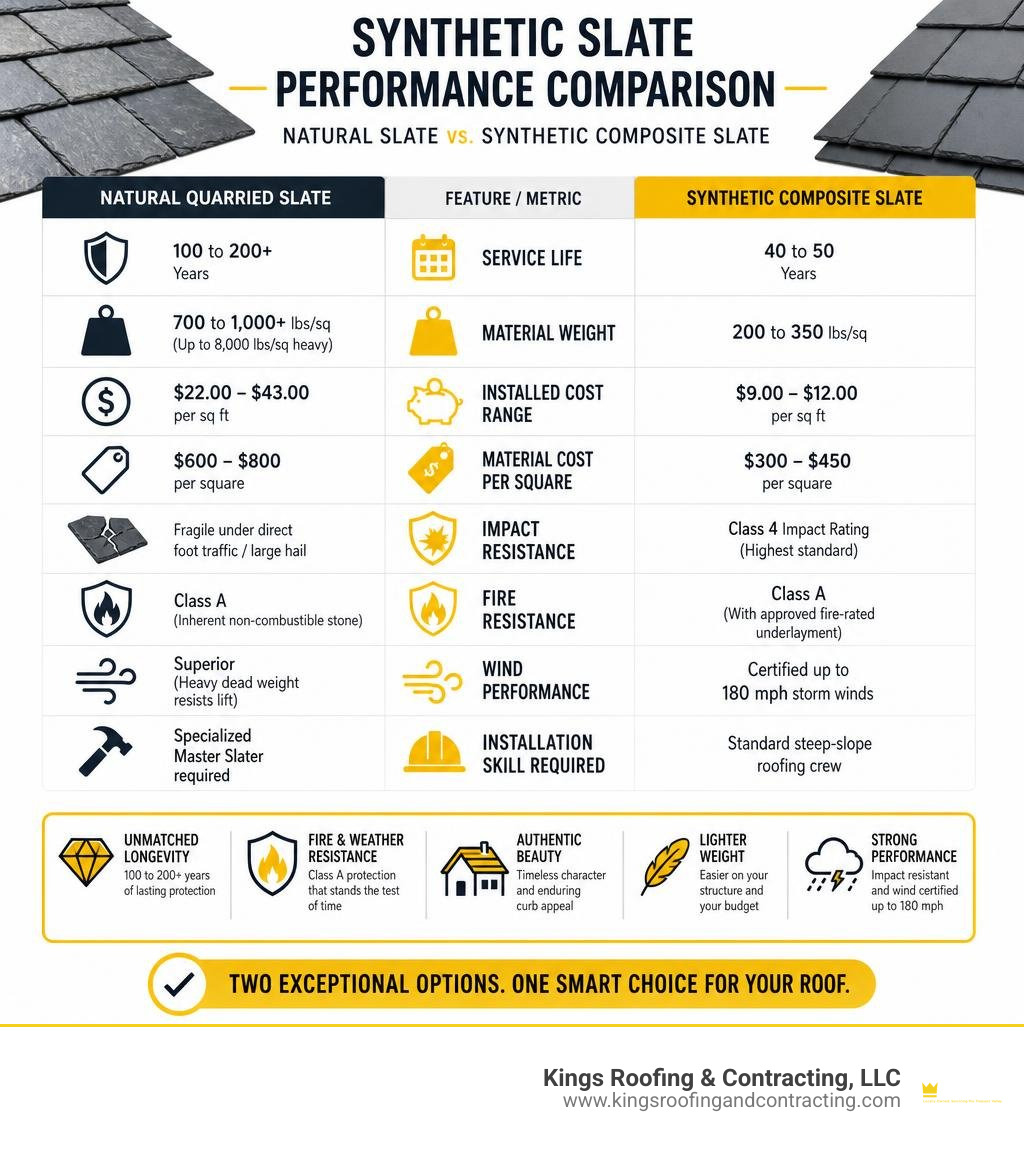
At $9 to $12 per square foot installed, composite slate reduces installation budgets compared to natural slate’s $22 to $43 per square foot price tag. Because synthetic options cut dead load weight in half, standard roof trusses can accommodate them without expensive structural modifications.
High-grade synthetic slate tiles carry Class 4 impact resistance ratings—withstanding severe hail that might crack natural slate—and resist hurricane-force winds up to 180 mph. Furthermore, engineered polymers eliminate freeze-thaw water penetration, preventing expansion cracks during harsh Treasure Valley winters.
If your current roof shows signs of aging and you are exploring modern material retrofits, learn more about our complete Roof Replacement Solutions.
Slate Roof Installation and Long-Term Maintenance
A slate roofing system performs only as well as the craftspeople who install it. Because slate roofs are built to endure for a century, every underlying component—from fasteners to flashing metals—must match that same multi-generational lifespan.
Key Factors for Installing Slate Roofing
Proper slate roof execution requires meticulous planning and traditional installation practices:
- Decking & Structural Framing: Slate must be fastened to solid, glue-free wood decking (such as 3/4-inch tongue-and-groove lumber) or thick plywood. Substrates must support calculated dead loads cleanly without sagging.
- Underlayment Requirements: Installers apply non-perforated No. 30 asphalt-saturated organic felt (ASTM D 226 Type II) or high-density self-adhered polymer membranes (minimum 40 mil thickness). In freezing climates, self-adhering ice dam protection extends along eave edges.
- Fasteners & Metallurgy: Pneumatic nail guns are strictly prohibited on natural slate because impact force shatters stone tiles. Slate tiles are hand-fastened using smooth-shank solid copper or Type 304 stainless steel roofing nails. Nail lengths must equal twice the slate thickness plus one inch.
- Headlap & Exposure: Headlap—the overlap between overlapping slate layers—must be strictly maintained. Slopes between 8:12 and 20:12 require a minimum 3-inch headlap. Proper exposure equals slate length minus headlap divided by two.
- Specialized Toolkit: Master slaters use dedicated hand tools: a slate hammer for driving nails and punching holes, a slate stake for hand-trimming edges, and a slate ripper to hook and slice nails during future repairs.
If you are suspecting storm damage or need localized maintenance in Boise, check out our specialized Boise Roof Repair Services.
Industry Standards, ASTM C406, and Restoration
To protect building owners, the American Society for Testing and Materials established strict physical performance criteria under ASTM C406. This standard evaluates flexural strength (ASTM C120), water absorption (ASTM C121), and weathering depth (ASTM C217), categorizing slates into three distinct durability tiers:
- Grade S1: Offers expected service life in excess of 75 years (often 100–200 years) with water absorption below 0.25%.
- Grade S2: Expected service life of 40 to 75 years.
- Grade S3: Expected service life of 20 to 40 years.
When drafting architectural specifications, contractors adhere to standards set by the National Slate Association Specifications.
When replacing single cracked tiles during routine inspections every 5 to 7 years, technicians follow established SRCA Maintenance Guidelines. Instead of face-nailing or applying short-lived mastic adhesives, roofers remove damaged tiles using a slate ripper, insert new matching tiles, secure them with smooth-shank copper nails or slate hooks, and slip a 16-ounce copper bib flashing underneath the overlying slate to seal the fastener hole permanently.
Frequently Asked Questions About Slate Roofs
How long does a natural slate roof last?
A natural slate roof crafted from ASTM Grade S1 quarried stone lasts between 100 and 200 years when installed with long-lasting copper fasteners and quality flashings. Synthetic composite slate roofs offer an expected service life of 20 to 50 years.
How much does natural slate cost compared to composite alternatives?
Natural slate installations range between $22 and $43 per square foot installed, with raw material costs running $600 to $800 per square (100 sq ft). Composite synthetic slate costs approximately $9 to $12 per square foot installed, offering lower initial installation costs.
What structural prep is required before slate installation?
Because natural slate adds 700 to 1,000+ pounds of dead load weight per 100 square feet, a structural engineer must inspect rafter framing and load-bearing walls. Light-frame homes often require rafter reinforcement or engineered collar ties prior to laying natural stone tiles.
Conclusion
A slate roofing system represents the ultimate investment in architectural beauty, fire safety, and unmatched durability. Whether you choose the historical character of hand-carved natural slate or the practical lightweight performance of synthetic composite tiles, selecting a certified installation team is the single most important step in protecting your home investment.
At Kings Roofing & Contracting, LLC, we bring decades of hands-on expertise, GAF-certified craftsmanship, transparent pricing, and 24/7 availability to homeowners throughout Boise, Meridian, Eagle, Nampa, Caldwell, and across the Treasure Valley.
Ready to explore how a natural or composite slate system can elevate your home? Explore Premium Roofing Options with our team or Request a Free Roof Quote today—we are here to serve you day or night!