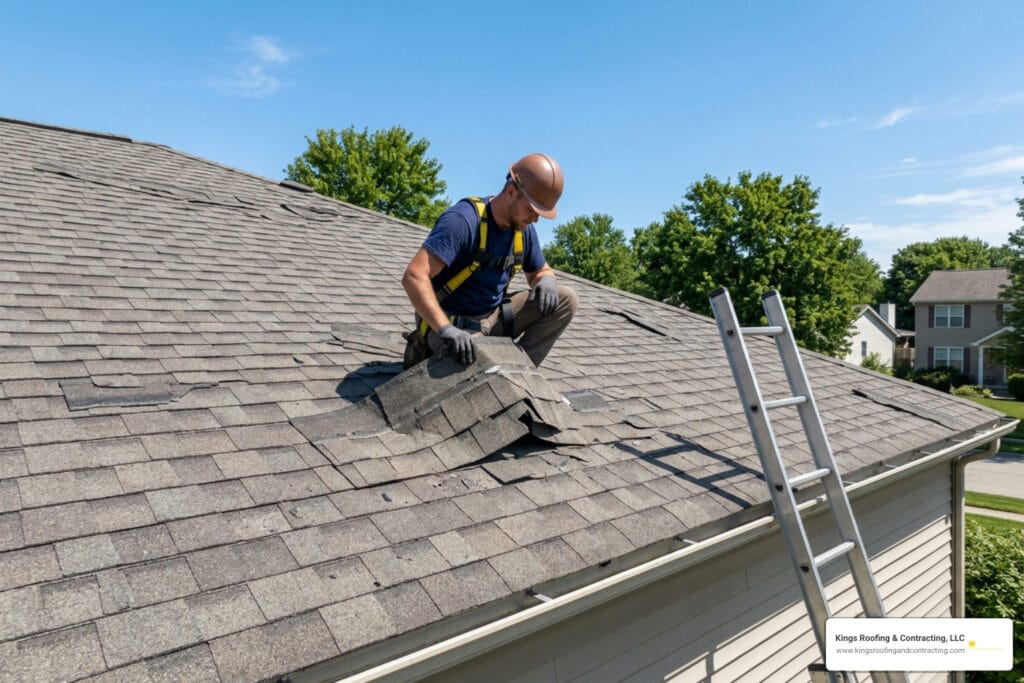
How to Choose a Dependable Asphalt Shingle Contractor After a Meridian Wind Storm
After severe wind, hire an Asphalt shingle contractor who can show current licensing, general liability and workers’ compensation insurance, factory certification, and a written scope covering tear-off, deck inspection, underlayment, flashing, ventilation, and cleanup. Ask who handles applicable Ada County permit requirements, request proof of insurance directly, and compare proposals line by line – not just by price. Kings Roofing & Contracting helps Treasure Valley homeowners assess storm damage with clear written estimates and system-focused recommendations.
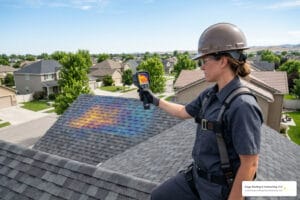
Meridian roofs face more than spring wind uplift. High-desert UV, wide temperature swings, winter snow load, and ice dams can turn a few lifted or creased shingles into leaks, wet decking, and costly interior repairs. A prompt inspection helps find damage before the next storm exposes it.
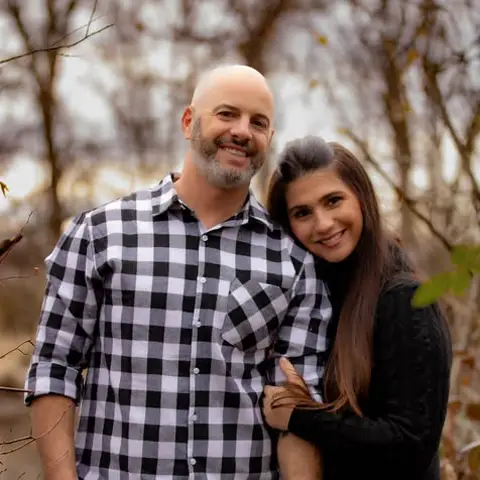
I am Ryan Santoro, owner of Kings Roofing & Contracting, LLC, with 24 years of construction experience across residential, commercial, remodeling, and roofing work. As an Asphalt shingle contractor serving the Treasure Valley, I focus on clear scopes, honest pricing, and fixes that address the full roofing system.
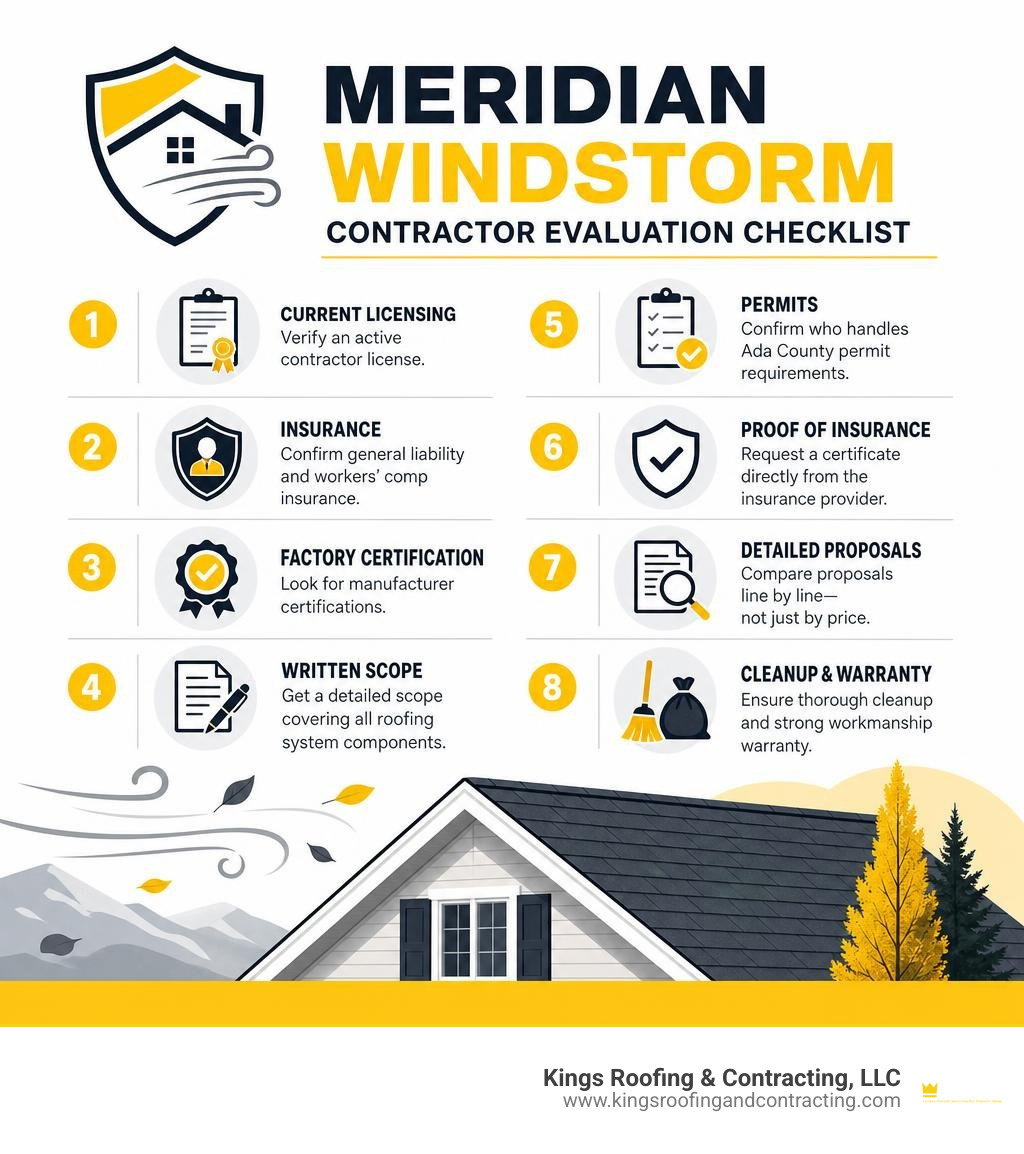
Simple Asphalt shingle contractor word guide:
Why Wind Storms in Meridian Demand Immediate Roof Inspections
A high-wind event in the Treasure Valley does not just blow shingles onto the lawn; it breaks the adhesive sealant strips bonding adjacent layers together, creating unsealed shingles that flutter silently and allow wind-driven moisture to bypass the primary water barrier. Spring gusts descending from the Boise Foothills often exceed 50 to 60 miles per hour, generating substantial negative pressure over roof ridges and eaves. When shingles lift, fine sand and airborne debris contaminate the thermal sealant bond underneath, permanently preventing self-resealing even during hot summer months.
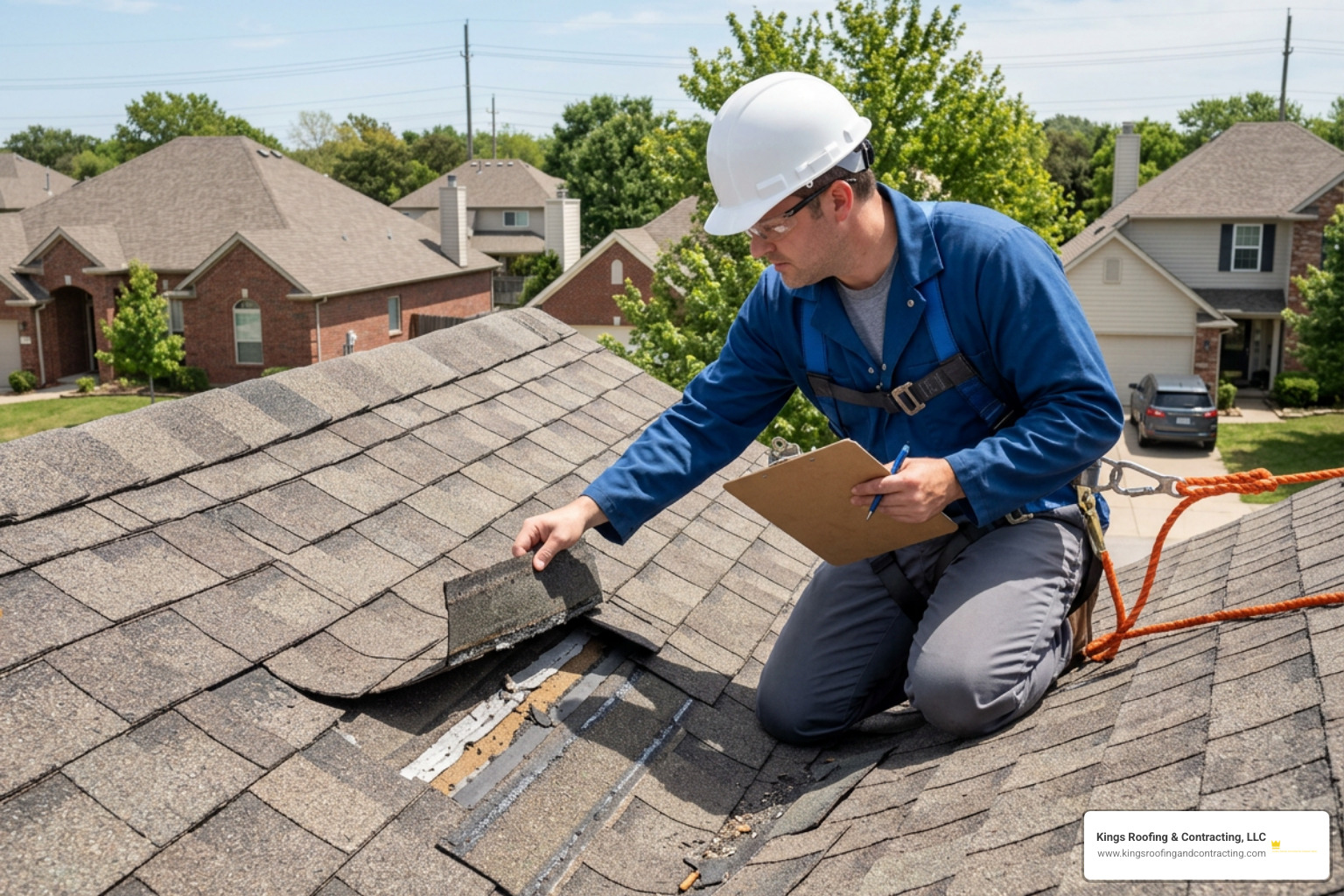
Prompt roof evaluations prevent compounding structural deterioration. High-desert UV radiation rapidly degrades exposed fiberglass reinforcement mats once the protective ceramic granules strip away. Furthermore, daily high-desert temperature swings—often exceeding 40 degrees Fahrenheit between midday heat and crisp mountain evenings—cause rapid thermal expansion and contraction. Unsealed tabs flex continuously under this thermal stress, resulting in horizontal creasing along the top edge of the shingle profile.
When winter arrives, these compromised sections fail under normal Treasure Valley snow loads. Snowmelt backs up along roof eaves, creating destructive ice dams that force meltwater upward under broken shingle joints. This hidden moisture saturates oriented strand board (OSB) or plywood roof decking, rotting the substrate long before a yellow ceiling ring appears in your living room. Promptly restoring wind damage stops this cascading failure cycle immediately.
Essential Qualifications to Demand from an Asphalt Shingle Contractor
You should never trust your home to an uninsured crew or an unverified operation working out of an unmarked truck. Professional roofing requires rigorous trade compliance, physical safety protocols, and proven business standing in our local community. Vetting your contractor protects you from personal liability if a worker falls and shields your finances against substandard installation practices that void manufacturer protection.
When searching for local Meridian roofing professionals, demand verifiable documentation upfront. A legitimate business maintains continuous standing with the Idaho Contractors Board, holds active general liability policies protecting your structural property, and carries complete statutory workers’ compensation coverage for every crew member stepping onto your roof. Furthermore, top-rated trade companies maintain active, complaint-free records with the Better Business Bureau and display transparent consumer feedback across vetted platforms.
Verifying Licenses, Insurance, and Ada County Permits for Your Asphalt Shingle Contractor
In Ada County, residential roof replacements require strict compliance with adopted International Residential Code (IRC) standards. A dependable roofing professional pulls all required local permits prior to beginning construction, ensuring that work passes municipal code inspections. Unlicensed operators frequently attempt to shift the permit burden onto the homeowner to bypass background checks and insurance audits, leaving you legally liable for code infractions.
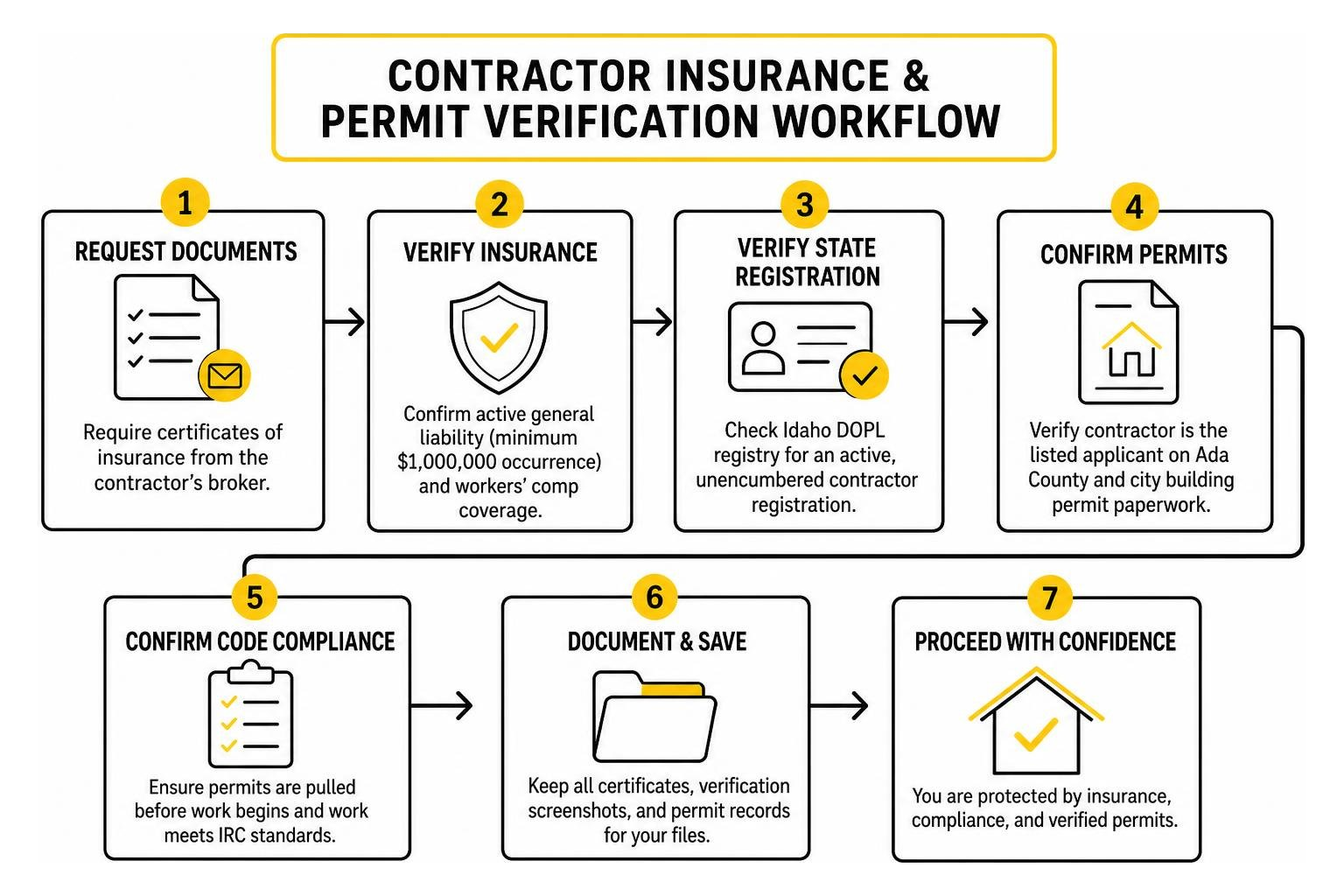
Always verify credential paperwork through these essential verification steps:
- Request Direct Certificates: Require the roofer’s insurance broker to email certificates of insurance for both general liability (minimum $1,000,000 occurrence limit) and workers’ compensation directly to your inbox.
- Verify State Registration: Search the Idaho Division of Occupational and Professional Licenses (DOPL) registry to confirm an active, unencumbered contractor registration number.
- Confirm Municipal Permitting: Verify that the contractor lists their business name as the primary applicant on all Ada County and city building permit paperwork.
- Check Bonding Status: Ensure the company carries standard commercial surety bonding, guaranteeing project completion according to contract terms.
Factory Certifications and Workmanship vs. Manufacturer Warranties
Homeowners are often surprised to learn that a standard factory shingle warranty covers only basic manufacturing defects in the shingle material itself—not installation mistakes, blow-offs from improper nailing, or rotten decking. If an uncertified installer drives a nail too high or penetrates the shingle at an angle, the manufacturer will deny your warranty claim entirely when shingles blow off during the next windstorm.
Achieving factory certification represents an elite standard in the roofing industry. For instance, GAF-certified roofers in Meridian, ID must demonstrate financial stability, continuous training, and adherence to manufacturer-specified fastening standards. Top-tier manufacturer credentials, such as CertainTeed SELECT ShingleMaster (earned by roughly 1–3% of contractors regionally) or GAF Master Elite status, allow contractors to offer extended non-prorated system warranties covering materials and certified labor for up to 50 years. Pairing genuine factory certification with an explicit, written contractor workmanship guarantee ensures your roof is protected against material defects and human error alike.
Critical Technical Details That Separate Durable Installations from Callbacks
A roof is an integrated water-shedding system, not just a layer of decorative shingles. Lasting durability relies on meticulous surface preparation, proper underlayment integration, precision fastening, and balanced attic ventilation.
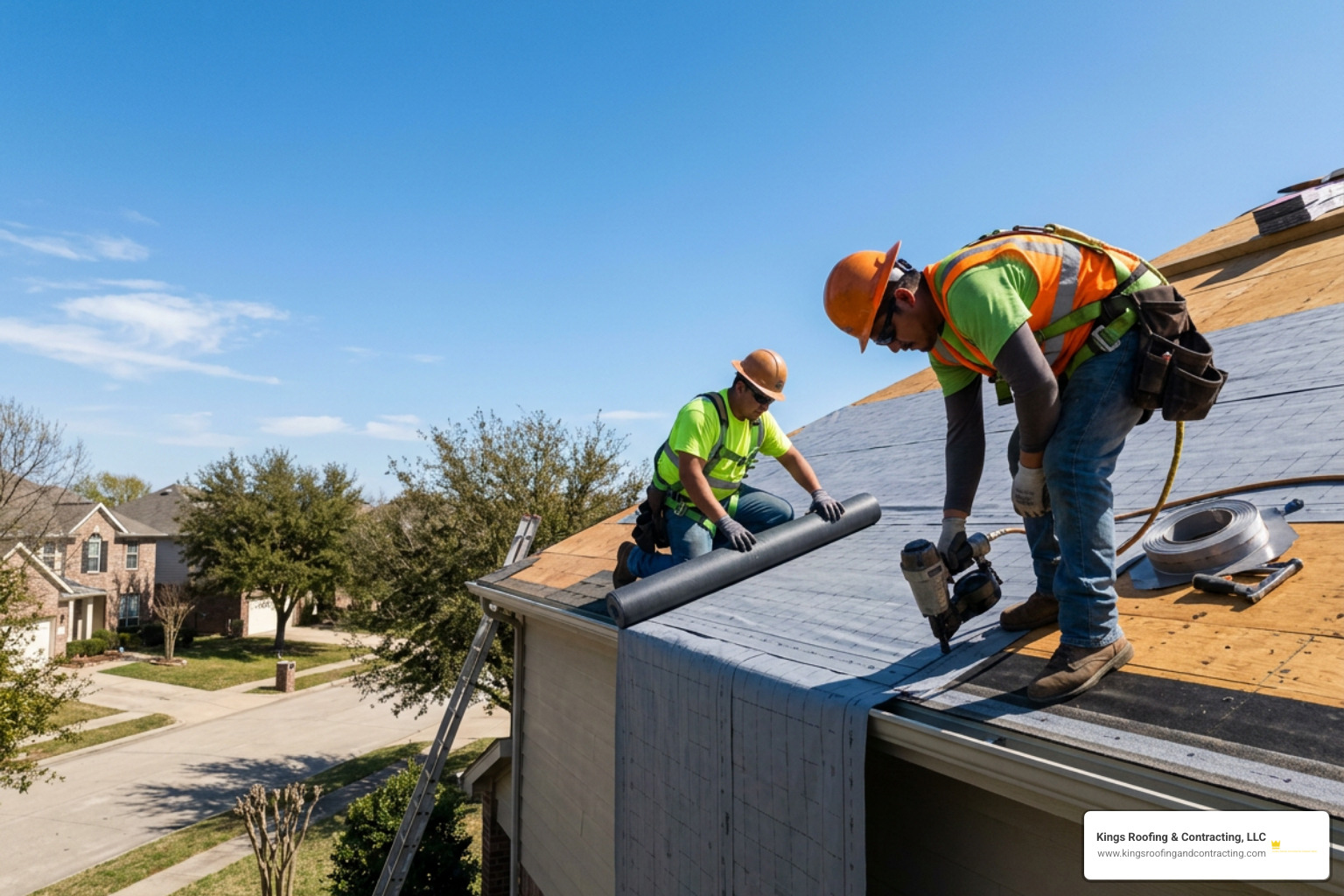
A high-performance installation requires complete removal of the existing roofing down to the bare wooden substrate. Overlaying new shingles across old, curled asphalt layers hides rotted structural decking, adds unnecessary dead load weight, and prevents the new shingles from sealing flat. Once stripped, sound decking must be secured, followed by a heavy-duty self-adhering ice and water barrier along the eaves, rakes, and valleys. Modern high-tear synthetic underlayment covers the field of the deck, outperforming traditional felt paper that wrinkles when damp.
Fastening accuracy dictates whether a roof survives sustained winds:
- Fastener Placement: Every shingle must be fastened within the manufacturer-designated nail zone, driven perpendicular to the roof plane until flush, without cutting through the shingle surface.
- 6-Nail Fastening Pattern: High-wind zones like Meridian require a 6-nail pattern rather than the standard 4-nail residential minimum, boosting wind resistance ratings up to 130 miles per hour.
- Dedicated Starter Courses: Factory starter strips featuring aggressive sealant adhesives must be mechanically fastened along all rakes and eaves to resist uplift forces.
- Valley Construction: Closed-cut or open-metal valleys lined with ice-and-water membranes ensure clean drainage during rapid snowmelt.
- Balanced Ventilation: Ridge vents and soffit intake pathways must be balanced at a 1:1 ratio to evacuate hot attic air during high-desert summers and eliminate moisture buildup during freezing winters.
Understanding these detailed construction principles is central to maintaining high-quality asphalt shingle roofing that performs reliably across every season.
Key Questions to Ask an Asphalt Shingle Contractor Before Signing
Protect your home by conducting an interview before executing a contract. Professional contractors welcome detailed inquiries and provide clear, direct responses:
- Who oversees the on-site crew daily? Ensure a designated, English-fluent site foreman or project manager remains on-site during tear-off and installation.
- Do you use direct employees or specialized trade crews? Know who is physically performing the labor on your roof and verify that all crew members are fully insured.
- What is your yard cleanup and magnetic sweep protocol? A reliable crew runs powerful multi-directional rolling magnets over grass, walkways, and driveways daily to collect stray roofing nails.
- How are weather delays and sudden rain events managed? The contractor must have commercial tarps and emergency sealing protocols ready if an unexpected storm rolls off the mountains during tear-off.
- What is the project milestone payment schedule? Avoid contractors demanding large cash deposits upfront; standard arrangements require minimal initial deposit with full balance due only upon final inspection and homeowner sign-off.
Comprehensive Scope of Work vs. Vague Proposals
A vague estimate is an open invitation for unexpected change orders, cost increases, and contentious disputes once your old roof is torn off. A professional proposal itemizes every material brand, accessory type, installation specification, and disposal protocol.
| Scope Element | Vague Estimate (High Risk) | Detailed Professional Scope (Low Risk) |
|---|---|---|
| Tear-Off Specification | “Remove old roof” | Full tear-off to bare wood substrate; debris disposal and haul-away fees included |
| Decking Inspection | “Check decking” | Inspect all wooden substrate; replace rotted sheeting at transparent, pre-agreed per-sheet unit rates |
| Underlayment System | “Standard paper underlayment” | Code-compliant ice & water shield at eaves/valleys; high-performance synthetic underlayment over entire deck |
| Fastening Specifications | “Nail down new shingles” | 6 nails per shingle driven into designated high-wind nailing zones using hot-dipped galvanized roofing nails |
| Flashing & Drip Edge | “Replace flashing as needed” | Install new heavy-gauge aluminum drip edge along all eaves/rakes; replace all step flashing, pipe boots, and chimney counter-flashing |
| Ventilation Integration | “Install roof vents” | Calculated intake/exhaust attic ventilation assessment; install matched continuous ridge vent and clear soffit airways |
| Warranty Details | “Standard 1-year warranty” | 50-year non-prorated manufacturer system warranty backed by a 10-year written contractor workmanship guarantee |
Carefully evaluating proposals helps you understand roof replacement costs without hidden fees before signing any binding paperwork.
Navigating Storm Damage Insurance Claims and Spotting Red Flags
Navigating storm restoration after severe wind requires clear photographic proof, methodical damage documentation, and honest claim representation. Unscrupulous out-of-state operators, commonly referred to as “storm chasers,” follow regional severe weather patterns to profit from rushed repairs. These entities canvass neighborhoods using aggressive door-to-door sales tactics, pressuring homeowners to sign immediate “Assignment of Benefits” contracts before disappearing when installation problems arise.
A reliable local contractor supports your insurance claim process ethically. They provide detailed storm damage assessment reports, utilize industry-standard Xactimate itemized pricing software, and meet directly with your insurance adjuster on the roof to ensure all damaged slopes, flashings, and collateral items are documented accurately.
Be alert to these warning signs when interviewing roofing sales representatives:
- Offering to “Cover” or “Absorb” Your Deductible: Waiving, rebating, or forgiving a property insurance deductible is illegal under insurance fraud statutes.
- Demanding Upfront Cash Endorsements: Never sign over an entire insurance claim payout check before materials arrive on your property and physical work begins.
- High-Pressure, Limited-Time Emergency Tactics: Reputable local contractors provide written estimates and give you adequate time to review specifications calmly.
- Unmarked Fleet Vehicles and Out-of-State License Plates: Ensure the contractor operates an established local facility with permanent ties to the Treasure Valley community.
- Absence of Online Verification: Cross-reference customer feedback on Google Business profiles and trade platforms like Caldwell, ID roofing reviews to confirm a sustained record of satisfied local clients.
Frequently Asked Questions About Hiring a Meridian Roofer
How quickly should storm-damaged shingles be repaired or replaced?
Emergency storm-damaged roof sections should be secured with waterproof tarps within 24 to 72 hours of initial damage to prevent progressive interior water damage, insulation contamination, and mold growth. Permanent restoration should follow as soon as the insurance adjustment process and municipal permitting are finalized.
Does homeowner insurance cover wind-damaged asphalt shingles in Ada County?
Yes, standard HO-3 and HO-5 homeowners insurance policies cover sudden and accidental wind damage caused by severe storms. If uplifted or missing shingles compromise the water-tight integrity of your roof slope, your insurer is responsible for the cost of repairing or replacing the damaged slopes minus your policy deductible.
What is the difference between architectural and 3-tab shingles for high-wind areas?
Traditional 3-tab shingles are manufactured from a single flat asphalt layer rated for wind speeds up to only 60 miles per hour, making them prone to tearing and wind-blowoff during severe storms. Modern architectural (dimensional) shingles feature a multi-layered laminated construction that provides superior structural strength, with high-wind ratings up to 130 miles per hour and available Class 4 impact resistance.
Conclusion: Securing Reliable Roofing Protection for Your Home
Safeguarding your home against the challenging climate of the Treasure Valley—from high-desert UV exposure and spring windstorms to winter snow loads and ice dams—requires an asphalt shingle roofing system built with precision craftsmanship. Choosing a properly licensed, fully insured, and factory-certified roofing partner ensures your investment will deliver lasting security and peace of mind for decades to come.
At Kings Roofing & Contracting, LLC, we bring 24 years of hands-on building experience to every project across Boise, Meridian, Eagle, Nampa, and Caldwell. As a GAF-certified roofing contractor, we provide upfront pricing, 24/7 emergency response, complete permitting coordination, and comprehensive system warranties. If you suspect your roof has suffered wind damage, reach out to our team to get an accurate estimate today and schedule your comprehensive, zero-pressure roof inspection.