What Does an Infrared Roof Inspection Cost in Boise?
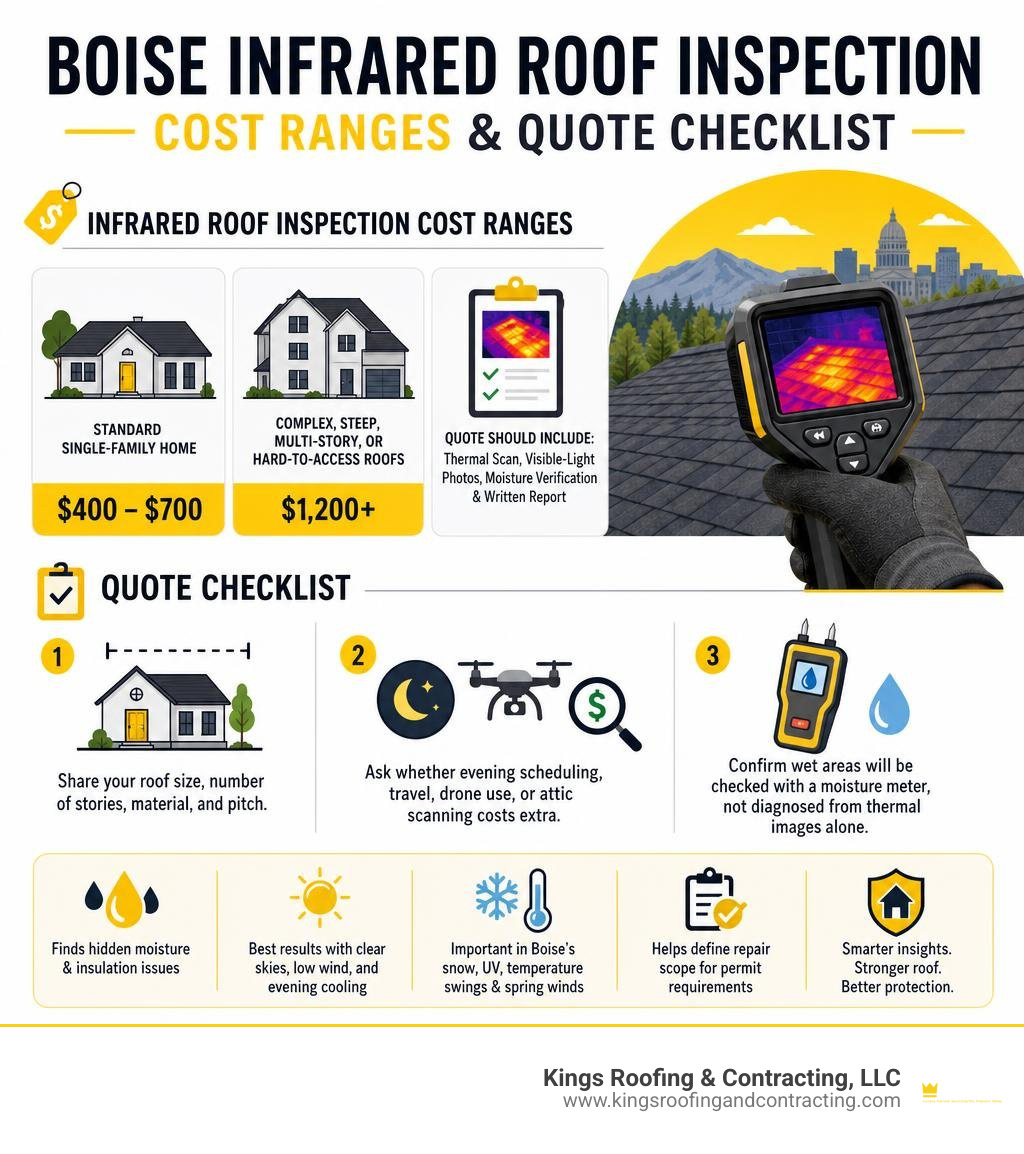
In Boise, the infrared roof inspection cost for a standard single-family home is usually $400 to $700, while complex, steep, multi-story, or hard-to-access roofs can reach $1,200 or more. Ask for a fixed written quote that includes the thermal scan, visible-light photos, moisture verification, and a written report before scheduling.
To get a useful estimate:
- Share your roof size, number of stories, material, and pitch.
- Ask whether evening scheduling, travel, drone use, or attic scanning costs extra.
- Confirm that suspected wet areas will be checked with a moisture meter, not diagnosed from thermal images alone.
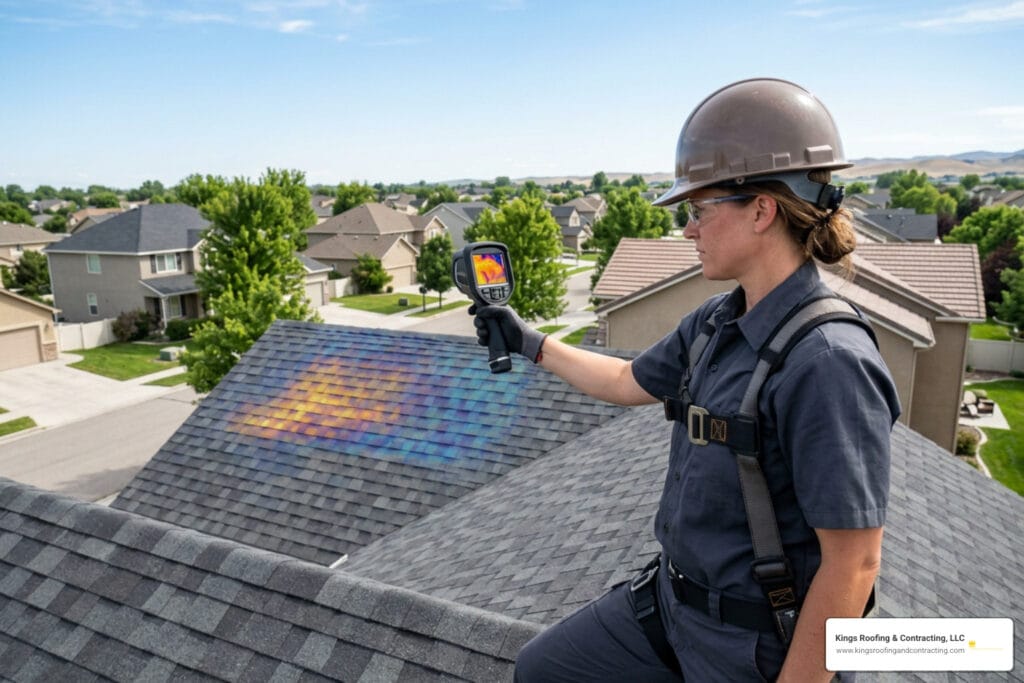
A thermal scan can find moisture and insulation problems that a visual inspection may miss. That matters in the Treasure Valley, where snow loads and ice dams, high-desert UV, wide temperature swings, and spring wind can all stress a roof. Clear skies, low wind, and evening cooling produce the strongest thermal contrast. Ada County permit requirements generally apply to repair or replacement work rather than the scan itself, but inspection findings can help define permitted repair scopes.
For clear pricing and condition-based recommendations, work with Boise roofing professionals who explain what the report means before recommending repairs.
I’m Ryan Santoro, owner of Kings Roofing & Contracting, LLC, with 24 years of construction and roofing experience across residential, commercial, remodeling, and multiple roof systems. I use that field experience to help Treasure Valley owners understand infrared roof inspection cost and decide when a thermal scan is worth the investment.
Infrared roof inspection cost vocab explained:
Average Infrared Roof Inspection Cost in 2026
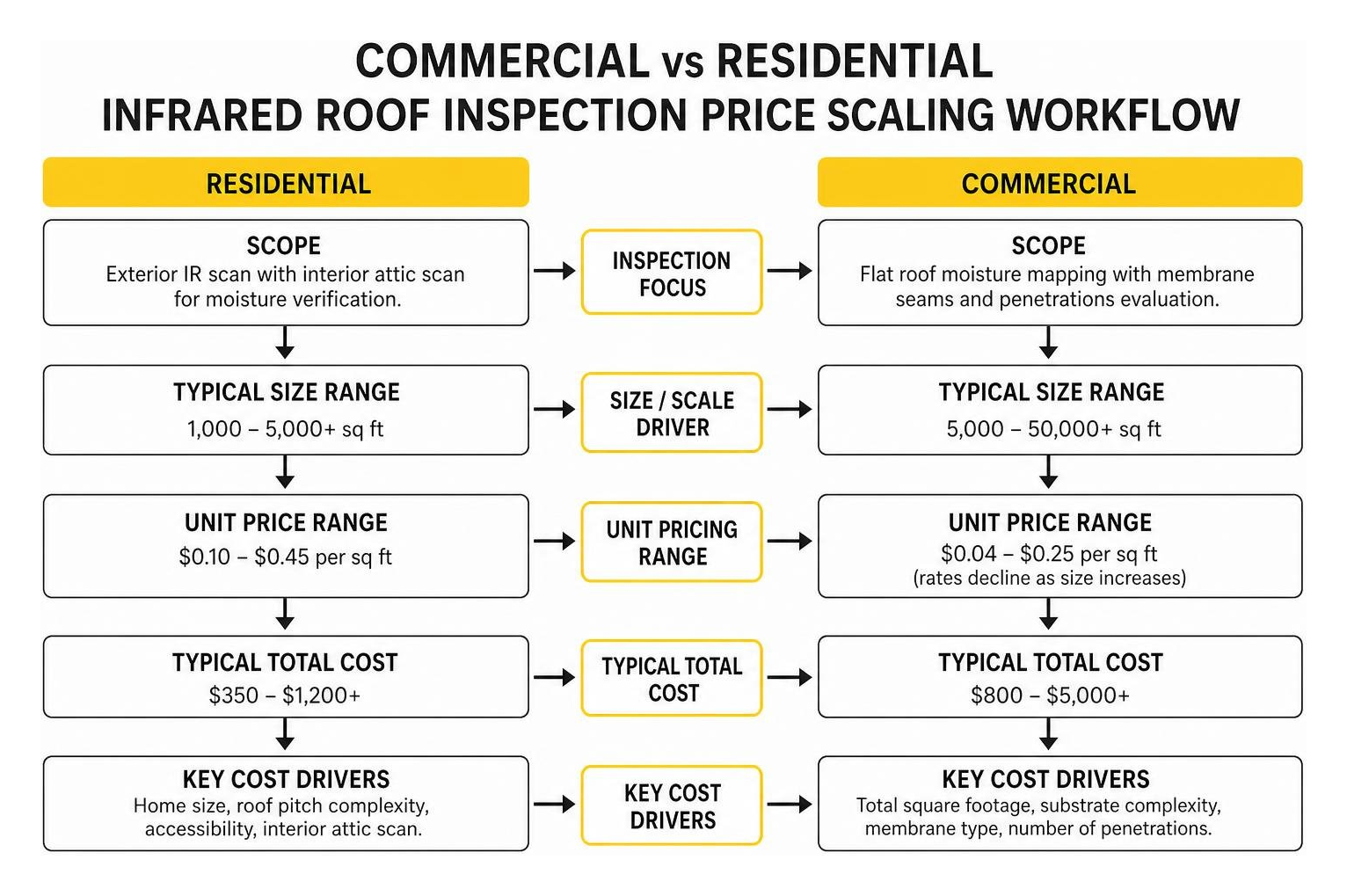
The national baseline cost for an infrared thermal roof survey sits at an average of $550, with most property owners paying between $300 and $1,200 depending on building parameters. Unit pricing typically spans between $0.10 and $0.45 per square foot across residential and light commercial projects.
Thermal imaging technology uses calibrated infrared cameras that detect subtle surface temperature differentials created by trapped moisture, degraded insulation, and structural air leakage. According to compiled roof inspection pricing benchmark data, these non-destructive surveys carry a 20% to 50% price premium over traditional physical walkthroughs due to the specialized radiometric equipment, evening labor requirements, and post-scan data processing needed to create accurate moisture maps.
| Property Type | Square Footage | Typical Price Range | Common Inclusions |
|---|---|---|---|
| Small Residential | 1,000 – 1,500 sq ft | $350 – $550 | Exterior thermal scan, digital defect photos, summary report |
| Standard Residential | 1,500 – 2,500 sq ft | $400 – $700 | Full exterior IR scan, attic interior scan, moisture meter verification |
| Large / Custom Home | 2,500 – 5,000+ sq ft | $700 – $1,200+ | Multi-pitch IR scan, drone thermal capture, comprehensive moisture map |
| Commercial (Small/Mid) | 5,000 – 10,000 sq ft | $1,200 – $2,500 | Core moisture mapping, membrane seam scan, CAD thermal overlay |
| Commercial (Industrial) | 20,000+ sq ft | $3,000 – $6,000+ | High-altitude aerial IR, penetrations check, targeted repair schedule |
Residential Infrared Roof Inspection Cost by Square Footage
For standard single-family residential homes in Boise, Eagle, and Meridian, square footage and elevation profiles serve as the foundation for baseline pricing. Single-story homes measuring 1,000 to 1,500 square feet with walkable pitches feature straightforward access, keeping service fees within the $350 to $550 window.
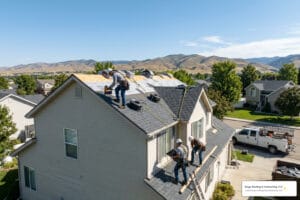
Homes expanding from 1,800 to 2,500 square feet average $450 to $700. In this tier, our inspectors combine external envelope scanning with interior attic space assessments to cross-reference heat loss pockets against suspected roof decking saturation. Larger custom residential properties throughout Ada County spanning 3,000 to 5,000 square feet require multiple thermal vantage points and extended scanning windows, moving total costs to $700 to $1,200. For an in-depth breakdown of standard evaluation protocols, review our comprehensive roof inspection guide.
Commercial Infrared Roof Inspection Cost Breakdown
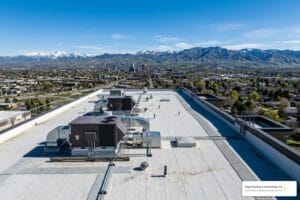
Commercial thermal roof inspections range from $800 to over $5,000, governed heavily by total square footage, substrate complexity, and membrane assembly types such as TPO, EPDM, PVC, and built-up roofing (BUR). Commercial pricing benefits from significant economies of scale: while a small 2,500-square-foot flat roof facility might demand $0.15 to $0.25 per square foot ($600 to $900 minimum), facilities exceeding 20,000 to 50,000 square feet in industrial corridors like Caldwell and Nampa frequently see unit rates decline to $0.04 to $0.10 per square foot.
Commercial flat roof inspections focus primarily on detecting saturated polyisocyanurate (polyiso) insulation boards beneath single-ply membranes. Wet insulation loses its thermal resistance (R-value) and accelerates deck corrosion, making early identification vital for avoiding complete commercial tear-offs that run $7.00 to $15.00 per square foot.
Key Factors That Drive Thermal Roof Inspection Pricing in Boise
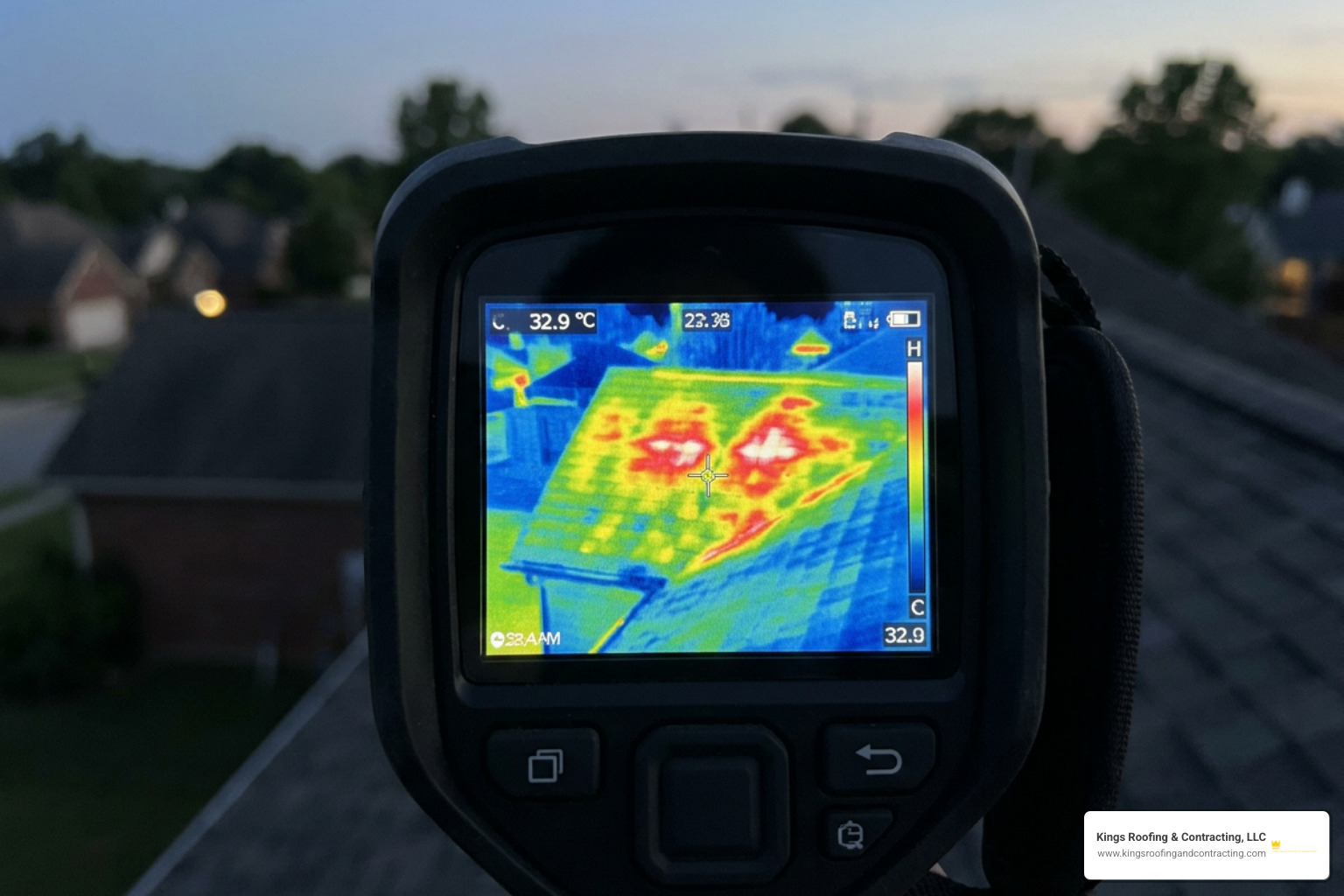
Pricing for thermal roof imaging is determined by structural geometry, environmental conditions, and inspector qualifications. High-resolution radiometric cameras produced by manufacturers like FLIR represent significant capital investments ranging from $5,000 to over $12,000, requiring precise calibration to separate true moisture signatures from simple material emissivity shifts.
Roof Size, Pitch, and Accessibility
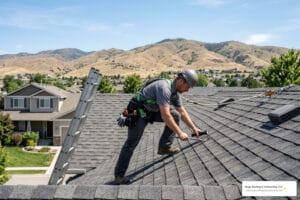
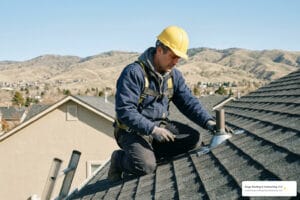
Roof architecture directly dictates the time, labor, and safety protocols required to execute an infrared scan. Standard walk-on scans work well for flat or low-slope structures with pitches up to 4/12. When roof slopes exceed an 8/12 or 9/12 pitch, walking the deck becomes hazardous, especially in low-light dusk conditions.
- Steep Pitches (>9/12): Require specialized rope-and-harness anchoring systems or advanced aerial drone thermography, increasing on-site setup times and adding $150 to $300 to standard labor rates.
- Architectural Complexity: Multiple dormers, intersecting valleys, parapet walls, and HVAC curbs create thermal shadows that require supplemental scans from diverse angles.
- Drone Thermography: High-resolution thermal drone flights provide rapid data collection over complex commercial footprints or hazardous slopes while maintaining full FAA Part 107 compliance.
- Regulatory Standards: While scans do not require municipal permits, any resulting structural repairs must adhere strictly to Ada County building codes and local snow load regulations.
Local Climate: Treasure Valley Temperature Swings and High-Desert UV
Boise’s high-desert environment presents specific thermal mechanics that dictate exactly when an infrared scan can occur. Infrared thermography relies on the principle of thermal capacitance: water has a high specific heat capacity, absorbing solar energy during the day and releasing it much slower than dry surrounding roofing materials once the sun sets.
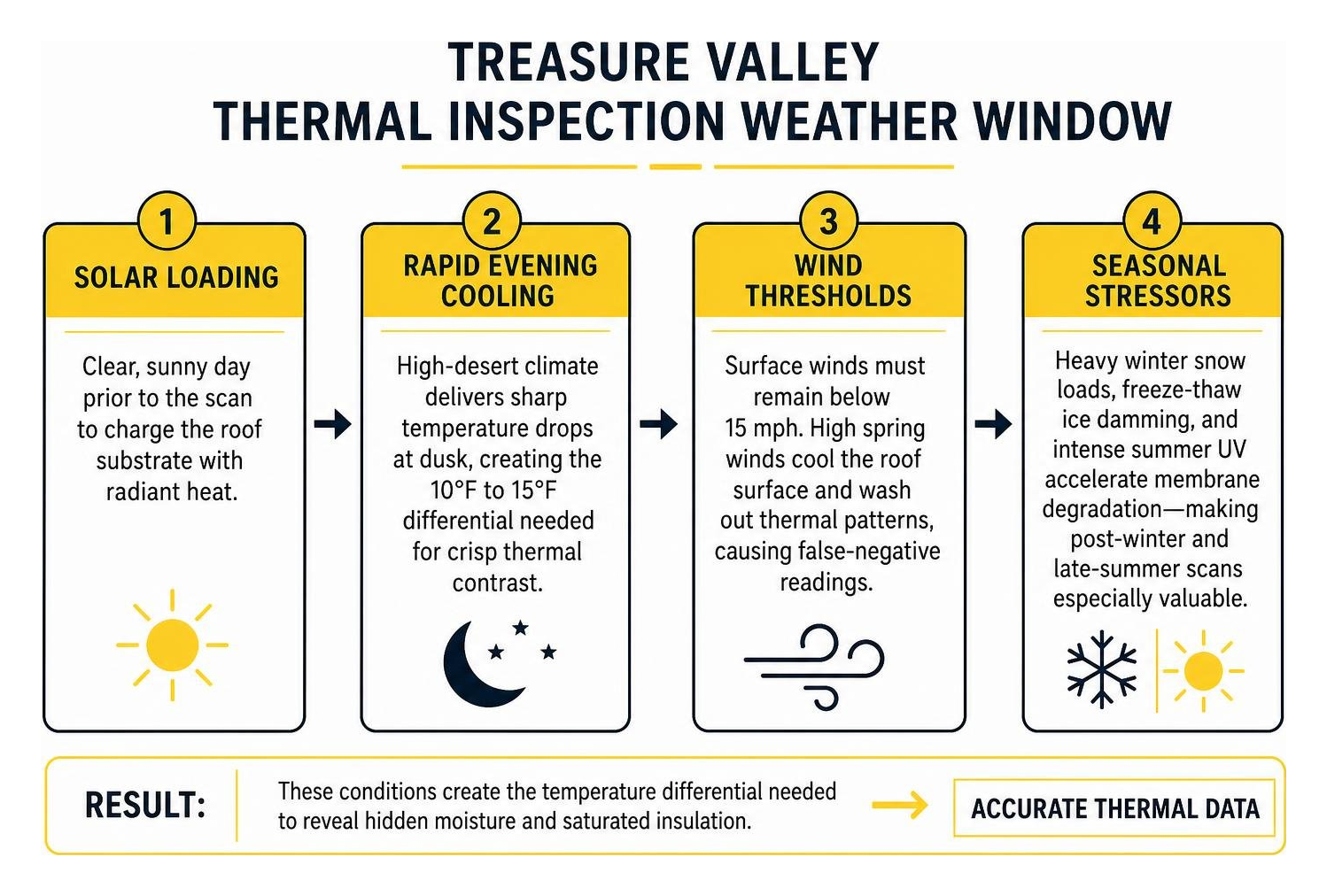
To capture accurate thermal data in the Treasure Valley, specific weather parameters are required:
- Solar Loading: A clear, sunny day prior to the scan is necessary to charge the roof substrate with radiant heat.
- Rapid Evening Cooling: The high-desert climate provides sharp temperature drops at dusk, creating the 10°F to 15°F differential needed for crisp thermal contrast.
- Wind Thresholds: Surface winds must remain below 15 mph. High spring winds in the valley cool the roof surface via convective heat transfer, washing out thermal patterns and causing false-negative readings.
- Seasonal Stressors: Heavy winter snow loads, freeze-thaw cycles that induce ice damming along eaves, and intense summer UV radiation accelerate membrane degradation, making post-winter and late-summer assessments particularly valuable. Learn more about managing storm-related vulnerabilities in our guide on weathering storm damage inspections.
How Infrared Roof Inspections Compare to Other Inspection Methods
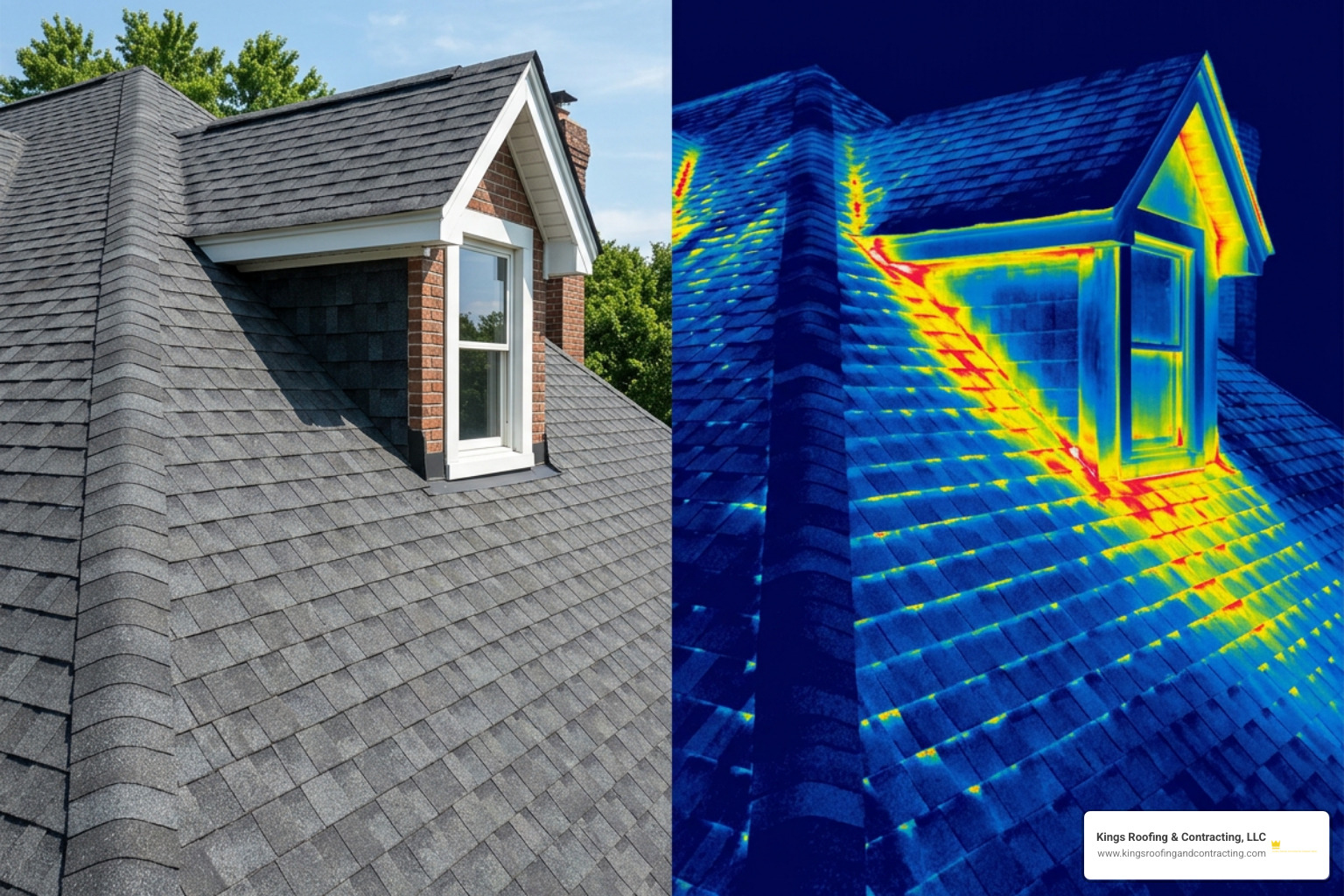
Property owners often evaluate whether an infrared survey provides enough distinct diagnostic value compared to traditional inspection methodologies. While standard evaluations rely purely on surface visual observations, thermography uncovers latent defects locked beneath the surface.
To explore non-destructive assessment options in detail, review thermal survey cost drivers and testing methods alongside our dedicated services for targeted non-invasive leak detection.
| Inspection Method | Typical Cost Range | Primary Use Case | Advantages | Limitations |
|---|---|---|---|---|
| Visual Walk-On | $150 – $350 | Routine annual checks, visible damage | Inexpensive, fast, checks surface wear | Cannot detect subsurface moisture or wet insulation |
| Standard Drone | $200 – $450 | High-pitch roofs, multi-story homes | Safe, high-res daylight photography | Limited to visible exterior shingle/flashing flaws |
| Infrared / Thermal | $400 – $1,200 | Hidden leak detection, energy audits | 100% non-destructive, maps trapped moisture | Weather-dependent, requires evening scanning |
| Core Sampling | $300 – $600 | Verifying flat roof deck layers | Definite cross-section material check | Destructive (creates holes that must be patched) |
| Nuclear Moisture | $800 – $2,500 | Large-scale commercial flat roofs | Precise quantitative moisture readings | Expensive, requires radioactive isotope licensing |
When to Schedule an Infrared Scan and Expected ROI
Investing $400 to $1,000 in a professional thermal inspection produces direct financial returns by shifting roof management from emergency repairs to predictive maintenance.
Key triggers for scheduling an infrared inspection include:
- Pre-Solar Panel Installation: Solar racking systems remain mounted on roofs for 20 to 25 years. Verifying that the underlying substrate and decking are completely dry prevents the costly requirement of removing solar arrays to execute premature roof repairs.
- Real Estate Transactions: Standard home inspectors cannot see inside roof assemblies. An infrared inspection provides negotiating leverage by discovering hidden moisture before closing.
- Post-Hail and Wind Storms: Hail impacts can fracture shingle fiberglass mats or puncture flat roof membranes without leaving visible surface holes. Thermal scans identify internal water intrusion pathways early.
- Preventative Energy Audits: Wet insulation conducts heat rapidly, stripping buildings of energy efficiency. Pinpointing and replacing isolated damp batts or polyiso boards restores designed R-values, trimming 10% to 30% off monthly utility costs.
- Preserving Asset Life: Replacing 500 square feet of wet commercial insulation costs a fraction of a full $60,000 tear-off, extending the existing roof assembly’s functional lifespan by 5 to 10 years. Track critical maintenance milestones using our preventative roof maintenance checklist.
Frequently Asked Questions About Infrared Roof Inspections
What is the average price of an infrared roof scan in Boise?
In Boise, Meridian, Eagle, and Caldwell, residential infrared roof scans average between $400 and $700 for a standard home up to 2,500 square feet. Commercial property scans typically start at a baseline call-out fee of $800 to $1,200 for structures up to 5,000 square feet, with larger industrial facilities priced between $0.04 and $0.12 per square foot based on total area and access requirements.
How does thermal imaging detect trapped moisture beneath the roof?
Thermal cameras do not “see” water directly; they detect the infrared radiation emitted by surfaces as heat. Because water has a higher thermal capacitance than dry insulation, wood decking, or asphalt, moisture traps solar heat during the day and releases it much slower after sunset. During evening cooling, areas with subsurface moisture show up as distinctly warmer, brighter anomalies on the camera display. Certified thermographers then confirm these warm zones using non-destructive electronic moisture meters.
Is an infrared roof inspection worth the investment?
Yes. Detecting a hidden roof leak early typically costs between $500 and $1,000 to repair. If left unchecked, that same leak can rot roof trusses, saturate insulation, cultivate mold, and compromise drywall, resulting in remediation expenses exceeding $10,000 to $50,000. For commercial building owners, thermal moisture mapping allows for surgical patch repairs that eliminate the need for premature, full-scale roof replacements.
Conclusion
Infrared roof inspections provide non-destructive diagnostic certainty that visual checks cannot match. By accurately mapping subsurface moisture pockets, insulation gaps, and storm damage paths, property owners throughout the Treasure Valley avoid costly structural rot and unnecessary full roof tear-offs.
At Kings Roofing & Contracting, LLC, our GAF-certified team delivers comprehensive thermal evaluations backed by calibrated imaging equipment, electrical moisture meter verification, and transparent reporting. Whether you own a residential home in Eagle or manage an industrial facility in Caldwell, we provide clear, data-backed guidance to protect your investment.