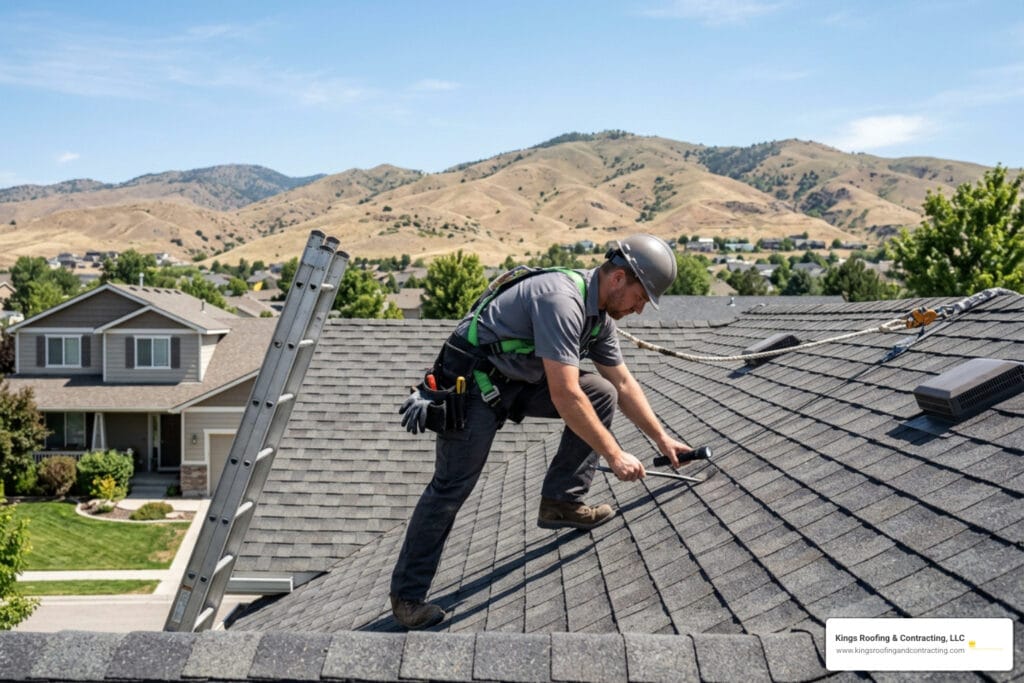
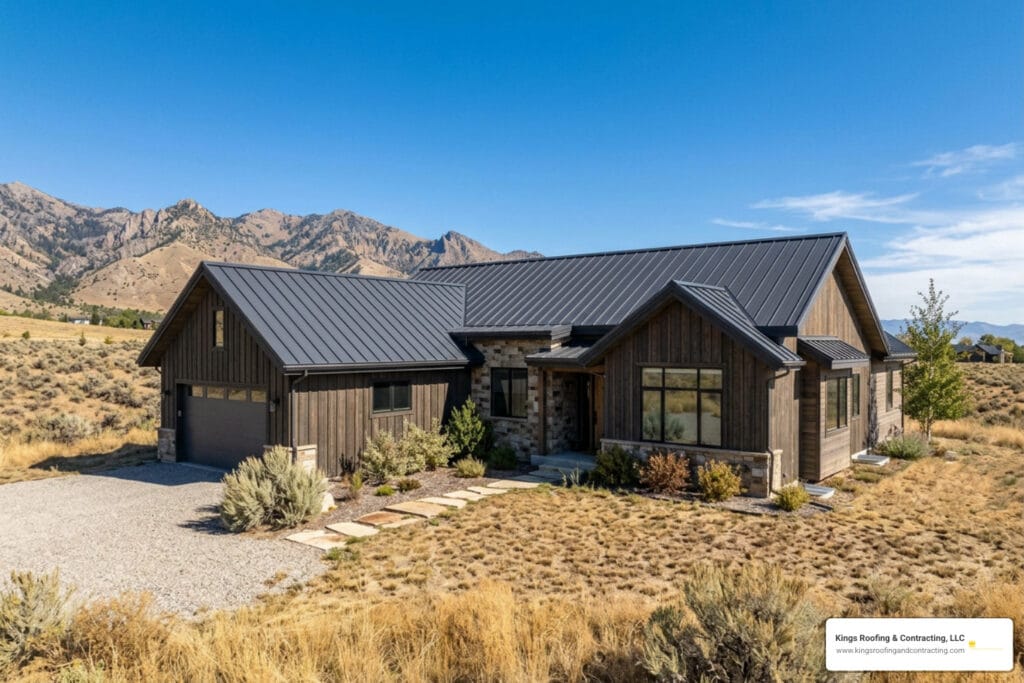
Choosing the Right Metal Roofing in Idaho
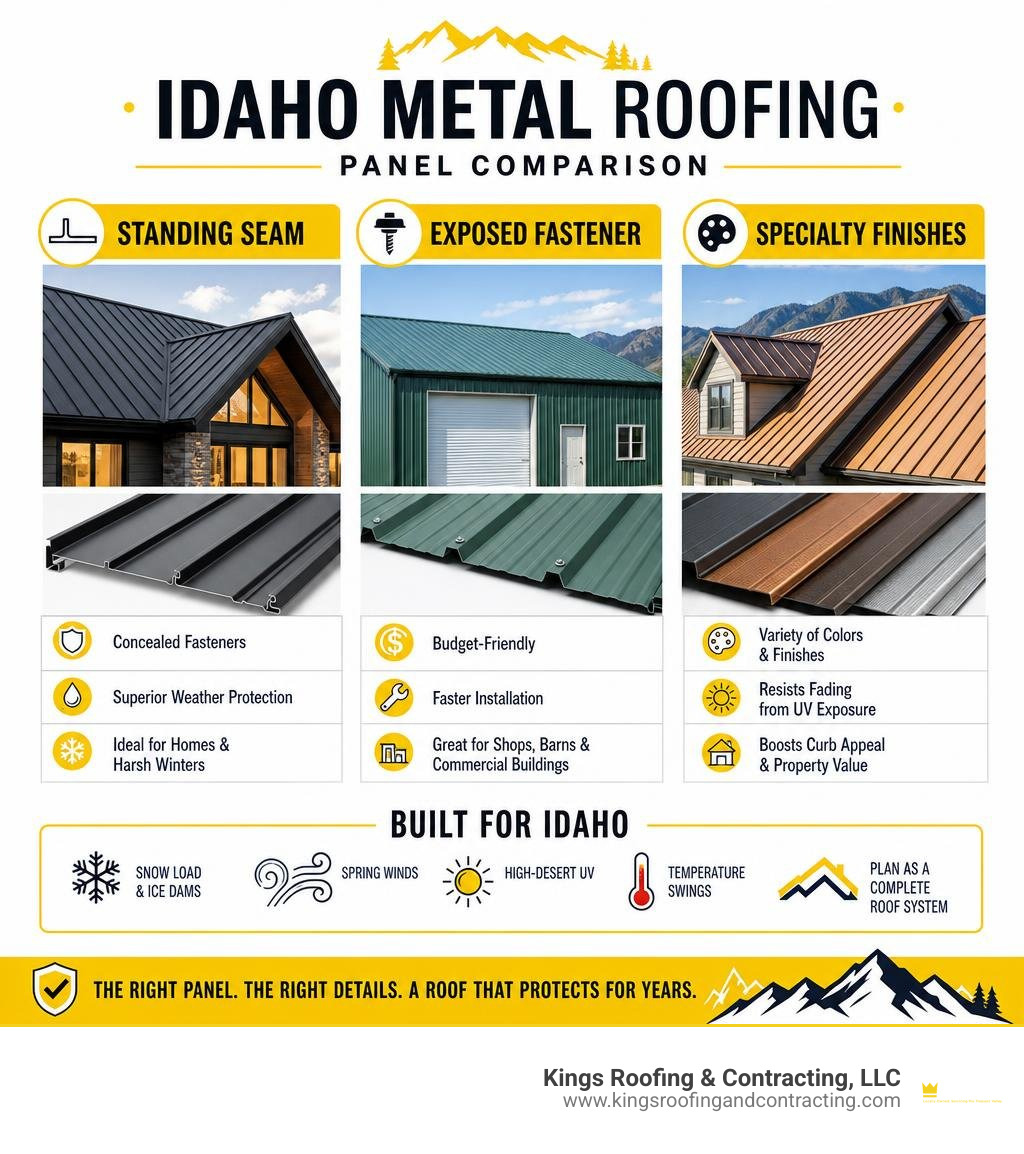
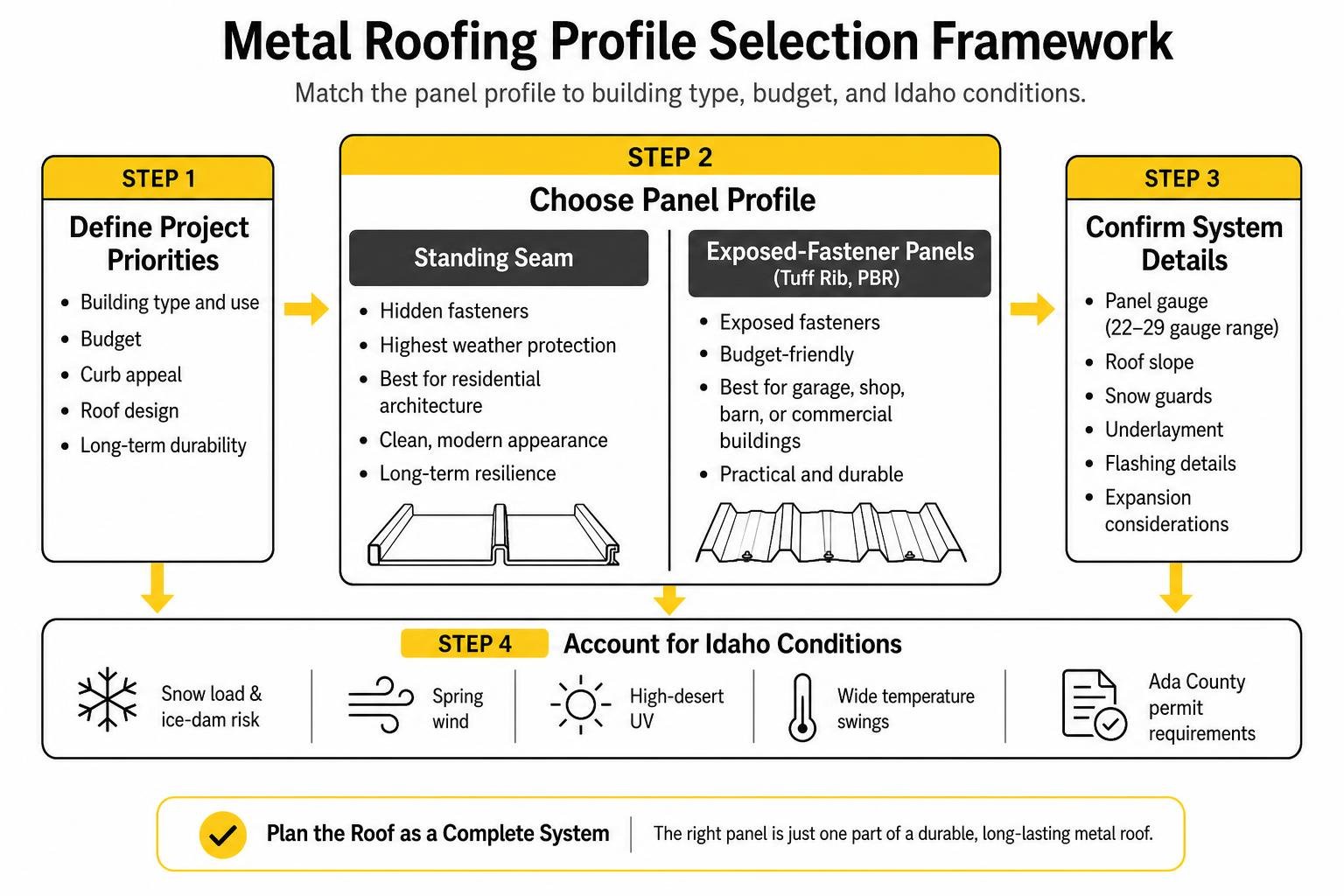
For metal roofing Idaho homeowners in the Treasure Valley, the best choice usually comes down to the building type and winter risk: choose standing seam for a long-term residential roof with hidden fasteners and strong weather protection, or choose exposed-fastener panels such as Tuff Rib or PBR for a more budget-friendly garage, shop, barn, or commercial building. Panel gauge, roof slope, snow guards, underlayment, and flashing details matter as much as the panel itself.
Idaho roofs must handle more than rain. Treasure Valley homes face snow load and ice-dam risk in winter, spring wind, intense high-desert UV, and wide temperature swings that make proper expansion details essential. Ada County permit requirements also apply to many reroofing and structural projects, so the roof system should be planned as a complete assembly, not simply a set of metal sheets.
At Kings Roofing & Contracting, we help Boise-area homeowners compare metal panels based on budget, curb appeal, roof design, and the conditions their home actually faces.
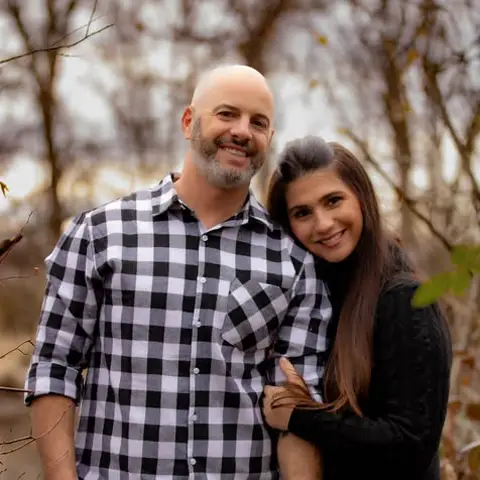
I am Ryan Santoro, owner of Kings Roofing & Contracting, LLC, with 24 years of experience across residential, commercial, remodeling, and roofing work. That hands-on background helps me guide homeowners through metal roofing Idaho options without overlooking the details that prevent leaks and costly repairs.
Simple guide to metal roofing idaho:
Core Panel Profiles for Metal Roofing Idaho Projects
Selecting the right profile requires balancing structural panel thickness, roof pitch, weather exposure, and overall architectural goals. In the Treasure Valley, steel thickness generally ranges from lightweight 29-gauge panels up to robust 22-gauge commercial-grade sheets. Thicker gauges (lower numbers like 24-gauge and 22-gauge) provide superior resistance to oil-canning, hail impacts, and high wind uplift, while thinner gauges (28-gauge or 29-gauge) offer a cost-effective alternative for utility structures.
Standing Seam Metal Roofing Idaho Systems
Standing seam delivers the highest level of weather protection for residential architecture across Boise, Meridian, and Eagle. Because the fasteners remain completely concealed beneath the raised interlocking ribs, standing seam systems eliminate thousands of surface penetrations that could otherwise become future leak points.
These panels are commonly fabricated in 24-gauge or 26-gauge steel, offering standard widths of 12 to 18 inches with vertical rib heights between 1 inch and 1.5 inches. Because metals naturally expand and contract as daily temperatures swing, standing seam utilizes concealed clips or slotted fastening flanges. These clips allow panels to glide smoothly along the roof deck without backing out screws or stressing the metal. Homeowners investing in standing seam panels enjoy a clean, modern aesthetic with unmatched long-term resilience against driving rain and heavy winter snow.
Exposed Fastener Panels: Tuff Rib, PBR, and Corrugated
Exposed fastener systems—such as Tuff Rib, PBR (Purling Bearing Rib), Pro Panel, and traditional corrugated metal—are workhorse profiles widely deployed across Caldwell, Nampa, and rural Treasure Valley properties. These panels typically feature 36-inch coverage widths and rib heights ranging from 3/4 inch to 1-1/4 inches.
Unlike concealed systems, exposed fastener panels are screwed directly through the exterior surface of the metal into the roof decking or purlins using hex-head screws fitted with neoprene or EPDM rubber washers. While these systems offer a significantly lower upfront material and installation cost, the rubber washers degrade under prolonged high-desert solar exposure. As a result, exposed fastener roofs require routine maintenance, including screw inspections and eventual washer replacements every 10 to 15 years to prevent water intrusion.
| Feature | Standing Seam | Exposed Fastener (Tuff Rib / PBR) | Corrugated (2.5″) |
|---|---|---|---|
| Fastener Style | Concealed (Clips / Flanges) | Exposed (Hex Screws with Washers) | Exposed (Hex Screws with Washers) |
| Common Gauges | 24ga, 26ga | 26ga, 28ga, 29ga | 24ga (Corten), 26ga, 28ga |
| Typical Coverage | 12″ – 18″ | 36″ net coverage | 22″ (roof) / 24″ (wall) |
| Primary Use | High-end residential & commercial | Agricultural, workshops, residential | Accent walls, rustic siding & roofing |
| Maintenance Need | Very low (No exposed washers) | Moderate (Washer checks every 10-15 yrs) | Moderate (Screw & washer maintenance) |
| Relative Cost | Premium investment | Budget-friendly | Economical / Mid-tier |
Architectural Wood-Look, Copper, and Specialty Metal Profiles
For homeowners seeking distinct curb appeal, manufacturers now produce specialty metal products ranging from digital woodgrain prints to architectural metals. Modern 26-gauge digital print steel panels accurately replicate natural wood textures—such as Natural Cedar, Cedar Gray, and Barnwood Plank—without the rot, fire hazards, or high maintenance of authentic timber siding.
Homeowners also explore timeless architectural metals such as weathering Corten steel and authentic copper. Reviewing copper standing seam durability highlights how premium natural metals develop a self-protecting patina that lasts for generations. These distinctive finishes, along with structural Board & Batten metal wall profiles, allow Treasure Valley properties to achieve a refined modern-rustic design that stands out in any neighborhood.
Idaho Climate Performance: Engineering for Snow, Sun, and Wind
Treasure Valley weather places unique demands on exterior building envelopes. A properly engineered metal roof must easily transition from freezing winter blizzards to blistering summer heatwaves while standing firm against intense spring windstorms.
Managing Treasure Valley Snow Load and Freeze-Thaw Cycling
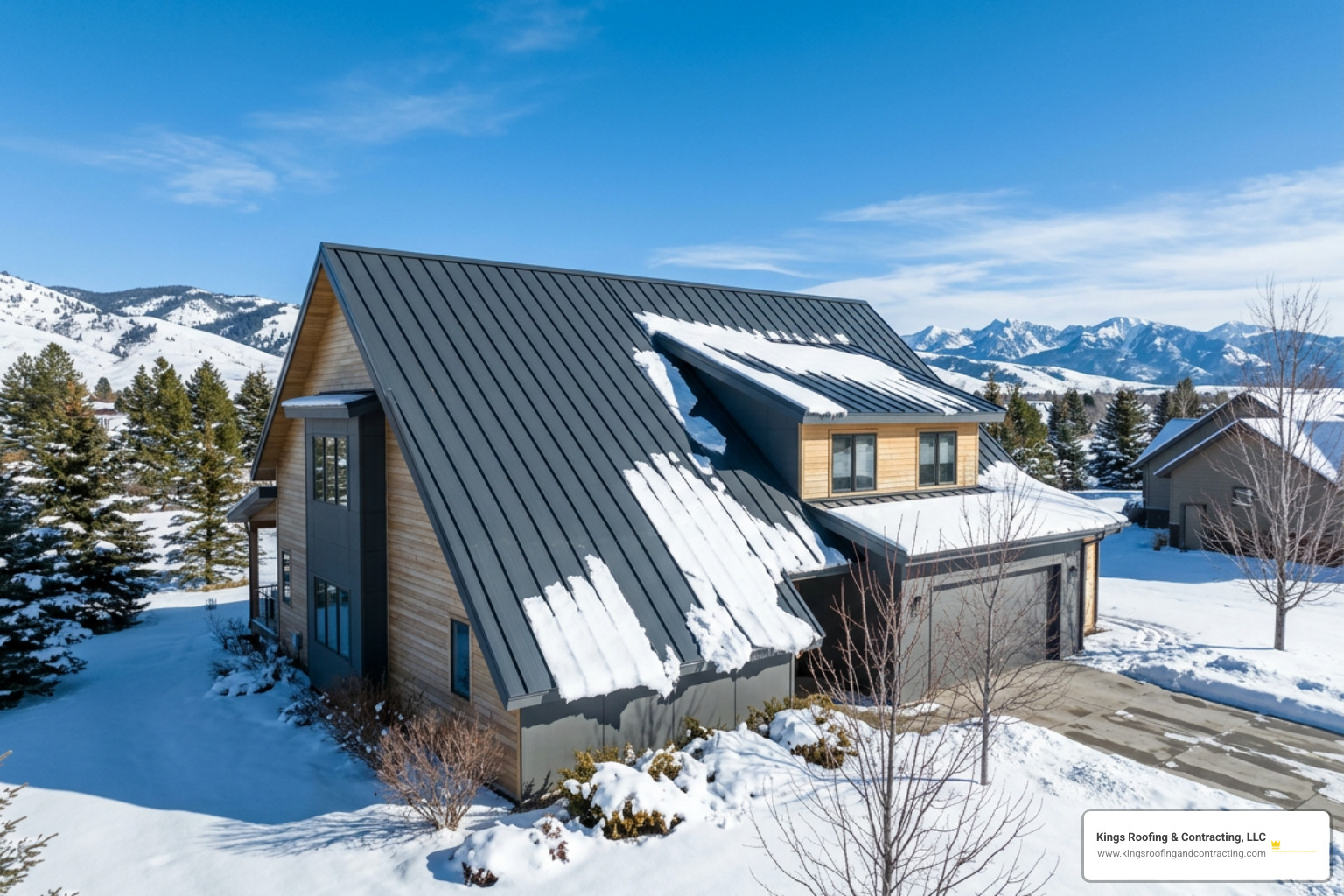
Treasure Valley winters bring heavy, wet snow accumulations, creating substantial snow load and ice dam risks along low-pitch eaves, valleys, and overhangs. Unlike asphalt shingles that absorb tiny amounts of moisture and lose mineral granules during repeated freeze-thaw cycles, steel metal roofing is completely non-porous. It does not crack, delaminate, or absorb meltwater.
Standing seam panels allow snow and ice to slide off smoothly because there are no protruding screw heads to catch the pack. On steep pitches, this sudden shedding can create a hazard above walkways and doorways. Installing engineered color-matched snow guards holds snow in place so it melts gradually into gutters. Professional engineering also ensures the entire system complies with strict Ada County permit requirements and resists strong spring wind gusts exceeding 60 mph without panel uplift.
High-Desert UV, Paint Systems, and Ventilation Solutions
Summers in Southern Idaho produce intense high-desert UV and wide temperature swings between daytime highs and cool desert nights. Standard paint coatings can fade rapidly under this solar radiation. To prevent premature chalking and color fade, premium metal panels utilize advanced paint finishes such as WeatherXL™ Silicone-Modified Polyester (SMP) or PVDF (Kynar 500®) coatings, which carry comprehensive 40-year paint warranties.
Extreme thermal shifts also generate internal attic moisture when warm indoor air meets a cold roof deck. Maintaining continuous soffit-to-ridge attic airflow and using appropriate vapor barriers prevents moisture accumulation. Homeowners focused on preventing metal roof condensation should prioritize balanced intake and exhaust ventilation. This keeps attic spaces dry while cool-roof pigments reflect solar heat to significantly lower summer air conditioning loads.
Sourcing, Custom Trims, and Essential Installation Components
A dependable metal roof relies on precision-formed flashing packages and high-grade underlayments working together as a watertight barrier.
Local Manufacturing, Custom Flashings, and Lead Times
Local manufacturing operations in the Treasure Valley give contractors and property owners distinct advantages in quality control and schedule flexibility. Facilities specializing in Boise metal panel manufacturing roll-form panels directly to custom project lengths, virtually eliminating jobsite material waste.
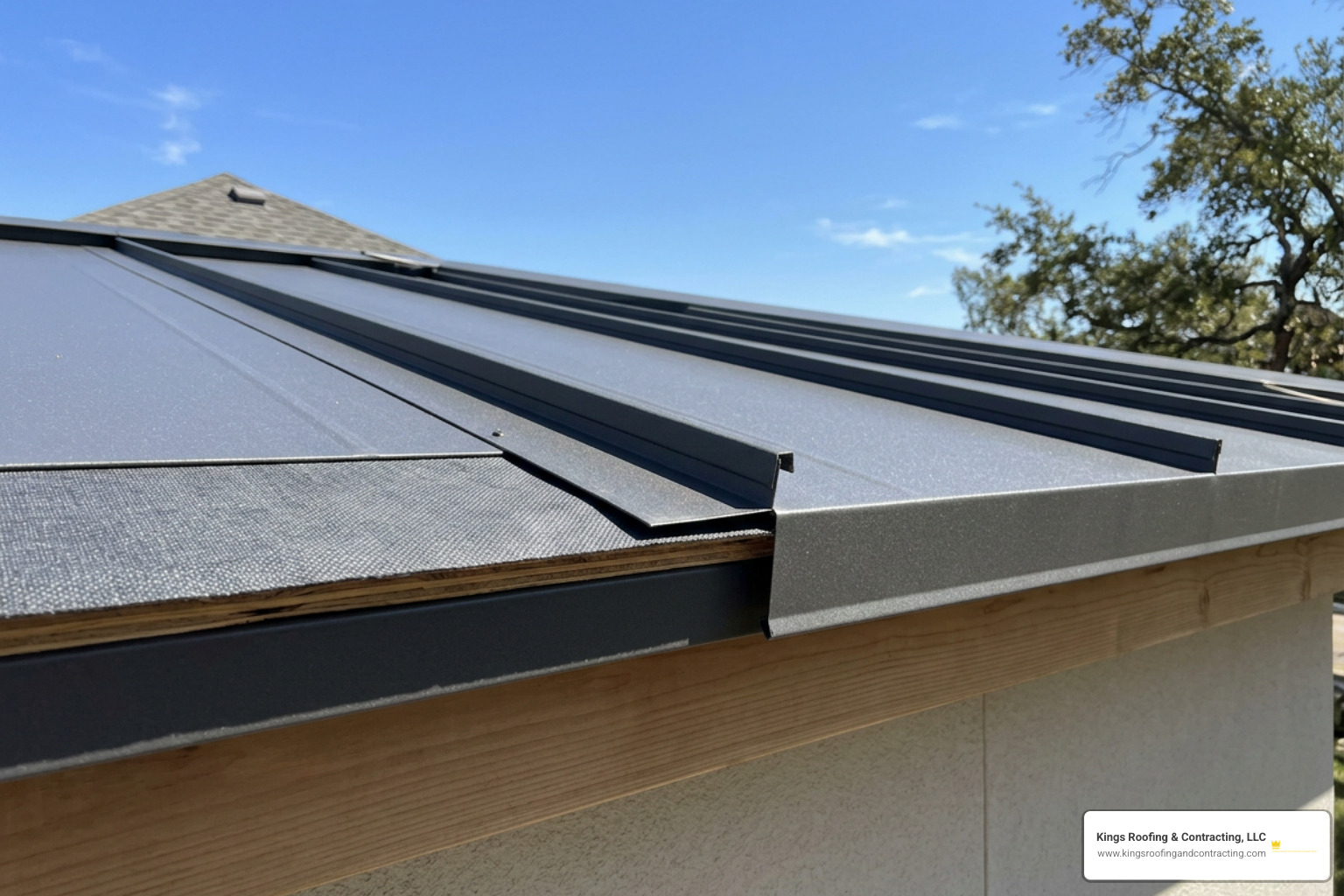
Working with established regional steel suppliers also allows custom fabrications of complex flashings—such as chimney crickets, valley liners, and custom transition trims up to 20 feet long. This regional supply chain shortens lead times, provides walk-in pickup access for additional trim pieces, and ensures complete color consistency across all project accessories.
Underlayments, Fasteners, and Flashing Details for Metal Roofing Idaho Homes
The protective layers beneath the steel panels are critical to long-term roof performance. High-performance synthetic underlayments, such as heavy-duty Sharkskin® membranes, provide superior tear resistance and secondary water protection compared to standard asphalt felt.
Critical system components include:
- Self-Adhering Ice-and-Water Shields: Applied along all eaves, valleys, and low-slope roof transitions to defend against freeze-thaw ice backup.
- Color-Matched Fasteners: High-grade screws equipped with UV-resistant EPDM washers or heavy-gauge concealed clips matched to the panel profile.
- Formed Closure Strips: Profile-cut foam or metal closures placed at ridge caps and eaves to block wind-driven rain, snow infiltration, and insect entry.
- Flexible Pipe Boots: High-temperature silicone or EPDM flashing boots that seal plumbing vent penetrations against roof leaks.
Frequently Asked Questions About Metal Roofing in Idaho
How long does a metal roof last in the Boise climate?
A quality metal roof will easily last 50 to 70 years or more in the Boise climate when professionally installed. The dry high-desert environment minimizes rust risks, while advanced SMP and PVDF paint systems carry 40-year warranties against chalking, fading, and peeling.
Can homeowners purchase metal panels directly from local Idaho manufacturers?
Yes, most regional metal manufacturers sell directly to homeowners, owner-builders, and licensed contractors alike. However, ordering cut-to-length panels requires precise architectural takeoffs, exact trim design calculations, and detailed panel schedules to avoid costly measurement mistakes on custom orders.
How do metal roof colors affect energy efficiency in Southern Idaho?
Lighter colors and specialized reflective finishes bounce radiant heat away from the home, lowering attic temperatures by up to 30 degrees during hot summer months. Even deep tones like dark bronze standing seam roofs utilize cool-roof ceramic pigments engineered to reflect infrared solar radiation, keeping cooling utility costs low without sacrificing curb appeal.
Conclusion
Upgrading to a high-performance metal roofing system provides Treasure Valley homes with lasting durability, fire resistance, and architectural style. Whether you choose the clean lines of standing seam or the practical strength of exposed fastener panels, proper installation makes all the difference in withstanding local snow loads, high wind events, and scorching summer sun.
At Kings Roofing & Contracting, LLC, our GAF-certified team brings transparent pricing, dedicated craftsmanship, and full compliance with Ada County permit requirements to every project. If you are ready to evaluate metal panel profiles for your home or need a professional assessment, contact our experienced Boise roofing contractors today to schedule your consultation.