What to Do When You Need Storm Damage Roof Replacement Near Me
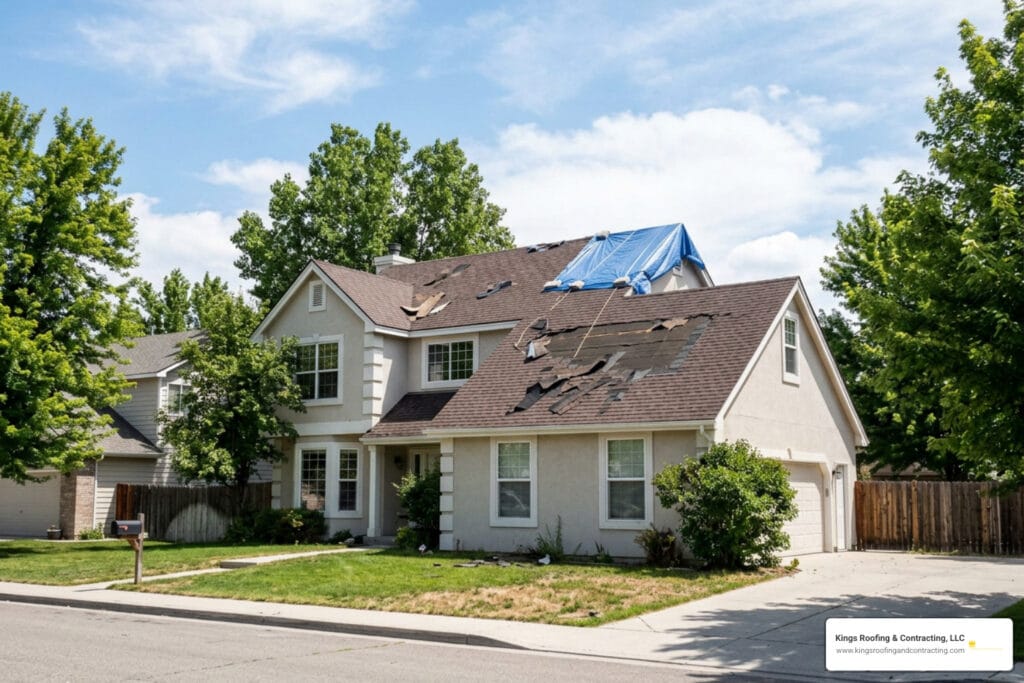
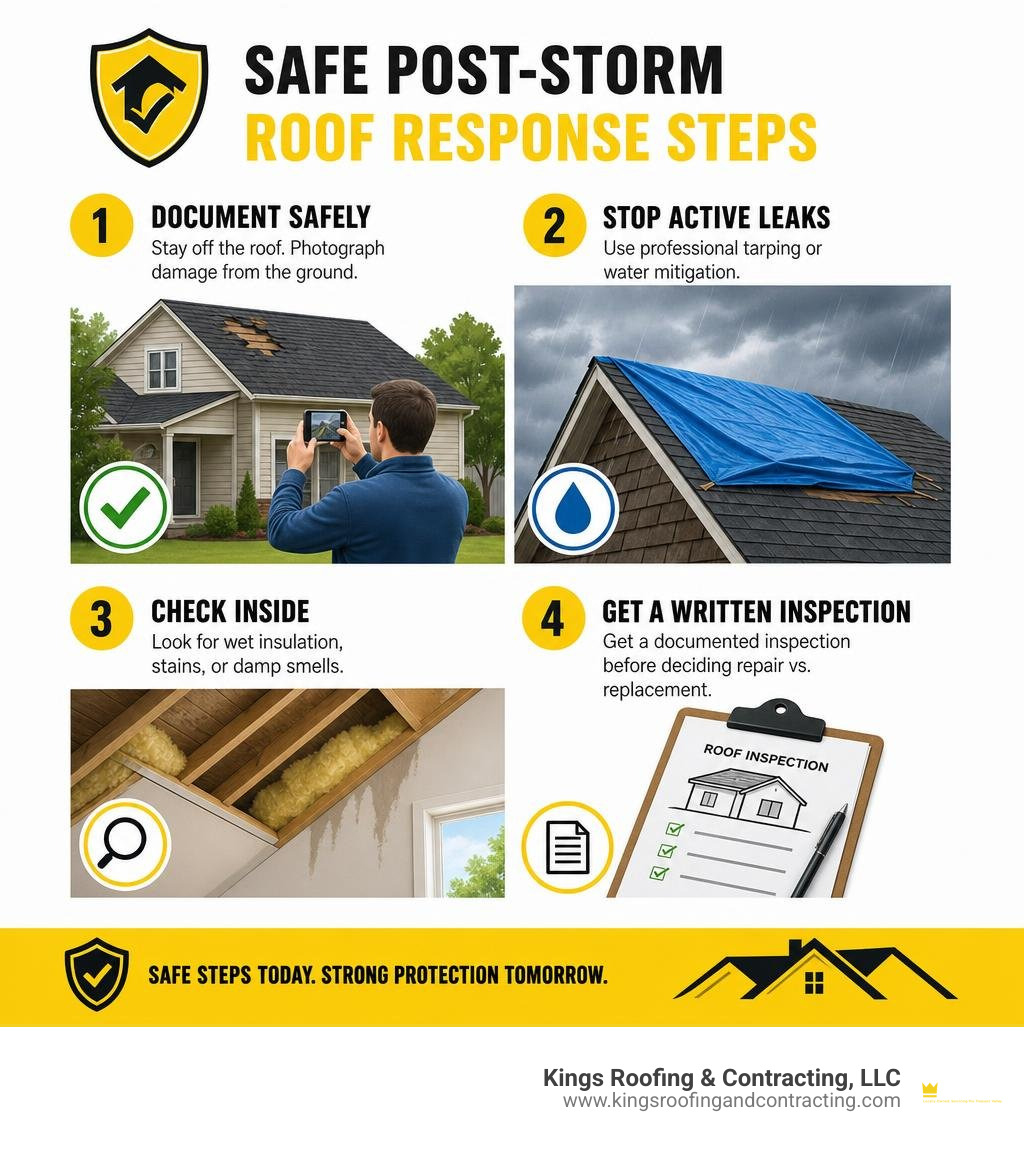
If you are searching for storm damage roof replacement near me in the Treasure Valley, take these steps first:
- Stay off the roof and photograph damage safely from the ground.
- Stop active leaks with professional emergency tarping or water mitigation.
- Check the attic and ceilings for wet insulation, stains, or damp smells.
- Get a written inspection before deciding between a repair and full replacement.
A roof can look intact from the yard while hail bruises shingles, spring wind breaks adhesive seals, or water slips past flashing. Boise-area roofs also face high-desert UV, wide temperature swings, winter snow load, and ice dams, all of which can turn small storm damage into a costly leak. A full replacement may require Ada County permits, so work with a trusted Treasure Valley roofing contractor who can assess the entire roof system and explain the scope clearly.
I am Ryan Santoro, owner of Kings Roofing & Contracting, LLC, with 24 years of construction and roofing experience across residential, commercial, remodeling, and multiple roof systems. I help Treasure Valley owners make informed decisions about storm damage roof replacement near me based on documented damage, budget, and long-term protection.
Immediate Emergency Steps to Protect Your Home After Severe Weather
Take immediate action to stabilize your property after a severe storm passes through Boise, Meridian, Eagle, or Caldwell. Prioritize safety by staying entirely off the roof structure. Walking on a storm-compromised deck risks structural collapse and personal injury.
Homeowners can follow this verified action framework directly following a severe weather event:
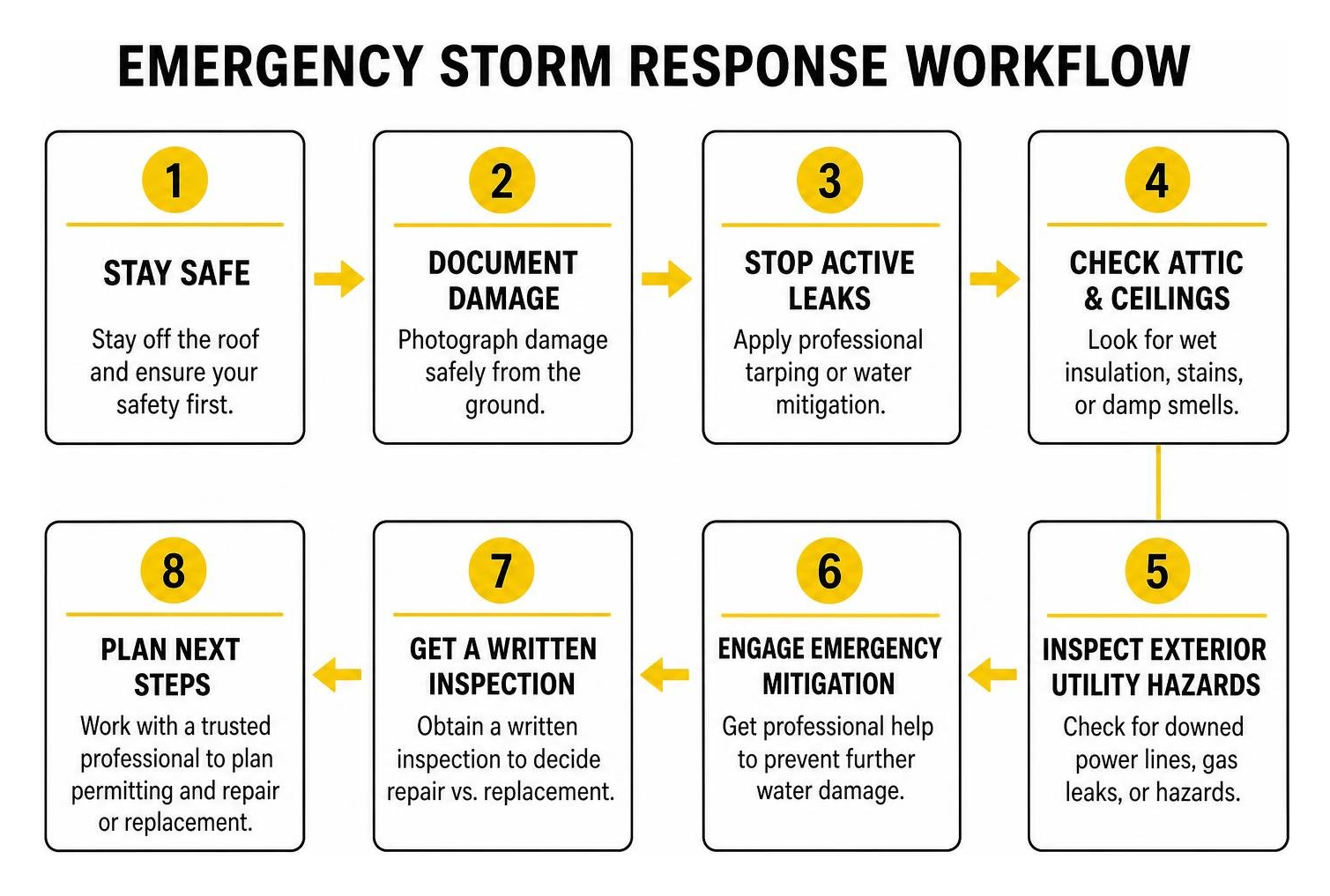
Start with these critical stabilization tasks:
- Perform Ground-Level Documentation: Photograph exterior property damage, detached gutters, fallen tree limbs, and torn shingles from safe yard positions.
- Secure Active Leaks: Deploy professional emergency roof tarping directly over compromised roof sections to block moisture infiltration into the home’s framing.
- Check Exterior Utility Hazards: Look for downed power lines, cracked gas meters, or leaning power poles around the structure.
- Engage Emergency Mitigation: Consult our storm roof repair survival guide find emergency help fast to prevent localized leaks from becoming full structural disasters.
Evaluating Visible and Hidden Attic Water Intrusion
Water intrusion rarely stays confined to your shingles; it migrates through decking joints, saturates insulation, and stains interior ceilings. After high-velocity storm events, inspect your attic space from the access hatch using a high-lumen flashlight.
Look for subtle warning signs inside the attic:
- Damp Insulation: Wet blown-in fiberglass or cellulose loses its thermal R-value immediately and retains moisture against ceiling drywall.
- Dark Decking Stains: Water entry points create dark, localized rings around roof penetrations, valleys, and nail penetrations.
- Musty Odors and Active Drips: Trapped moisture fosters fungal growth within 48 to 72 hours under warm temperatures.
- Winter Complications: Unaddressed freeze-thaw cycles and roof leaks worsen when winter arrives. Review the cold hard truth about home insurance and snow damage to see how trapped moisture accelerates winter roof failures across Nampa and Caldwell.
Identifying Roof Storm Damage: Hail Versus Wind Effects
Wind and hail compromise roofing systems through completely different mechanical actions. Wind causes physical displacement and uplift, while hail causes mechanical impact shock that crushes the core structural layers of your shingles.
The National Weather Service defines baseline severe thunderstorm criteria as 1-inch hail or 58 mph thunderstorm winds. High-velocity spring wind events across the Treasure Valley frequently reach or exceed these thresholds, creating distinct stress patterns across different roof facets.
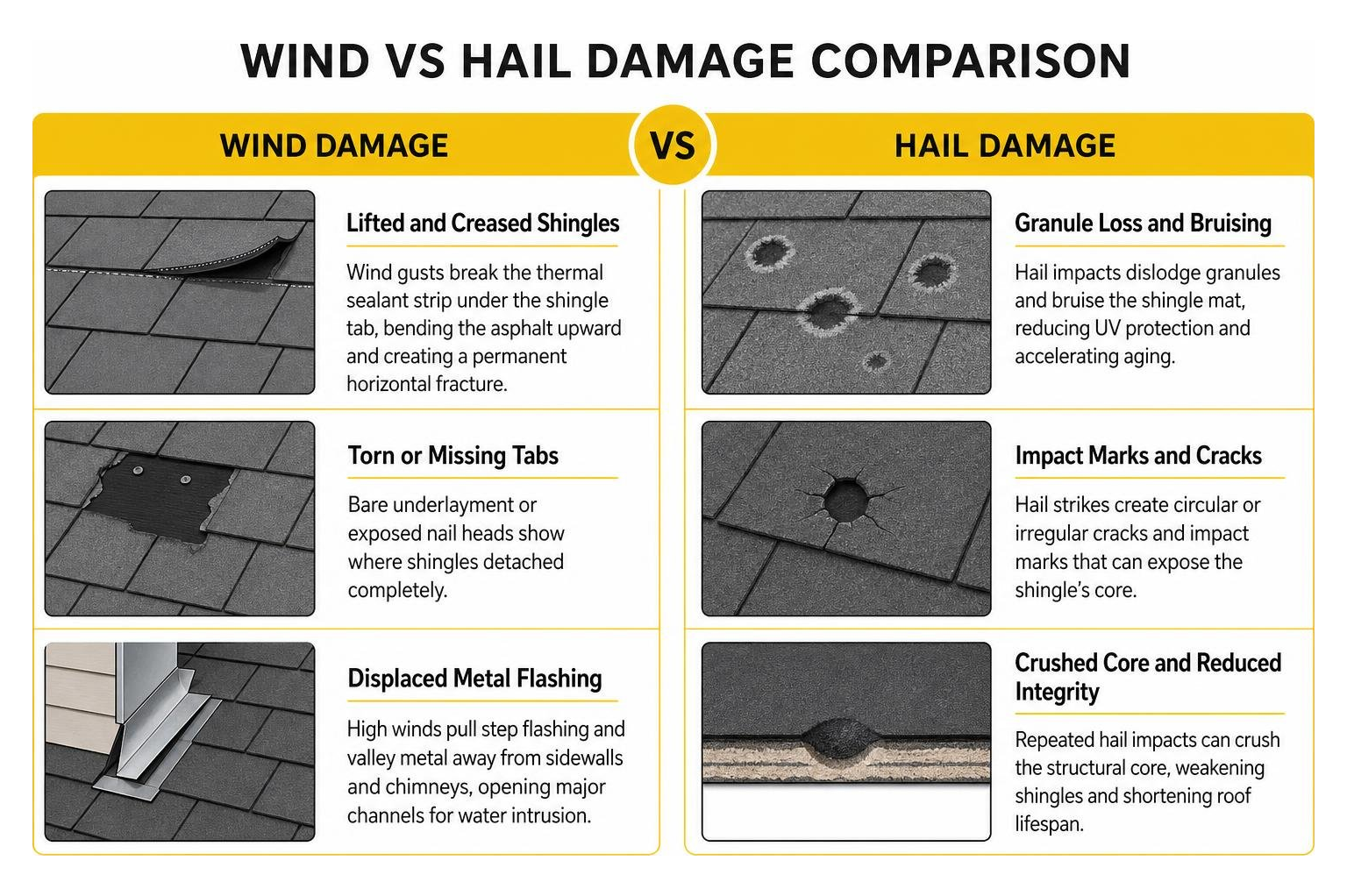
Wind damage manifests primarily as:
- Lifted and Creased Shingles: Wind gusts break the thermal sealant strip underneath the shingle tab, bending the asphalt upward and creating a permanent horizontal fracture across the top.
- Torn or Missing Tabs: Bare underlayment or exposed nail heads show where shingles detached completely.
- Displaced Metal Flashing: High winds pull step flashing and valley metal away from sidewalls and chimneys, opening major channels for water intrusion.
Spotting Non-Visible Hail Impacts and Granule Displacement
Hail impacts act like thousands of tiny hammer blows across your roof. Hail measuring 1 inch or larger fractures the underlying fiberglass mat without always tearing the surface shingle. This hidden fracture exposes raw asphalt to intense high-desert UV radiation, causing premature cracking and material failure.
Watch for these non-visible and subtle hail indicators:
- Circular Granule Loss: Hail dislodges the protective mineral granules, leaving black, soft, or bruised asphalt depressions.
- Accumulated Gutter Sediment: Heavy piles of shingle granules collecting inside gutter troughs and downspout splash blocks point to extensive surface impact.
- Dented Soft Metals: Hail leaves clear indentations on metal roof vents, valley pans, gutters, and air conditioning units. Explore the ultimate guide to spotting hail damage on your roof for additional help diagnosing subtle shingle trauma.
Professional Multi-Point Inspection Protocols
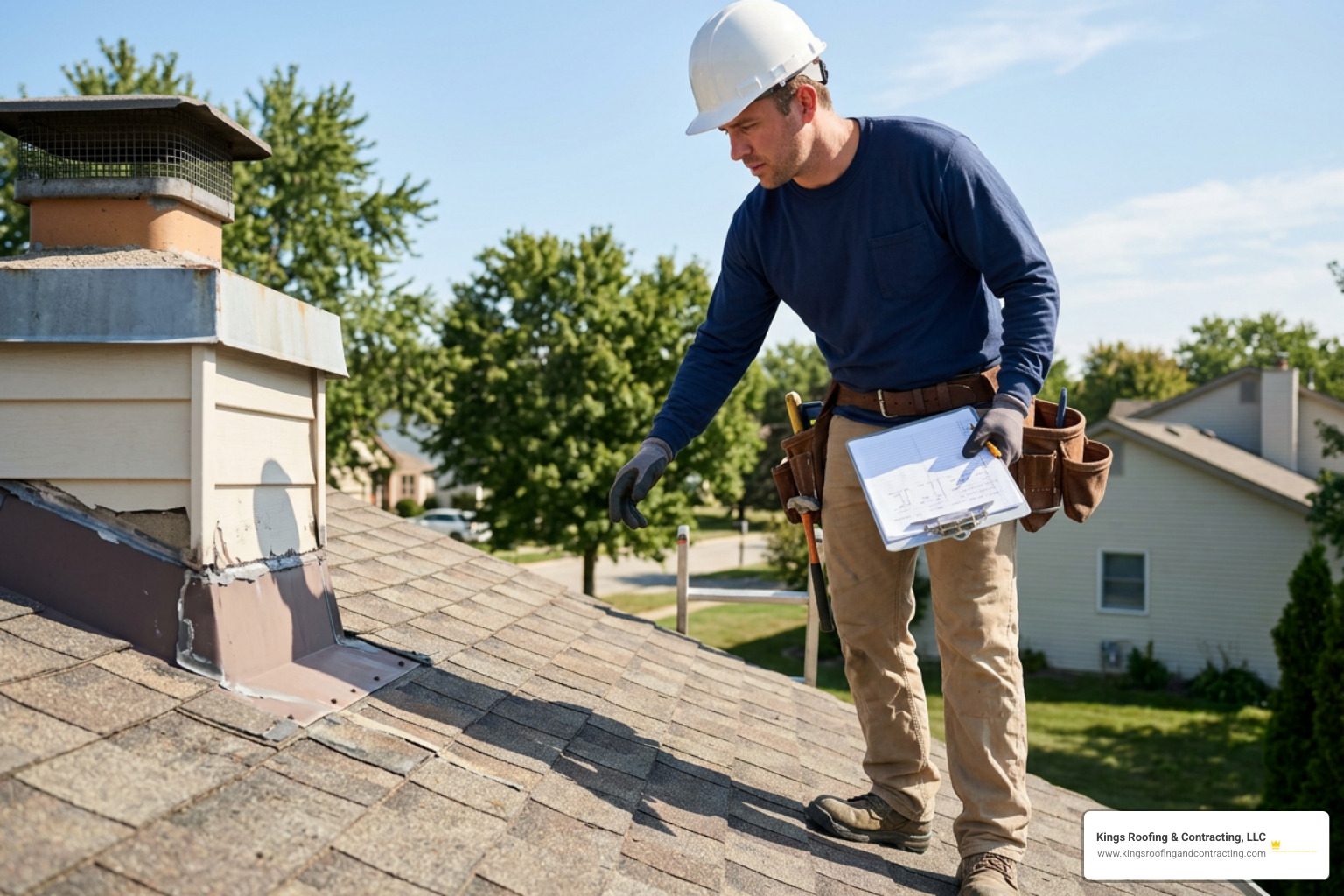
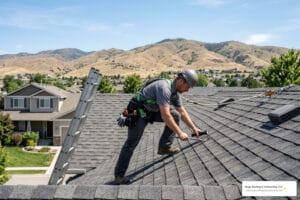
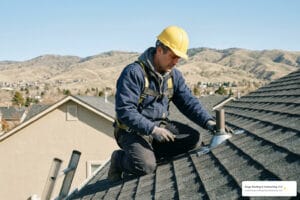
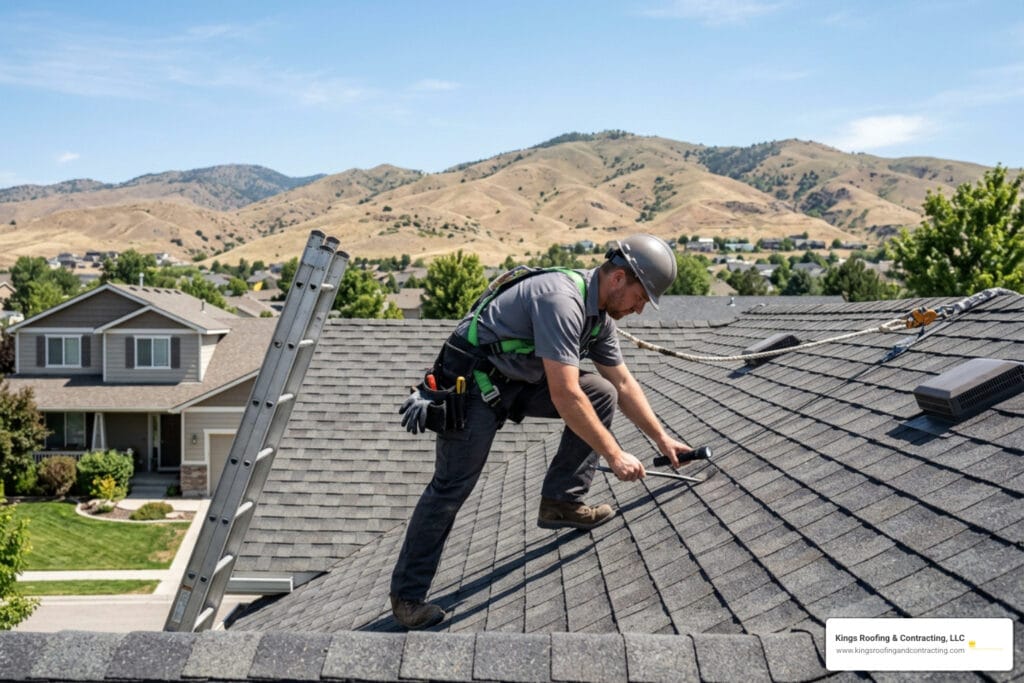
An accurate storm assessment requires a physical evaluation from the eave to the ridge. Professional multi-point inspections incorporate aerial drone photography alongside hands-on rooftop testing to document the precise density of wind creases and hail impacts per roof square (a 100-square-foot area).
Our storm damage inspection process examines:
- Decking and Sheathing Integrity: Testing for soft spots, rotted plywood, and deflection caused by sudden water pooling.
- Flashing, Vents, and Boots: Inspecting pipe boots, chimney counter-flashing, and valley liners for hidden seam splits.
- Ridge Caps and Edge Metal: Checking starter strips and hip shingles for uplift and fastener detachment. Review our insights on weathering the storm with a Boise roof inspection to understand how comprehensive documentation protects property value.
When to Choose Storm Damage Roof Replacement Near Me Over Localized Repairs
A localized repair fixes isolated, single-area damage, while a full roof replacement restores structural stability when storm damage spreads across multiple slopes or compromises the underlying roof deck.
| Evaluation Factor | Localized Roof Repair | Full Roof Replacement |
|---|---|---|
| Damage Distribution | Isolated to a single slope or under 15% of surface | Widespread across multiple roof facets |
| Shingle Condition | Shingles are flexible with intact adhesive seals | Shingles are brittle, aged, or widely unsealed |
| Underlayment Status | Moisture barrier intact; no water penetration | Underlayment torn, punctured, or rotted |
| Decking Structural State | Plywood decking remains solid and dry | Plywood shows widespread rot, sagging, or soft spots |
| Snow Load Capacity | Structural capacity meets Treasure Valley standards | Structural load limits compromised by deck rot |
| Building Code Compliance | Minor patch matches existing roof specs | Must meet current Ada County building permit codes |
Assessing Severe Structural Impact for Storm Damage Roof Replacement Near Me
Treasure Valley homes endure dramatic climate extremes: summer high-desert temperatures exceeding 100°F followed by winter snow loads and freezing temperatures. When severe storms puncture shingles, this temperature swing accelerates structural deterioration. Moisture trapped within the sub-roofing freezes, expands, and rapidly rots the structural decking.
Extensive rot around rafters or widespread mat fracture across all roof slopes makes spot patching impractical. When structural integrity fails, contact Kings Roofing & Contracting, LLC at 208-812-5464 to request a comprehensive restoration estimate and protect your home investment.
Navigating Insurance Claims: RCV, ACV, and Contractor Coordination
Filing a storm damage claim requires understanding how insurance carriers calculate payouts. Most standard policies utilize either Replacement Cost Value (RCV) or Actual Cash Value (ACV).
- Replacement Cost Value (RCV): Covers the full current market cost to replace your damaged roof with new materials of like kind and quality, without subtracting for depreciation, once repairs are completed.
- Actual Cash Value (ACV): Pays only the depreciated value of the roof based on its age and pre-storm condition, leaving the homeowner responsible for depreciation shortfalls unless an RCV policy endorsement exists.
- Deductibles and Depreciation: Homeowners pay their policy deductible directly to the contractor. The insurer pays the ACV upfront and releases the recoverable depreciation check once the contractor submits proof of final installation.
Should You Contact an Insurance Adjuster or Roofing Specialist First?
Schedule a comprehensive roof inspection with a licensed contractor before opening an insurance claim. Insurance adjusters evaluate damage quickly, but an independent contractor provides the photographic evidence and line-item scope necessary to establish that damage resulted from a specific covered weather event rather than long-term wear.
Having your roofing specialist on-site during the insurance adjuster’s physical walkthrough ensures that subtle issues—such as bruised fiberglass mats, unsealed starter strips, and collateral valley flashing damage—are included in the initial claim summary. This eliminates disputed line items and speeds claim approval.
Protecting Your Investment from Storm Chaser Scams

Out-of-town contractors flood neighborhoods across Boise, Meridian, Eagle, Caldwell, and Nampa immediately following major hailstorms and wind events. These transient operators use high-pressure sales tactics to capture insurance checks, install substandard materials with untrained labor, and leave the region before warranty issues appear.
Protect your home by confirming that your roofing contractor holds active manufacturer credentials, such as GAF Master Elite status. GAF Master Elite contractors represent the top 2% of roofing professionals nationwide and can offer factory-backed 50-year non-prorated warranties that transient storm chasers cannot match. Read the ultimate guide to finding a trusted roofer near me for detailed vetting strategies.
How to Vet Contractors for Storm Damage Roof Replacement Near Me
Use this vetting checklist before signing any contract or releasing insurance funds:
- Verify State Registration: Confirm active registration with the Idaho Contractors Board.
- Check Physical Location: Require a permanent local business office within the Treasure Valley rather than an out-of-state PO Box.
- Demand Proof of Insurance: Verify current general liability coverage and active workers’ compensation policies.
- Review Manufacturer Certifications: Choose certified contractors who provide direct manufacturer-backed material and workmanship warranties.
Frequently Asked Questions About Storm Damage Roof Restoration
How long do I have to file a storm damage insurance claim in Idaho?
Most standard homeowner insurance policies require policyholders to file a storm damage claim within 12 months (one year) of the verified date of loss. However, prompt reporting is essential because delaying can allow water damage to spread, leading adjusters to deny claims for secondary rot or homeowner neglect.
Does homeowners insurance cover a full roof replacement after a storm?
Homeowners insurance generally covers full roof replacement if the damage was caused by a covered sudden peril—such as severe wind, hail, or fallen tree limbs—and the scope of damage makes localized repairs unfeasible. The homeowner remains responsible for paying their policy deductible.
How does Boise’s climate accelerate hidden storm damage?
Boise’s high-desert climate features intense summer UV radiation alongside wide daily temperature swings. When hail creates micro-fractures in the shingle mat or wind lifts adhesive seals, sunlight degrades the exposed asphalt rapidly, allowing winter snow and ice melt to penetrate the home.
Conclusion
Recovering from severe weather requires rapid response, precise damage documentation, and expert craftsmanship. Kings Roofing & Contracting, LLC delivers 24/7 emergency response, GAF-certified installation standards, and transparent storm restoration estimates throughout Boise, Meridian, Eagle, Caldwell, and Nampa.
Whether your home needs emergency tarping, insurance claims assistance, or a full exterior restoration, our team ensures your home meets all Ada County building codes and stands strong against Treasure Valley weather.
Visit our storm damage roofing service page to schedule your comprehensive storm damage assessment.