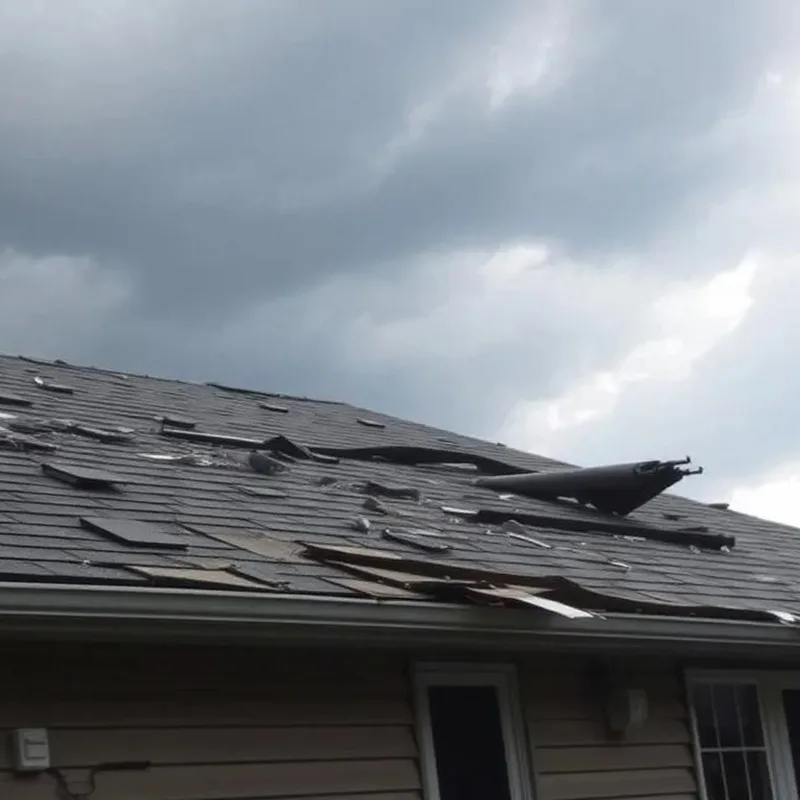
When Storms Hit Boise, Your Roof Is the First Line of Defense
Boise roof storm damage is one of the most urgent — and most underestimated — threats facing Treasure Valley homeowners today. The region’s weather can shift dramatically in a matter of hours: calm mornings giving way to hailstorms, wind gusts pushing 60 mph, and sudden downpours that expose every weak point in your roofing system. When that happens, the damage is often deeper than what you can see from the ground.
Here’s a quick summary of what Boise homeowners need to know after a storm:
Common storm damage types in Boise:
- Hail damage — dents, granule loss, cracked shingles, hidden fiberglass mat fractures
- Wind damage — missing shingles, lifted flashing, torn roofing sections
- Fallen debris — punctures, broken decking, compromised underlayment
- Water intrusion — leaks, attic moisture, ceiling stains (often appearing weeks later)
Immediate steps after a Boise storm:
- Stay safe — do not climb on a damaged roof
- Document all visible damage with photos from ground level
- Call a trusted local roofer before contacting your insurance company
- Arrange emergency tarping if there is active water intrusion
- File your insurance claim promptly — Idaho policies typically have a 12-month window
Partnering with trusted local roofing services is the single most effective way to catch hidden vulnerabilities before they become expensive structural problems.
The stakes are real. In one well-documented local event, wind gusts nearing 60 mph tore part of the roof off a commercial building near Boise Airport — scattering roofing materials across the property and triggering widespread power outages across the city. Residential roofs face the same forces. The difference is whether damage gets caught early or ignored until water is dripping through your ceiling.
This guide walks you through everything — from spotting damage to navigating your insurance claim — so you can act fast and protect your home.

Understanding Boise Roof Storm Damage and Local Weather Patterns
Boise and the surrounding Treasure Valley experience a unique semi-arid, high-desert climate. While we enjoy over 200 sunny days a year, our geographical positioning makes us highly susceptible to rapid, volatile weather shifts. When cold mountain air from the surrounding ranges collides with the warm air rising from the valley floor, it creates a recipe for severe weather.
These atmospheric conditions frequently result in high-velocity wind gusts, localized microbursts, and sudden summer hailstorms. According to historical tracking from the National Weather Service, wind gusts in the Treasure Valley regularly exceed 50 to 60 mph during severe thunderstorm events. These winds carry immense kinetic energy. When they hit a residential structure, they don’t just blow across the roof; they create a pressure differential. This aerodynamic lift can pry up older shingles, break the adhesive seal on newer ones, and tear away critical components like ridge caps and flashing.
Furthermore, our seasonal weather transitions act as a force multiplier for existing structural weaknesses. As we move from the blistering heat of Boise summers to freezing winter temperatures, roofing materials undergo constant thermal expansion and contraction. This cycle, known as thermal shock, causes asphalt shingles to lose their flexibility over time. When a late-spring or summer storm delivers hail on top of thermally stressed shingles, the impact easily fractures the brittle asphalt layer.
The consequences of ignoring these weather-induced vulnerabilities can be devastating. For example, during a severe weather outbreak in the Meridian area, a fast-moving fire jumped from parked cars to a residential shed and quickly spread to a nearby home. While this was an extreme thermal event, it highlights how quickly localized hazards can compromise a property’s safety envelope when structural materials are already stressed or damaged. Protecting your home from these unpredictable high-desert elements starts with securing professional, localized Boise storm damage repair immediately following any major weather event.
How to Identify Visible and Hidden Roof Damage
To understand Boise roof storm damage, you must understand the basic physics of how a modern shingle degrades under physical stress. An asphalt shingle is not just a piece of colored material; it is a highly engineered system composed of a fiberglass mat, a layer of water-resistant asphalt, and an outer coating of ceramic granules. These granules serve a vital dual purpose: they protect the volatile asphalt layer from degradation by solar ultraviolet (UV) rays, and they provide the weight and fire resistance necessary to meet local building codes.
When hail strikes a shingle, or when extreme winds flex it back and forth, the immediate result is often granule loss. Without this protective ceramic shield, the newly exposed asphalt is left completely vulnerable to solar radiation. Within a matter of weeks, the sun baking down on your roof will dry out the exposed asphalt, causing it to crack, curl, and blister. This is a progressive form of decay. What begins as a minor cosmetic blemish during a spring storm can easily evolve into a major structural leak by the time winter snow begins to accumulate.
Furthermore, ignoring these minor issues almost always leads to catastrophic water intrusion. Once water bypasses the primary shingle barrier, it saturates the underlayment and begins soaking into your home’s structural plywood decking. This trapped moisture creates an ideal breeding ground for toxic black mold and wood-rotting fungi. By the time you notice a water spot on your living room ceiling, the underlying structural rafters may already be severely compromised.
To prevent this costly chain reaction, we offer specialized, targeted solutions designed to address the exact type of storm impact your home has sustained:
- We specialize in restoring impact-damaged shingles and reinforcing compromised decking through our dedicated hail damage roof repair services.
- We focus on securing loose flashing, sealing exposed nail heads, and replacing missing materials with our high-wind wind damage roof repair protocols.
Spotting Boise Roof Storm Damage from the Ground
You do not need to climb onto your roof to identify the initial warning signs of storm damage. In fact, for safety reasons, we strongly advise homeowners to keep their feet firmly on the ground and perform a thorough perimeter check using a pair of binoculars.

Start by walking slowly around your entire lawn and checking for the following ground-level indicators:
- Shingle Debris on the Lawn: Look for whole shingles, torn tabs, or small black chunks of asphalt scattered across your grass or landscaping beds.
- Granule Accumulation in Downspouts: Check the exit points of your gutter downspouts. If you see large piles of dark, sand-like granules, it is a clear sign that your shingles have suffered heavy physical impact and are actively shedding their protective coating.
- Dented Metal Gutters and Downspouts: Hail heavy enough to damage a roof will almost always leave visible dings and round dents in aluminum gutters, downspout pipes, and metal valley flashing.
- Fallen Fascia and Soffit Boards: Strong wind gusts can get underneath the eaves of your home, ripping away wooden fascia boards and exposing the edge of your roof deck to direct rainfall.
- Damaged Window Screens and Siding: Inspect your window screens for tears and check your vinyl or wood siding for circular cracks or chips. If the vertical surfaces of your home show signs of hail impact, your roof almost certainly took a beating as well.
If you spot any of these indicators around your property, time is of the essence. You should immediately coordinate with a trusted local team to secure emergency roof repair in Boise to stabilize your home’s exterior and prevent active leaks from spreading throughout your living spaces.
Uncovering Hidden Boise Roof Storm Damage
While ground-level checks are incredibly useful, they only tell part of the story. The most dangerous types of Boise roof storm damage are completely invisible from the ground and can easily deceive an untrained eye.
When hail strikes a shingle, it often creates a “bruise.” This is a localized spot where the physical impact has fractured the underlying fiberglass mat without necessarily tearing the top surface of the shingle. To the naked eye, the shingle looks completely intact. However, the structural integrity of that shingle is gone. Over the next several months, rain, wind, and snow will easily push past this micro-fracture, allowing water to slowly seep into your home’s structural attic framing.
Once water migrates past the shingles, it rarely travels in a straight line. It will run down the slope of your roof deck, travel along a structural rafter, and pool in your attic insulation before finally soaking through your drywall ceiling. This means a water spot in your master bedroom could be caused by a leak on the opposite side of your roof.
To solve this puzzle, we utilize advanced, professional leak detection techniques to trace moisture directly back to its origin point. We align our inspections with the strict quality standards established by leading industry manufacturers like GAF. These standards clearly define the difference between cosmetic blemishes and functional storm damage. This ensures that every inspection report we write contains the precise, objective technical data required to prove your roof’s structural integrity has been compromised.
Navigating the Insurance Claims Process in Idaho
Filing an insurance claim for storm damage can feel like learning a foreign language. To advocate for yourself effectively, you must first understand the fundamental terms of your homeowner’s insurance policy.
The most important distinction to understand is how your policy calculates payouts:
- Actual Cash Value (ACV): Under an ACV policy, your insurance company will calculate the cost to repair or replace your roof, but they will deduct value based on the age and wear of your existing roof. If you have a 15-year-old roof, your payout may only cover a small fraction of the actual replacement cost.
- Replacement Cost Value (RCV): Under an RCV policy, the insurance company covers the entire current market cost to replace your damaged roof with a new one of similar quality, regardless of how old your roof was when the storm hit (minus your deductible, of course).
To ensure you receive every penny you are legally owed under your policy, we compile our damage estimates using Xactimate. This is the exact same, industry-standard estimating software utilized by major insurance adjusters across the United States. Xactimate uses real-time, localized market data to calculate precise costs for labor hours, building permits, and material types in the Boise area. By speaking the exact same financial language as your insurance company, we drastically reduce the likelihood of pricing disputes, lowball offers, and claim delays.
Furthermore, having a professional roofing contractor present during your official insurance adjuster meeting is critical. Adjusters are trained to look for reasons to deny or minimize claims, often attributing storm damage to “normal wear and tear” or “pre-existing neglect.” We walk the roof side-by-side with your adjuster, pointing out the specific physical evidence of hail bruises, wind uplift, and compromised seals that prove the damage was caused directly by the storm event. You do not have to navigate this stressful process alone; you can streamline your entire recovery by taking advantage of our comprehensive insurance claims assistance services.
Step-by-Step Post-Storm Action Plan
When a severe storm moves through the Treasure Valley, taking immediate, organized action is the best way to protect your property and secure your financial interests. Follow this simple three-step action plan to keep your recovery on track:
Step 1: Document Everything
As soon as it is safe to go outside, grab your smartphone and take high-resolution photos and videos of your entire property. Document any hail sitting on your deck, fallen tree limbs, dented gutters, and shingle debris in your yard. If you notice any water leaking inside your home, take clear photos of the active drips, wet insulation, and ceiling stains. Keep a written log of the exact date and time the storm occurred, as insurance companies require a specific “date of loss” for every claim.
Step 2: Prevent Secondary Damage
Homeowners have a legal obligation under their insurance policies to take reasonable steps to mitigate further damage to their property. If your roof is actively leaking, you must arrange for immediate temporary tarping or minor repairs. Contact our team to schedule emergency roof repair services. We will quickly apply professional-grade synthetic tarps and temporary sealants to stop water in its tracks, keeping your home dry while your insurance claim is being processed. For emergency stabilization resources in the wider area, you can also consult the Garden City emergency restoration resource.
Step 3: File Promptly
Do not wait to file your claim. Idaho insurance policies have strict statutes of limitations, and delaying your filing can result in a complete denial of coverage. Once we have performed our comprehensive physical inspection and provided you with a detailed Xactimate estimate, contact your insurance provider immediately to initiate the claim.
What to Expect During a Professional Storm Damage Inspection
When you hire us to inspect your roof after a storm, we don’t just walk around with a clipboard and make guesses. We perform a highly technical, multi-point diagnostic evaluation of your entire roofing system.
We utilize advanced diagnostic tools to ensure no detail is missed. This includes flying commercial-grade drones equipped with high-resolution cameras to capture extreme close-ups of steep, high-elevation roof sections that are unsafe to access manually. We also utilize thermal imaging cameras to scan your roof deck for temperature anomalies. Because wet insulation holds heat differently than dry insulation, thermal imaging allows us to literally “see” water trapped beneath your shingles before it ever drips onto your ceiling.
Beyond the shingles, we perform a comprehensive structural analysis of your attic space. We inspect the underside of your wooden roof decking for water staining, mold growth, and structural sagging. We also evaluate your attic’s ventilation system. Poor ventilation causes heat and moisture to build up in your attic, which can bake your shingles from the inside out and make them far more susceptible to wind and hail damage.
| Feature / Metric | Drone Inspections | Manual Physical Inspections |
|---|---|---|
| Safety Level | Excellent (No climbing required; zero fall risk for technicians) | Moderate (Requires climbing steep slopes and high-elevation areas) |
| Inspection Speed | Very Fast (Entire roof scanned and mapped in 10–15 minutes) | Slow (Takes 45–60 minutes to manually measure and inspect) |
| Data Accuracy | High Precision (Captures 4K digital photos and creates 3D models) | Variable (Relies on human eyesight and manual tape measurements) |
| Attic & Structural Analysis | Not Applicable (Cannot inspect interior framing or insulation) | Excellent (Technician physically enters attic to check decking) |
| Material Testing | Limited (Cannot physically touch shingles to feel for soft spots) | Excellent (Technician can physically feel for bruised substrates) |
By combining the speed and safety of drone technology with the deep, hands-on diagnostic capability of a physical attic and material inspection, we provide the most accurate and comprehensive damage reports in the industry. To get started, you can easily request a detailed, transparent free roof quote online today.
Frequently Asked Questions About Storm Damage Repairs
How long do I have to file a roof insurance claim in Idaho?
In Idaho, most homeowners insurance policies require you to file a storm damage claim within one year (12 months) of the date of the storm event. However, some policies may allow up to two years. It is critical to review your specific policy language and schedule a professional inspection immediately after a storm to document the exact date of loss.
Can hail damage my roof without causing immediate leaks?
Yes, hail can cause severe, latent damage to your roof without causing immediate interior leaks. Hail impacts bruise the shingle substrate, fracturing the fiberglass mat and knocking away protective asphalt granules. Over time, solar UV rays degrade these exposed areas, leading to premature shingle failure and leaks months or even years down the road.
How do I avoid “storm chaser” roofing scams?
To avoid “storm chaser” scams, always hire a contractor with a physical local office, a registered Idaho contractor license, and verified local reviews. Avoid out-of-state companies that knock on your door offering “free roofs” or asking you to sign contracts before your insurance company has approved the claim. Look for certified credentials, such as GAF Master Elite status, which verify the contractor’s long-term local standing.
Conclusion
Your home is likely your single largest financial investment, and your roof is the only thing standing between that investment and the unpredictable, high-desert weather of the Treasure Valley. When severe storms strike, relying on guess-work or ignoring the signs of damage can lead to thousands of dollars in unnecessary, long-term structural repairs.
At Kings Roofing & Contracting, LLC, we are proud to serve our neighbors across Boise, Meridian, Eagle, Nampa, Caldwell, Kuna, and Garden City. We protect your home by combining GAF-certified workmanship with honest, transparent pricing and 24/7 availability. We don’t believe in cutting corners, and we don’t believe in high-pressure sales tactics. We simply provide the expert, detail-driven care your home deserves.
If your neighborhood has recently experienced high winds, heavy rains, or hail, do not wait for a leak to show up on your ceiling.
Ready to secure your home and gain true peace of mind? Schedule a storm damage roofing consultation with our local team today!