What Causes Metal Roof Condensation Problems?
Metal roof condensation problems are one of the most misunderstood issues homeowners face — water drips from the ceiling, and the first instinct is to blame a leak. But if it hasn’t rained recently, the culprit is almost always condensation. Partnering with a provider of professional roofing services can help you identify and resolve these issues before they cause lasting damage.
Here’s a quick answer to what’s happening and how to fix it:
Metal Roof Condensation: The Short Version
- What it is: Water vapor in warm indoor air turns to liquid when it contacts the cold underside of your metal roof
- When it happens: Most often on cold mornings, after temperature swings, or following HVAC runtime — not during rain
- What it damages: Insulation, wood framing, fasteners, stored items, and air quality
- How to fix it: Insulation, proper ventilation, vapor barriers, or anti-condensation membranes — often without replacing the roof
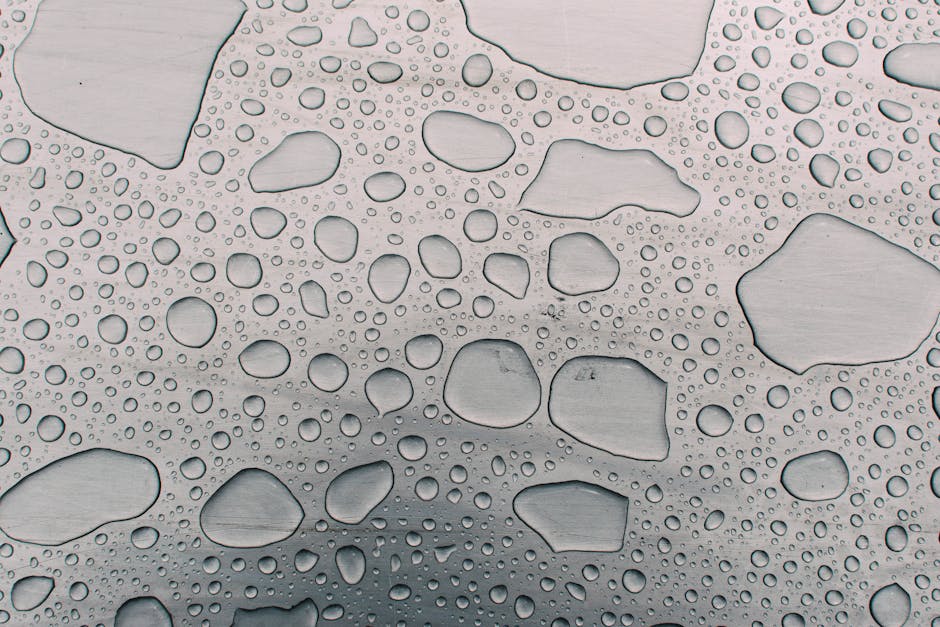
Metal is an excellent heat conductor. On a cold night, metal roof panels can drop below the surrounding air temperature through radiant cooling — sometimes below the outdoor air temperature itself. When warm, humid air from inside your home rises and contacts that cold surface, moisture condenses out of the air and drips down.
It’s the same physics as a cold drink “sweating” at a summer cookout. The glass isn’t leaking — it’s pulling moisture out of the air around it. Your roof does the same thing.
This happens across every climate, but it’s especially common in places like the Treasure Valley, where Idaho’s sharp temperature swings between cold nights and warm days create the perfect conditions for repeated condensation cycles.
The good news: this is a solvable problem. Most fixes don’t require tearing off your roof.
I’m Ryan Santoro, owner of Kings Roofing & Contracting, LLC, with 24 years of construction experience that includes diagnosing and resolving metal roof condensation problems across residential and commercial buildings throughout the Boise area. In this guide, I’ll walk you through exactly what’s causing the moisture, how to confirm it’s not a leak, and the most effective fixes available today.
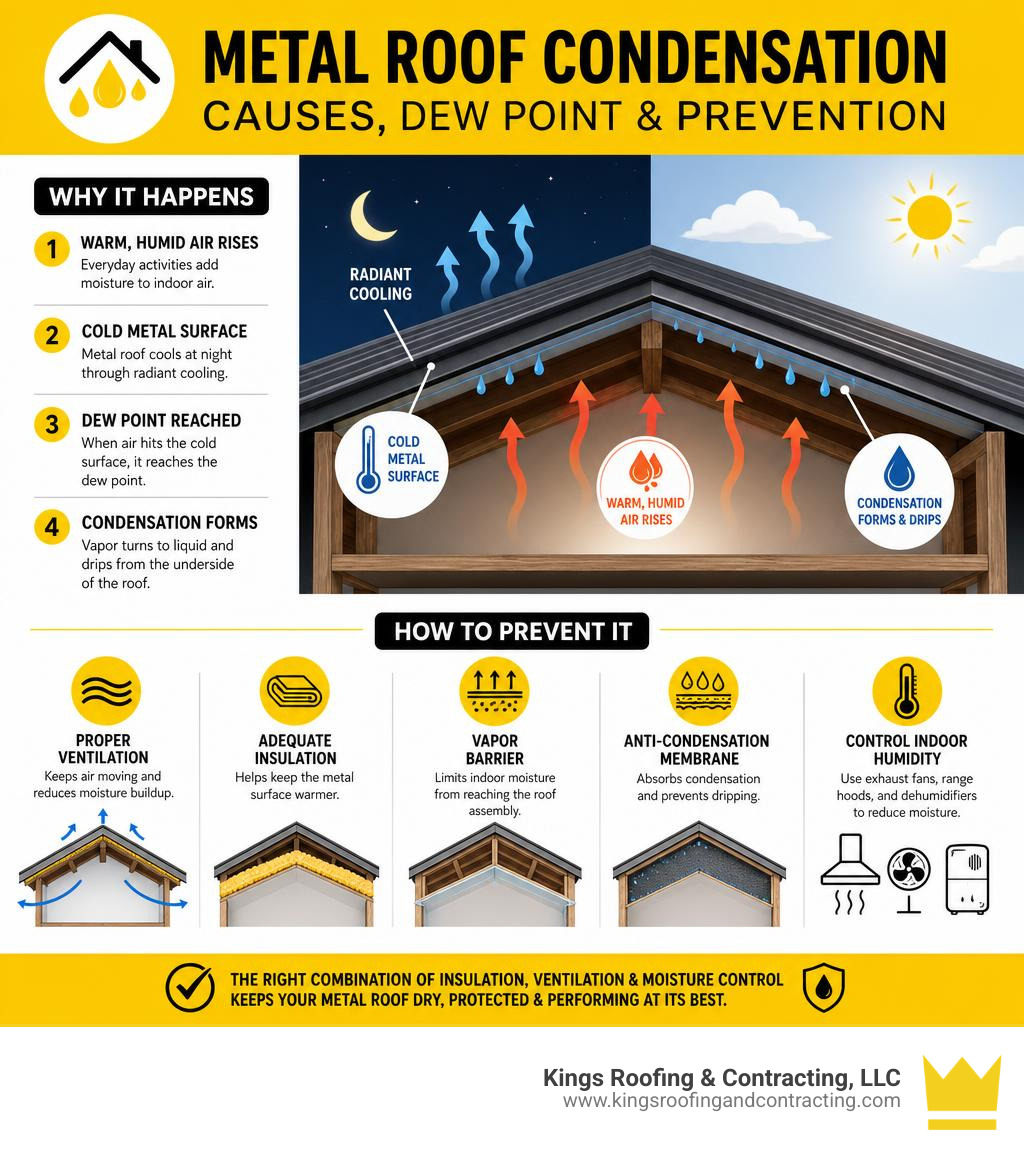
To solve metal roof condensation problems, we must first look at the basic physics of how heat and moisture interact with metal panels. Condensation is not a material defect; it is a natural physical response to temperature differentials and moisture levels.
Radiant Cooling
Unlike asphalt shingles or wood shakes, metal roof panels possess high thermal conductivity and low thermal mass. At night, they shed heat rapidly into the night sky through a process known as radiant cooling. This radiative heat loss is so efficient that the temperature of the metal panels can drop several degrees below the actual ambient outdoor air temperature. When this happens, the metal panels act as a giant condenser coil above your attic space.
Thermal Bridging
Metal structural elements, such as steel purlins, trusses, or even the fasteners holding your roof panels in place, act as thermal bridges. They conduct cold temperatures from the exterior of the building directly into the interior envelope. This creates localized cold spots. When warm, moist air inside the attic or building touches these cold fasteners or framing members, it instantly reaches its dew point, forming water droplets that eventually drip onto your ceiling or stored belongings.
Vapor Drive
Warm air is naturally lighter than cold air, and it holds significantly more moisture. This warm, humid air exerts vapor pressure, driving it upward through ceiling penetrations, drywall joints, and unsealed attic hatches. As this moisture-laden air migrates toward the cold underside of the metal roof, it encounters a sudden drop in temperature. Because cold air cannot hold as much water vapor as warm air, the excess moisture is forced out of the air, converting from a gas to a liquid directly on the metal surface.
Industry Standards
According to the MBMA Condensation Technical Guide, managing moisture in modern metal roofing systems requires a strict balance of temperature control and air movement. The Metal Building Manufacturers Association emphasizes that failing to address vapor drive and thermal bridging during the design or retrofit phase is the leading cause of premature structural deterioration in metal-clad buildings.
Condensation vs. Roof Leaks: How to Tell the Difference
One of the most common calls we receive at Kings Roofing & Contracting, LLC is for a “leaking roof” that turns out to be a severe condensation issue. Misdiagnosing this problem can lead to expensive, unnecessary repairs that fail to stop the water.
Answer-First Diagnostic
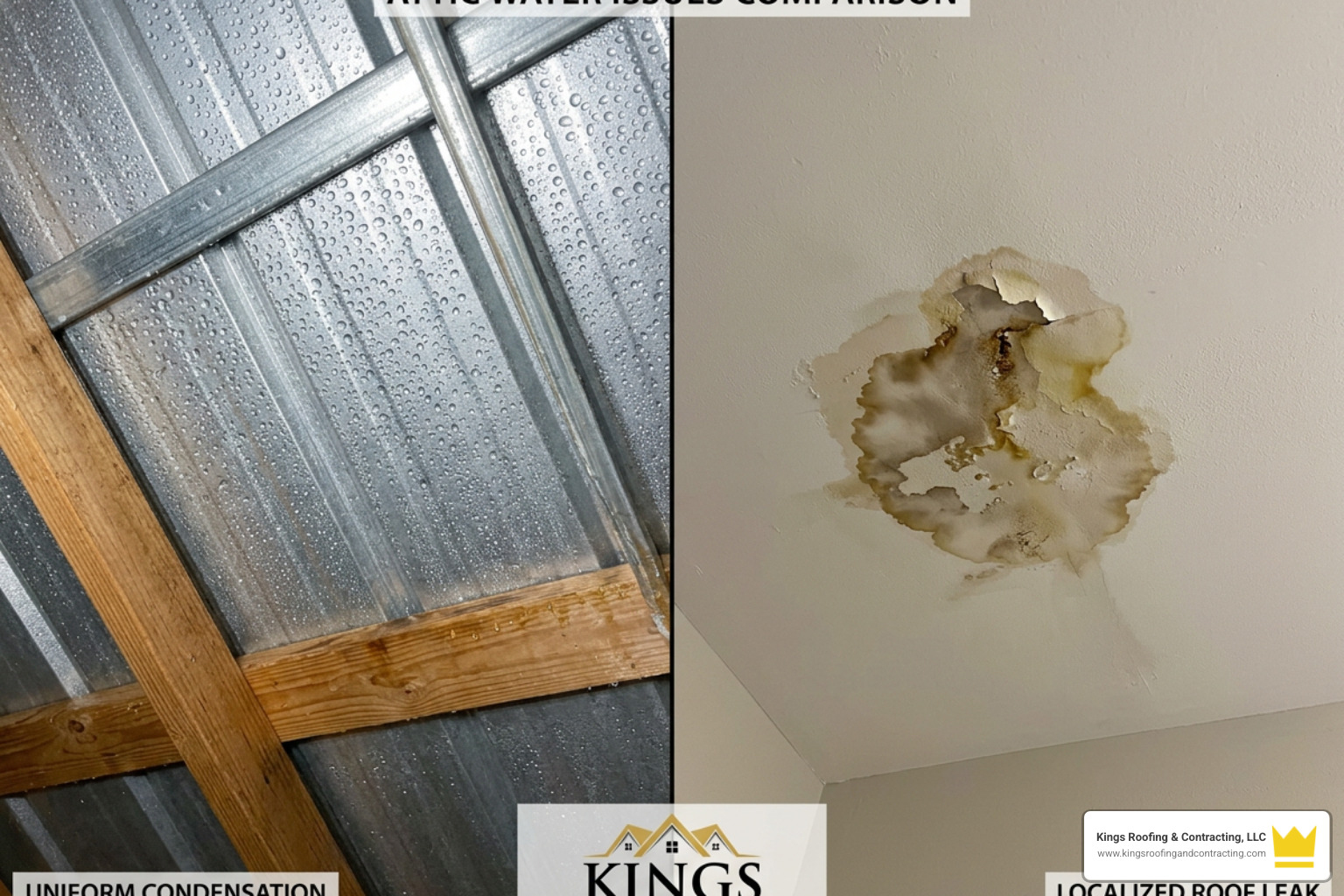
Here is how to tell the difference immediately: A roof leak is localized, occurring in a specific spot during or immediately after a rainstorm or rapid snowmelt. Condensation is widespread, occurring uniformly across large areas of the roof, and is heaviest on cold, clear mornings following a warm day—even when there has been no rain for weeks.
Visual Patterns
When a roof leaks, you will typically see water stains concentrated around valleys, flashing, chimneys, or damaged fasteners. Condensation, however, behaves like a heavy dew. It forms across the entire underside of the metal panels, running down the purlins and dripping uniformly across the attic space.
Timing Patterns
To track down the source of your moisture, keep a simple log of when the dripping occurs:
- If it drips during a dry spell: If you notice water dripping at 7:00 AM on a clear, dry autumn morning in Meridian or Nampa, it is condensation. This is the classic “sweating” pattern caused by the overnight temperature drop.
- If it drips only during heavy rain: If the dripping is directly correlated with a downpour or active snowmelt in the foothills, you are likely dealing with an actual leak.
- If it drips during seasonal swings: In the Treasure Valley, we often see massive condensation events in late autumn and early spring when daytime temperatures are pleasant but nighttime temperatures plummet.
Professional Assessment
Because water can travel along the underside of roof purlins and drip far from its actual source, identifying the root cause can be tricky. Homeowners should schedule a professional leak detection or comprehensive roof inspections to get a definitive diagnosis. Our team uses advanced moisture meters and thermal imaging to trace the moisture without guessing.
The Hidden Dangers of Unmanaged Moisture
Allowing metal roof condensation problems to persist is a recipe for structural and financial disaster. What starts as a few morning drips can quickly escalate into thousands of dollars in hidden damage.
Structural Rot
When condensation drips off the metal panels, it lands directly on your wood trusses, rafters, and ceiling joists. Over time, this constant wetting causes the wood to rot, compromising the structural integrity of your home. If your metal roof was installed directly over old wood decking without a proper vapor barrier, that decking will eventually soften, buckle, and fail, requiring extensive structural roof repair.
Insulation Degradation
Most traditional attic spaces rely on fiberglass batt or blown-in cellulose insulation. When water drips from a sweating metal roof, it saturates this insulation. Wet insulation loses its loft and can suffer a drop in R-value of up to 75%. This means your home will struggle to retain heat in the winter and stay cool in the summer, leading to skyrocketing energy bills.
Mold and Mildew
Damp, dark, and warm attic spaces are the perfect breeding ground for mold and mildew. Once mold takes hold in your attic, spores can easily migrate into your living spaces through HVAC ducts and ceiling bypasses, causing respiratory issues and severe allergic reactions for your family.
Metal Corrosion
While the exterior of your metal roof is protected by high-quality paints and coatings, the underside of raw metal panels and the fasteners holding them in place are highly vulnerable to rust. Persistent moisture traps water against these metal components, leading to premature corrosion and fastener failure.
Scientific Context
The Fletcher Insulation Whitepaper on Condensation Management highlights that modern, highly airtight building envelopes trap more moisture inside homes than ever before. Without a dedicated pathway for this moisture to escape or a physical barrier to keep it away from cold surfaces, structural damage and indoor air quality degradation are inevitable.
If your roof structure has already suffered from prolonged moisture exposure, you may need a targeted roof repair or structural reinforcement to make the building safe again.
Proven Solutions for Metal Roof Condensation
To permanently stop metal roof condensation problems, we must implement a strategic plan that addresses the root physical causes: temperature differences, air movement, and vapor control.
The Three-Pronged Approach
- Control the Temperature: We must keep the temperature of the surface that indoor air touches above the dew point. This is achieved through proper insulation.
- Manage the Airflow: We must flush out warm, humid air from the attic or building envelope before it has a chance to settle and condense. This is achieved through balanced ventilation.
- Block the Vapor: We must prevent indoor moisture from ever reaching the cold metal panels. This is achieved through high-quality vapor barriers and underlayments.
Site Preparation
If you are planning a metal roof retrofit or a new installation, proper site preparation is critical. Installing drainage battens (which create a rainscreen cavity under the metal panels) allows any minor condensation that does form to drain away harmlessly and evaporate, rather than pooling on your underlayment or framing.
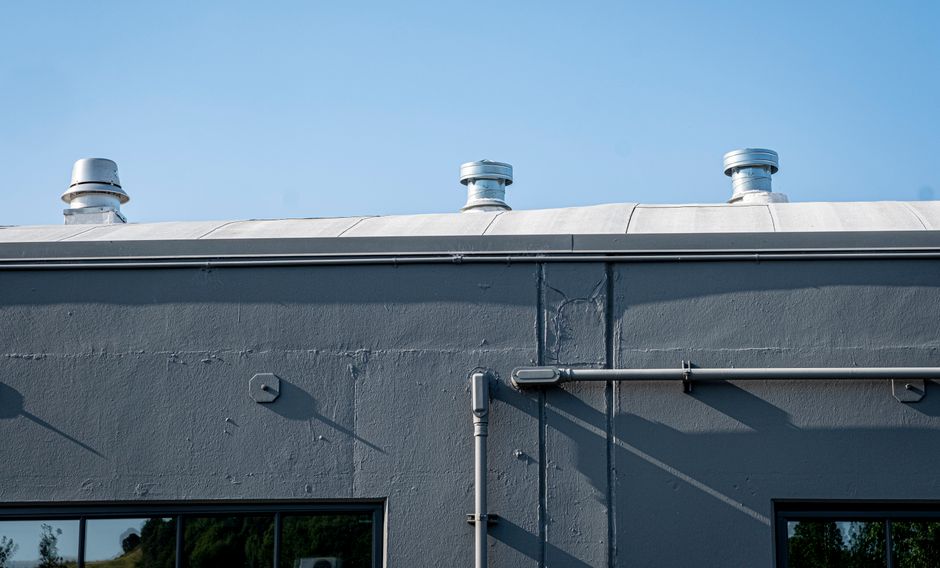
Retrofitting Insulation to Stop Metal Roof Condensation Problems
Insulation is your primary defense against condensation. By placing a thermal barrier between the cold metal roof and the warm interior air, you prevent the warm air from ever reaching its dew point.
Closed-Cell Spray Foam
For existing metal roofs with exposed undersides—such as in shops, garages, or open-attic residential homes—closed-cell spray foam is the absolute gold standard.
- How it works: It is sprayed directly onto the underside of the metal panels.
- Why it’s highly effective: It expands to fill every corrugation, gap, and seam, creating a completely seamless air and vapor barrier. Because the foam adheres directly to the metal, there is no air cavity left where condensation can form.
- Thickness required: In typical Idaho winter conditions, a minimum of 1.5 to 2 inches (approx. R-11 to R-15) of closed-cell foam is required to keep the interior surface above the dew point.
Fiberglass Batts vs. Rigid Board
- Fiberglass Batts (Vinyl-Backed): Commonly used in metal pole barns and commercial spaces. The vinyl backing acts as a vapor barrier, but if the seams are not taped perfectly, or if the backing gets torn, humid air will bypass the insulation, condense on the metal, and pool inside the insulation blankets.
- Rigid Foam Board: An excellent option during a new roof installation or re-roofing project. Installing rigid foam boards directly over the roof deck before laying down the metal panels provides a continuous thermal break, eliminating thermal bridging through the rafters.
Integrating these insulation upgrades with routine roof insulation and maintenance ensures your home remains dry, energy-efficient, and structurally sound year-round.
Designing Ventilation to Prevent Metal Roof Condensation Problems
Ventilation does not mean simply cutting a few holes in your roof; it requires a carefully balanced system of intake and exhaust.
 [Ridge Vent (Exhaust)]
 ^   ^
 / \
 / \
 / \
 / \
 [Soffit Vent] [Soffit Vent]
   (Intake) (Intake)
The Physics of Airflow
Natural ventilation relies on the stack effect (warm air rising) and wind pressure. Cool, dry air must be drawn in through the lowest point of the roof (the eaves or soffits), wash over the underside of the roof deck, and escape through the highest point (the ridge). This continuous movement flushes out moisture before it can condense.
System Components & NFVA
To design an effective system, we calculate the Net Free Vent Area (NFVA). The industry standard rule of thumb is the 1:150 ratio—1 square foot of ventilation for every 150 square feet of attic floor space. This area must be split evenly:
- 50% Intake: Located at the soffits or eaves.
- 50% Exhaust: Located at the ridge or high gable vents.
If you have plenty of exhaust but no intake, your attic will pull air from your living spaces, dragging warm, moist air upward and actually worsening your condensation problems.
Industry Best Practices
We design our ventilation systems according to GAF Ridge Vent and Ventilation Standards. Using high-quality, weather-resistant ridge vents prevents snow infiltration during Boise winters while maintaining continuous airflow to keep your attic’s relative humidity in check.
Anti-Condensation Membranes and Vapor Barriers
If you are installing an uninsulated metal building—such as a hay barn, RV cover, or detached garage—traditional insulation might not fit your budget. This is where advanced anti-condensation membranes shine.
Advanced Materials: DripStop and CondenStop
These are specialized, felt-like polyester membranes that are factory-applied to the underside of the metal panels before they are roll-formed.
- How they work: Instead of trying to prevent condensation, they manage it. When dew forms on the underside of the metal, the membrane traps the moisture like a sponge. Ten square feet of CondenStop or DripStop membrane can hold up to 2 pounds of water.
- The drying cycle: During the day, as the sun warms the metal roof, the trapped water evaporates back into the air as humidity and escapes through your ridge vents.
- The cost benefit: DripStop is up to 25% less expensive than traditional vinyl-backed fiberglass insulation systems, making it an incredibly cost-effective solution for agricultural and storage buildings.
Vapor Permeable Sarking
For residential pitched roofs, installing a high-quality vapor-permeable underlayment (sarking) under the roof battens is highly recommended. This allows water vapor from inside the home to escape outward, while preventing any external condensation drips from reaching your ceiling insulation.
Comparison of Condensation Control Methods
| Solution | Est. Cost | R-Value | Primary Benefit | Best Suited For |
|---|---|---|---|---|
| Closed-Cell Spray Foam | High | R-6 to R-7 per inch | Stops condensation completely; adds structural strength | Heated residential homes, workshops, commercial spaces |
| DripStop / CondenStop | Low to Moderate | None | Absorbs and releases moisture safely; up to 25% cheaper than insulation | Unheated garages, agricultural barns, RV storage |
| Rigid Foam Board | Moderate to High | R-5 per inch | Eliminates thermal bridging entirely | New residential metal roof installations |
| Fiberglass Batts | Moderate | R-11 to R-38 | High thermal performance | Standard residential attics (installed on attic floor) |
Frequently Asked Questions About Metal Roof Condensation
Does a metal roof sweat more than shingles?
Yes, metal roofs sweat more than asphalt shingles. Because metal has high thermal conductivity and low thermal mass, it cools down much faster at night due to night sky radiation. This rapid cooling causes the temperature of the metal panels to drop below the dew point of the surrounding air much faster than organic materials like asphalt, wood, or clay tiles, creating more frequent opportunities for condensation to form.
Can you fix condensation without replacing the roof?
Yes, you can absolutely fix condensation issues without replacing the roof. Most condensation problems are caused by attic-side failures, such as poor ventilation, unsealed air leaks, or inadequate insulation. By sealing ceiling bypasses, adding balanced soffit-to-ridge ventilation, or retrofitting closed-cell spray foam to the underside of the metal panels from inside the attic, you can solve the issue permanently without touching the exterior roof.
Does attic ventilation completely eliminate condensation?
No, ventilation alone is rarely a magic bullet. While proper ventilation is crucial for lowering humidity levels, it must be paired with an effective vapor barrier and proper thermal insulation. If warm, humid air from your home is constantly leaking into the attic through unsealed light fixtures or access hatches, even a perfectly ventilated attic can experience condensation on cold nights when the metal panels drop below the dew point.
Conclusion
Managing metal roof condensation problems is not about fighting physics—it is about working with them. By understanding how temperature, humidity, and airflow interact with your roof, you can implement targeted, permanent solutions that protect your home, improve your energy efficiency, and extend the lifespan of your roof.
Whether you are dealing with a sweating garage ceiling in Caldwell, a damp attic in Eagle, or planning a new metal roof installation in Meridian, partnering with experienced local professionals is the best way to ensure your project is done right.
At Kings Roofing & Contracting, LLC, we are proud to be your GAF-certified Boise roof repair experts, serving Boise, Nampa, Caldwell, Meridian, Eagle, Kuna, and the entire Treasure Valley. We combine decades of local experience with transparent pricing and GAF-certified workmanship to keep your home dry and comfortable in every season.
If you suspect your metal roof is sweating, don’t wait for mold or structural rot to set in. Contact us today for a professional condensation diagnostic or a free consultation on our metal roofing installation services.