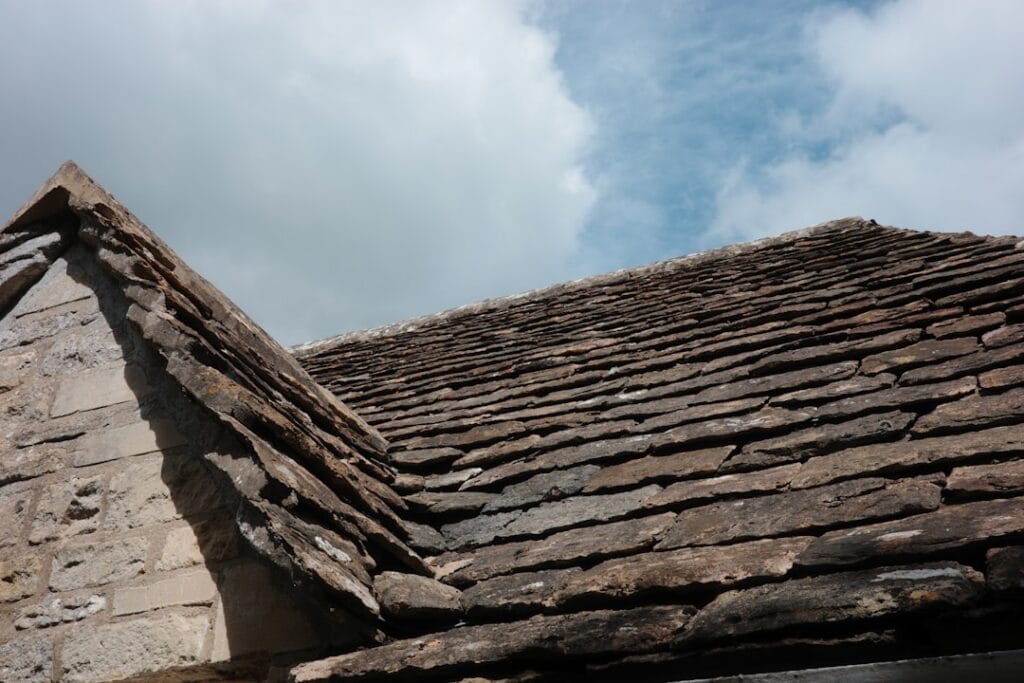
Why Choose Slate Over Other Roofing Materials?
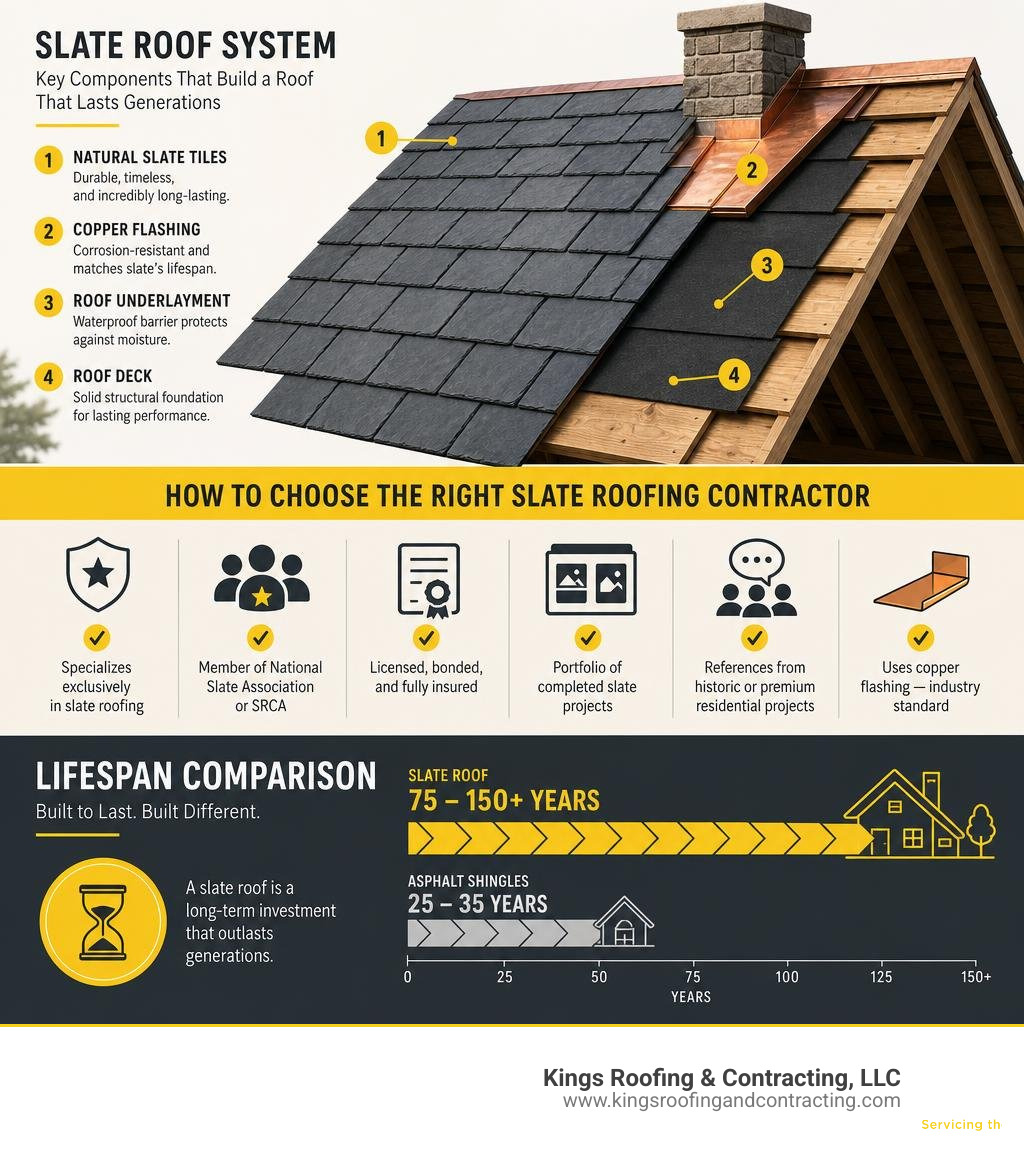
Slate roofing companies specialize in one of the most durable and architecturally stunning roofing systems available — natural stone roofs that can last 75 to 150 years or more. If you’re trying to find the right contractor for a slate roof installation, repair, or inspection, partnering with a premier local roofing contractor is essential. Here is what you need to know fast:
How to find a qualified slate roofing company:
- Look for contractors who specialize exclusively in slate — not general asphalt roofers who occasionally handle slate
- Verify membership in the National Slate Association or the Slate Roofing Contractors Association
- Confirm they are licensed, bonded, and carry full liability and workers’ compensation insurance
- Ask for a portfolio of completed slate projects, not just general roofing work
- Request references from historic restoration or premium residential projects specifically
- Confirm they use copper flashing — it matches slate’s lifespan and is the industry-trusted standard
A slate roof is not just a roofing material. It’s a long-term investment in your home’s structure, curb appeal, and resale value. Unlike asphalt shingles — which typically need replacement every 25 to 35 years — a properly installed natural slate roof can outlast multiple generations of homeowners. That kind of durability changes how you think about roofing costs entirely.
But here’s the catch: slate roofing requires a completely different skill set than conventional roofing. The tools are different. The installation techniques are different. Even the way you walk on a slate roof is different (hint: you don’t, if you can avoid it). Hiring the wrong contractor doesn’t just cost money — it can crack tiles, void warranties, and shorten a century-long roof down to a decade.
That’s why finding the right professional roofing services for a slate installation or repair is so critical — and why this guide exists.
I’m Ryan Santoro, owner of Kings Roofing & Contracting LLC, with 24 years of construction experience across residential roofing systems including slate, concrete tile, and standing seam metal. As one of the Treasure Valley’s trusted slate roofing companies, my team helps homeowners navigate the full scope of premium roofing decisions — from material selection to long-term maintenance planning.
When evaluating types of roofing for your home, the choices can feel overwhelming. However, natural stone slate remains without equal as the hardest, most durable, and intrinsically handsome material available.
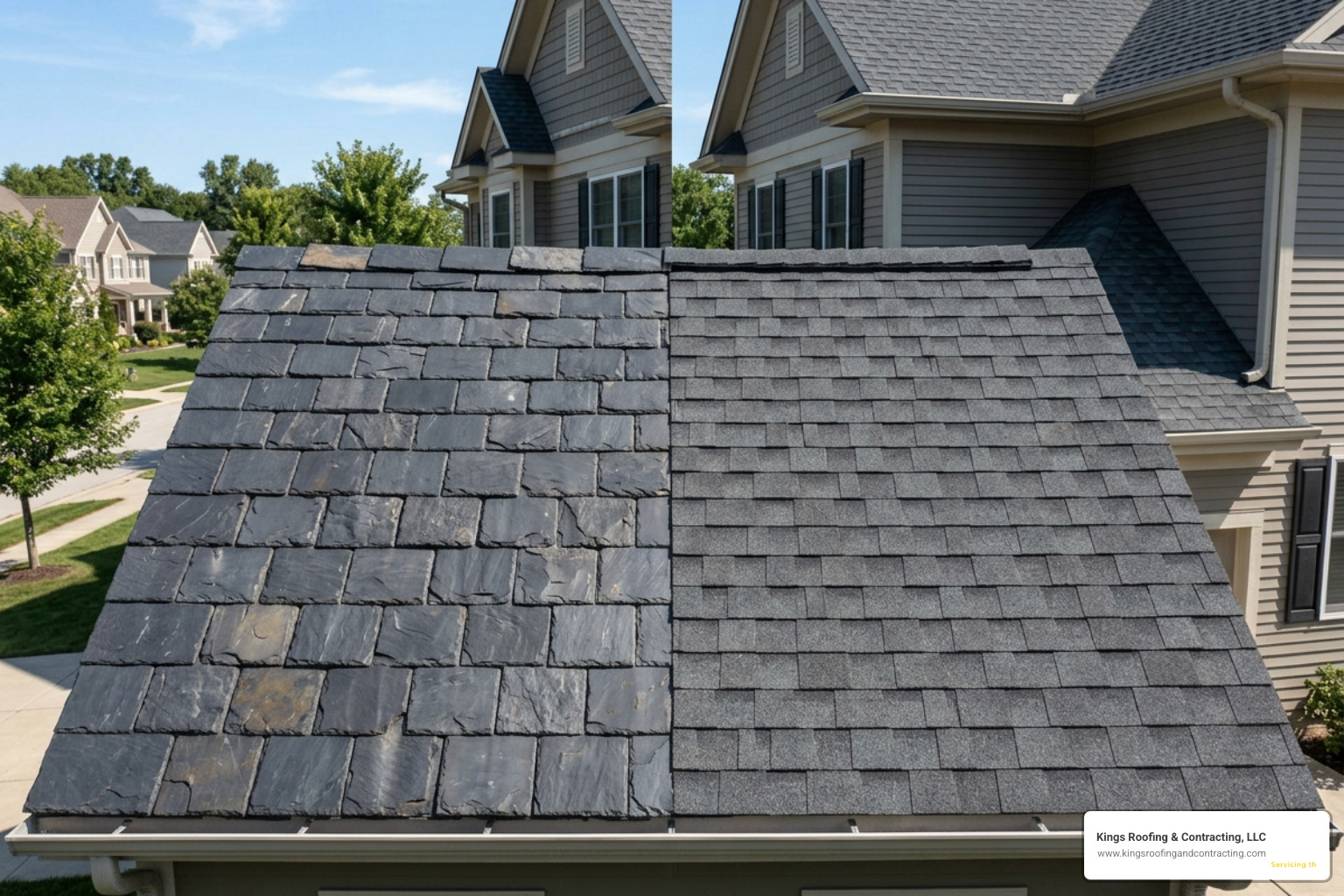
To understand why slate is highly regarded as the “forever roof,” it helps to compare it directly to common alternatives like asphalt shingle roofing and metal roofing.
Environmental Benefits and Low Carbon Footprint
In an era where sustainability is top of mind, natural slate is an environmental champion. Because it is a natural metamorphic rock formed by extraordinary geological time and compression, it requires absolutely no petro-chemicals for manufacturing. Its carbon footprint is limited almost entirely to extraction and transportation.
Furthermore, a single slate roof can reduce construction waste by eliminating the need for five or more asphalt replacement roofs over a century. In the roofing industry, we often say that doubling the life of a building material halves its overall environmental impact. When your roof lasts 100 to 200 years, you keep tons of petroleum-based waste out of local landfills in Boise, Meridian, and Caldwell.
Fireproof and Weather-Resistant Properties
Slate is entirely fireproof, providing an unmatched layer of safety against wildfires or stray sparks. Additionally, high-quality slate exhibits incredible resistance to extreme weather:
- Wind Resistance: Premium Vermont slates, such as those from Greenstone Slate, are Miami-Dade County approved for high-velocity hurricane zones, having been tested at sustained wind speeds of 110 mph with zero failures or leaks.
- Hail Resistance: Standard-grade rough texture slates (1/4 to 5/16-inch thick) easily achieve a Class 3 hail rating. When you upgrade to thicker slates of 3/8-inch or more, they receive a Class 4 hail rating (FM 4473 impact rating), which means they can repel 2-inch hail traveling at 120 mph. This makes slate highly attractive for protecting homes in Eagle and Nampa during volatile spring storms.
Roofing Material Comparison Table
| Feature | Natural Slate | Premium Metal | Standard Asphalt |
|---|---|---|---|
| Typical Lifespan | 75 to 100+ Years (S1 Grade) | 50 to 100 Years (Copper/Steel) | 20 to 30 Years |
| Upfront Cost | Very High ($15 – $30 / sq. ft.) | Moderate to High ($5 – $14 / sq. ft.) | Low ($3 – $5 / sq. ft.) |
| Maintenance Need | Low (Annual Inspections) | Very Low | Moderate (Algae, Wind Damage) |
| Fire Resistance | Class A (Non-combustible) | Class A (Non-combustible) | Class A (Treated) |
| Recyclability | 100% Recyclable Natural Stone | 100% Recyclable Metal | Limited (High Landfill Waste) |
Understanding Slate Grades and Structural Requirements
Not all natural stone slate is created equal. When working with specialized slate roofing companies, one of the first technical details we will discuss is the quality grade of the slate.
Under the ASTM C406 standard, roofing slate is graded into three classifications based on its raw material properties, water absorption rates, and expected longevity:
- S1 Grade: The highest quality classification. S1 slate provides a life expectancy of 75 to 100+ years. For example, Greenstone Slate offers a 100-year warranty on its S1-rated Vermont slate. During testing, these slates absorb less than 0.0025% of their weight when submerged for 72 hours. This extremely low water absorption is critical because it prevents the stone from absorbing water, freezing, and cracking during cold Idaho winters.
- S2 Grade: Offers a lifespan of 40 to 75 years. It is slightly more porous than S1 and may weather more quickly in severe climates.
- S3 Grade: Offers a lifespan of 20 to 40 years. This grade is rarely recommended for northern climates due to its higher water absorption and susceptibility to freeze-thaw damage.
To ensure your roof stands the test of time, it should be installed in strict accordance with the historic 1927 National Slate Association Standards.
How Slate Roofing Companies Evaluate Structural Weight
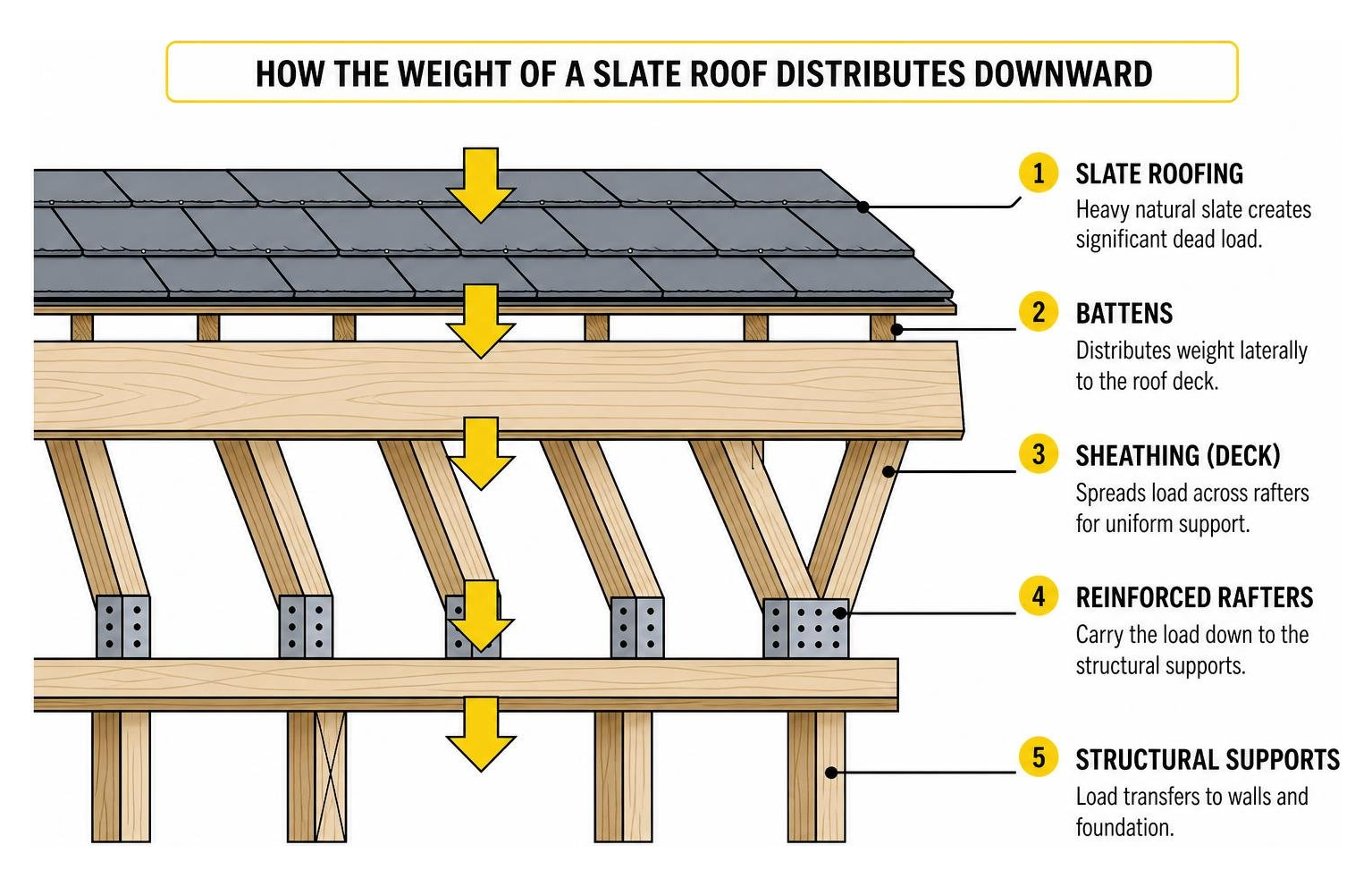
The beauty of natural stone comes with a physical reality: weight. Traditional natural slate is incredibly heavy, typically weighing between 800 and 1,500 pounds per square (a “square” is a 100-square-foot area of roof).
Before any slate installation can begin, a thorough evaluation of your home’s structural framing is mandatory.
- Dead Load Capacity: We must calculate the “dead load” capacity of your roof structure. Standard modern homes are typically engineered to support asphalt shingles (about 200 to 300 lbs per square).
- Rafter and Sheathing Inspection: During our comprehensive roof inspections, we examine the spacing, size, and span of your rafters. We also check the condition of the wood sheathing.
- Structural Reinforcement: If the existing framing cannot support the heavy stone tiles, we must perform a structural roof repair or reinforcement. This often involves sistering rafters or adding structural collar ties to prevent the roof from sagging under the weight.
Lifespan, Common Problems, and Maintenance of Slate Roofs
While a natural slate roof is designed to last a century, its actual lifespan depends heavily on proper roof maintenance and the quality of the flashings beneath the stone.
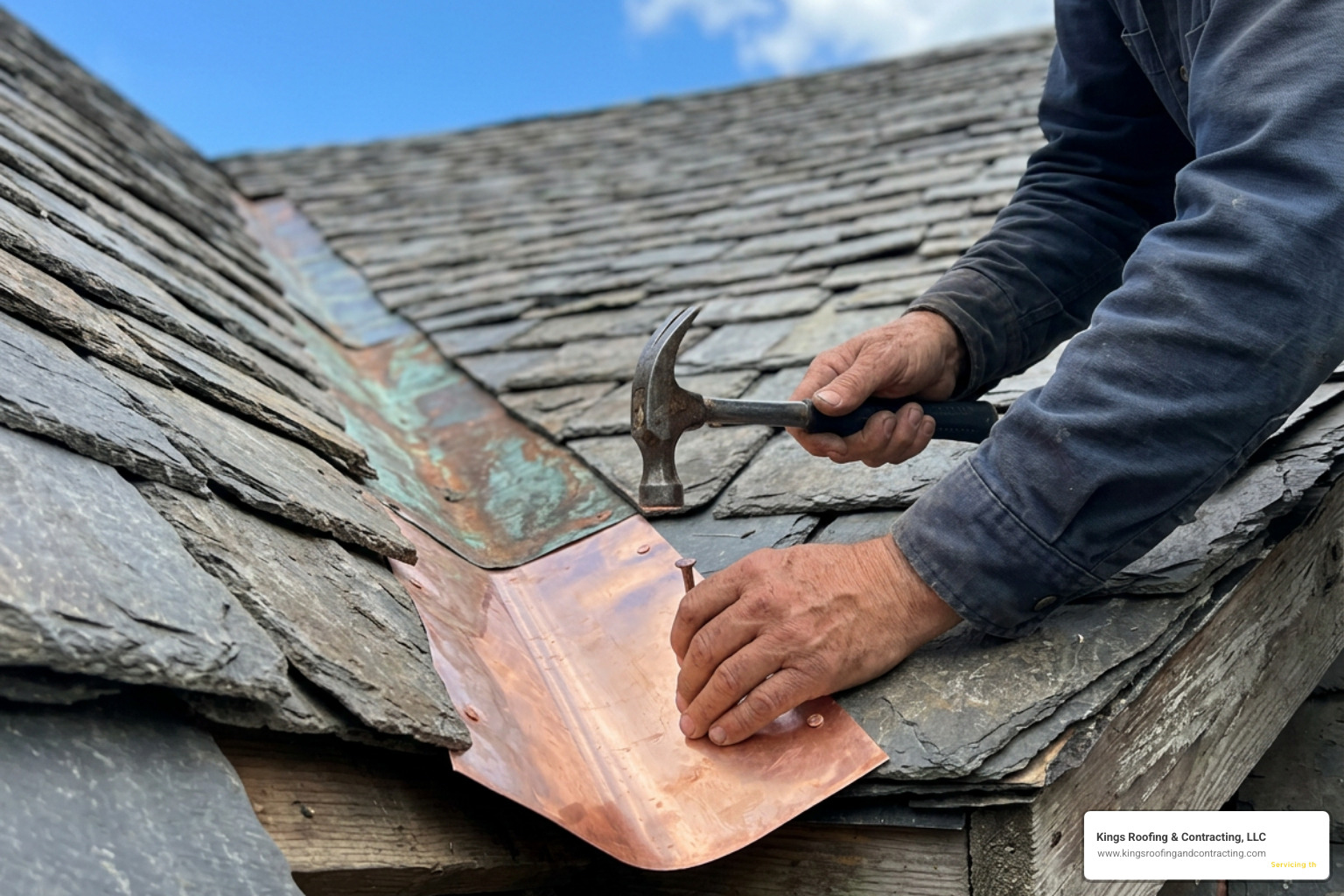
The Role of Copper Flashing and Preventing Galvanic Corrosion
In many cases, a slate roof “fails” not because the stone has deteriorated, but because the metal flashings in the valleys, chimneys, and dormers have worn out. Because natural slate lasts 100+ years, it must always be paired with a flashing material of matching durability.
This is why copper is the only flashing material trusted by high-end slate contractors. According to the Copper Development Association, copper naturally develops a protective blue-green patina over time that prevents corrosion.
However, installing copper requires specialized skills:
- No Steel Fasteners: Steel or galvanized fasteners must never be used with copper. When dissimilar metals come into contact, a chemical reaction called galvanic corrosion occurs, rapidly destroying the copper. We use only copper nails or brass fasteners.
- Hand-Soldered Seams: Horizontal seams and critical transition areas must be sweat-soldered by hand using a 50/50 solder to ensure a watertight seal that expands and contracts naturally with seasonal temperature shifts.
Common Problems and Early Leak Detection
Homeowners in the Treasure Valley should schedule annual inspections to watch for common issues such as:
- Broken or Missing Tiles: Often caused by falling tree limbs, heavy snow slides, or well-meaning homeowners attempting to walk on the roof to hang holiday lights.
- Flashing Failures: Cracks in old valley metal or chimney saddles that require immediate leak detection and repair before moisture rots the underlying deck.
When to Repair vs. Replace with Slate Roofing Companies
If you notice water stains on your ceiling or find a broken slate tile on your lawn, you don’t necessarily need a full, expensive roof replacement.
To determine the best course of action, we use two industry-standard diagnostic tools:
- The 20 Percent Rule: If less than 20% of the slate tiles across the entire roof are damaged or missing, a targeted repair is highly cost-effective. We can perform a missing shingle replacement using matching salvaged or newly quarried slates. If damage exceeds 20%, or if the tiles are uniformly failing, a replacement is required.
- The Knuckle Test: To check the health of your slate, pick up a fallen tile and tap it gently with your knuckles. If it produces a clear, metallic, ringing sound, the stone is still structurally sound. If it makes a dull, paper-like thud, the slate is delaminating (absorbing moisture and rotting internally) and must be replaced.
Modern Innovations in Slate Roofing Systems
If a structural inspection reveals your home cannot support a traditional 1,000-pound slate roof, you don’t have to settle for asphalt. Modern engineering has introduced brilliant lightweight installation methods that make genuine slate accessible for almost any home.
- The SlateTec Method: This innovative system reduces the weight of a genuine slate roof by up to 40%, bringing the overall weight down to under 6 lbs per square foot. By utilizing a rugged, high-performance interlayment grid, SlateTec eliminates the need for the heavy overlapping layers required by traditional installation, allowing you to enjoy real Vermont stone without costly structural reinforcement.
- The Nu-lok Grid System: This system uses lightweight, durable tracks to lock individual slate tiles into place. It simplifies the roof installation process and makes replacing a damaged tile as simple as sliding a new one into the grid.
- Integrated Solar Panels: You no longer have to ruin the architectural beauty of stone with bulky solar racks. Modern systems allow high-performance solar panels (such as CertainTeed Solstice) to be integrated completely flush with the slate roofline, preserving your home’s historic aesthetic.
How to Choose Qualified Slate Roofing Companies
Because slate installation is an art form, choosing the right contractor is the single most important decision you will make.
When vetting local contractors, slate requires completely different skills, tools, and European-style craftsmanship compared to asphalt shingles. A general roofer may try to use modern shortcuts — like improper face nailing or sealing tiles with roofing cement — which will rapidly ruin the roof.
Here is what you must verify before signing a contract:
- Specialized Credentials: Ensure the company is an active member of the Slate Roofing Contractors Association or has co-founders tied to the National Slate Association.
- Proper Equipment: Ask if they use specialized slate cutters, slate hammers, and rippers.
- Local Idaho Licensing: Ensure they hold active registrations in Idaho and carry robust general liability and workers’ compensation insurance to protect your property during the project.
Frequently Asked Questions about Slate Roofing
How much does a slate roof cost per square foot?
Natural slate is a premium, high-end material. The baseline material cost for natural slate typically ranges from $15.00 to $30.00 per square foot, depending on the thickness and color blend (such as Vermont Antique Maple or Welsh Penrhyn Purple). When you factor in specialized labor and copper flashing, the total cost can be significant.
If you love the look of slate but have a tighter budget, synthetic slate alternatives (made of durable polymers) cost between $6.00 and $12.00 per square foot and can be installed by our residential roofing team. You can request a free roof quote to compare both options for your specific home.
Can you walk on a slate roof?
No, you should never walk on a slate roof. Natural slate is strong against wind and hail, but it is highly fragile under the concentrated weight of a human foot. Walking on the tiles — whether to clean gutters or hang holiday lights — carries an incredibly high risk of cracking the stone. If access is absolutely necessary, professional slate roofers use specialized roof ladders, hook ladders, or staging brackets to distribute weight evenly without touching the stone directly.
Is slate roofing practical for the Idaho climate?
Yes, but only if you choose high-quality slate and an experienced contractor. The Treasure Valley experiences intense seasonal shifts, from hot summer days to freezing winter nights with heavy snow loads.
If you use a lower-grade slate that absorbs water, the moisture will freeze and expand during winter, causing the tiles to crack and delaminate. However, if you install an S1-rated slate (which absorbs less than 0.0025% water), it will easily withstand freeze-thaw cycles.
Our team specializes in boise roof repair and installations designed specifically to handle Idaho’s unique climate. We also serve homeowners in Eagle, so if you need localized assistance, check out our eagle roof-repair services.
Conclusion
A slate roof is the ultimate crown for a beautiful home. It offers unparalleled fireproof protection, extreme wind resistance, and an architectural elegance that synthetic materials simply cannot replicate. While the upfront investment is higher than other materials, its 100-year lifespan means it is the last roof you will ever install.
At Kings Roofing & Contracting, LLC, we bring transparent pricing, GAF-certified workmanship, and a deep respect for traditional craftsmanship to every premium roofing project across Boise, Meridian, Nampa, Caldwell, Eagle, Kuna, and Garden City.
Whether you need a historic restoration, a targeted repair, or a modern lightweight slate installation, we are here to help. Fill out our online form today to receive your free roof quote.