When a Storm Hits, Every Hour Counts
Storm damage repair is the process of restoring a home’s roof, siding, gutters, and structure after wind, hail, flooding, or fallen trees cause harm. If your home has been hit, contacting a trusted storm damage roofing contractor in Boise, ID immediately is the best way to prevent further structural issues. Here is what you need to know right away:
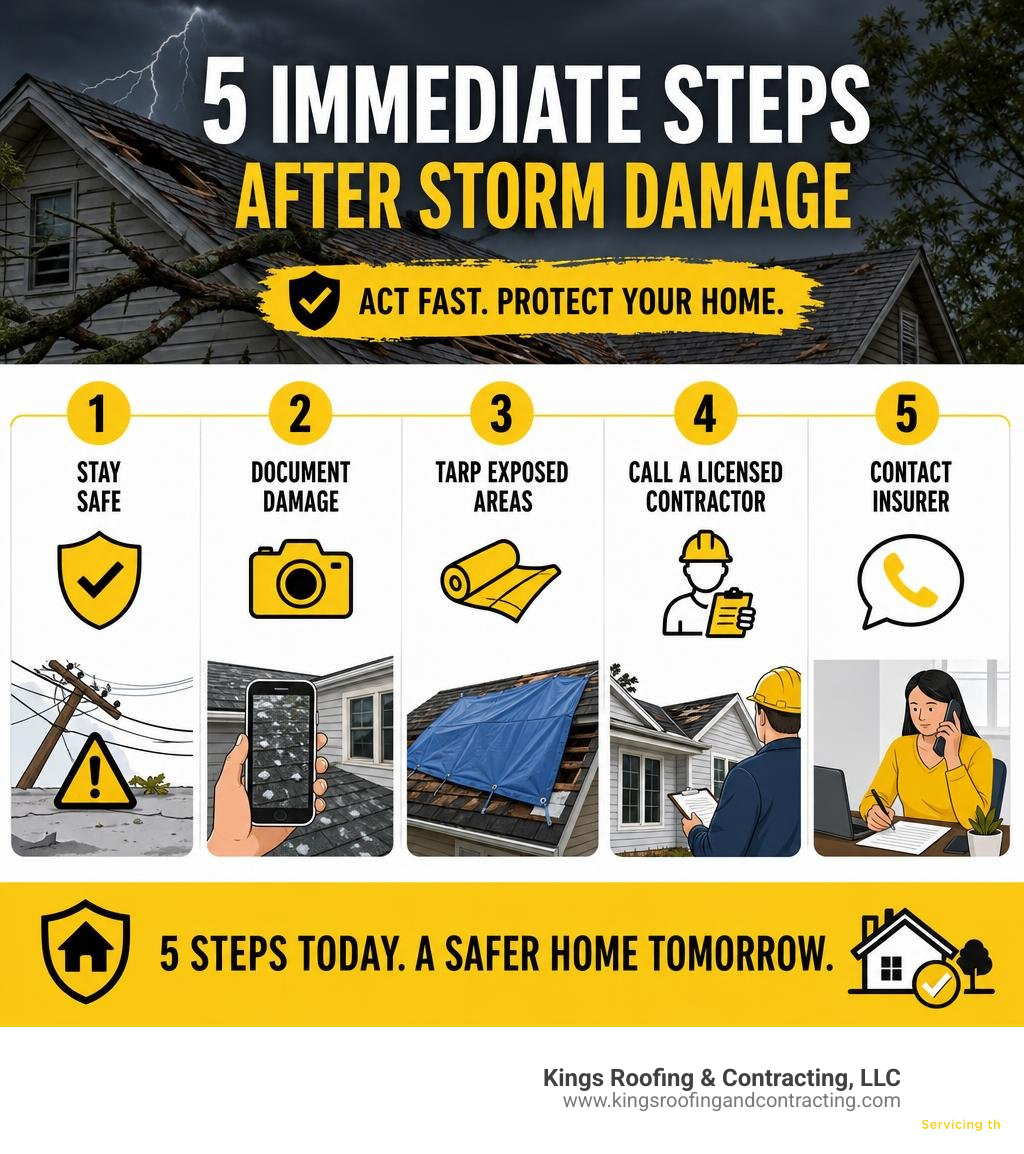
Quick Answer: What to Do After Storm Damage
- Stay safe — avoid downed power lines, broken glass, and unstable structures
- Document everything — photograph all visible damage inside and outside
- Prevent more damage — cover exposed areas with tarps if safe to do so
- Call a licensed local contractor — get a professional inspection before filing your insurance claim
- Contact your insurer — report the damage and ask about your HO-3 policy coverage
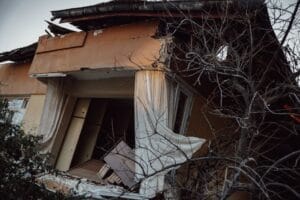
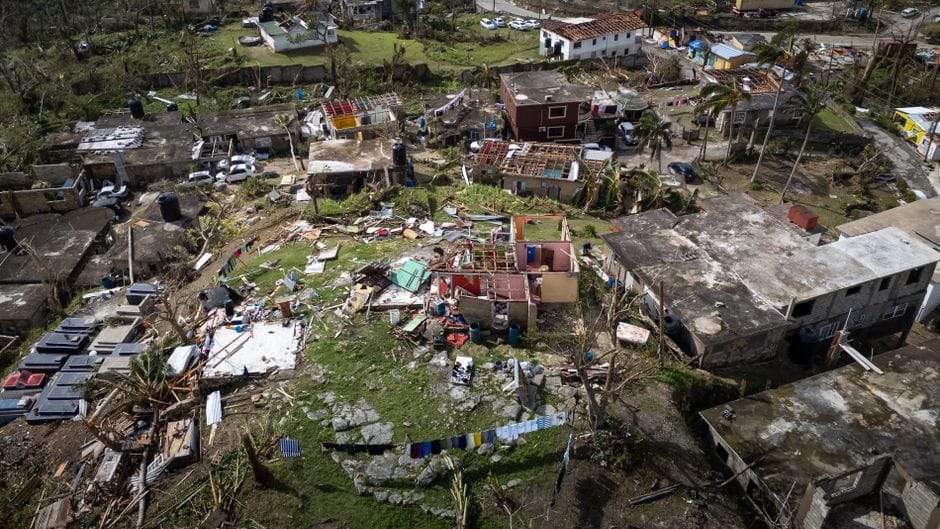
A storm can turn your home from a safe haven into a disaster area overnight. In the Treasure Valley, intense hail and high winds can strip shingles, collapse gutters, and push water into your attic — often while you are asleep. By morning, the damage is done, and the clock is already ticking on mold, rot, and structural decay.
The good news: acting fast makes a real difference. Professional roofing services in Boise are built for exactly this situation — rapid assessment, emergency protection, and full restoration so your home gets back to pre-storm condition. Homeowners in the city can also review dedicated Boise roof repair services for local repair guidance.
I’m Ryan Santoro, owner of Kings Roofing & Contracting, LLC, and with 24 years of construction experience I’ve guided hundreds of Treasure Valley homeowners through storm damage repair — from the first emergency tarp to the final insurance sign-off. In the sections below, I’ll walk you through everything you need to know to protect your home, navigate your claim, and avoid costly mistakes.
Critical Indicators That Your Home Needs Storm Damage Repair
Storm damage repair is necessary when wind, hail, or water compromises a roof’s ability to shed water and protect the structure beneath it. When severe weather rolls through Idaho, it rarely leaves a polite note explaining what it broke. Instead, severe storms leave behind a trail of subtle clues. Identifying these indicators early is the key to preventing a minor leak from turning into a full-scale structural disaster.
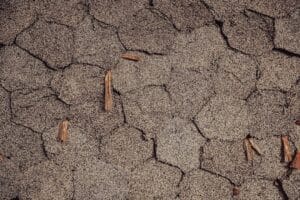
If your home has recently been subjected to heavy winds or pounding hail, you need to look closely at your exterior. The NOAA National Severe Storms Laboratory hail guide explains that hail forms in strong thunderstorm updrafts and can reach damaging sizes before falling to the ground. Hailstones act like tiny hammers, striking your roof at terminal velocity. These impacts strip away the protective mineral granules on your asphalt shingles, leaving the underlying asphalt substrate completely exposed to harsh UV rays. Over the course of 6 to 18 months, these exposed spots degrade, crack, and inevitably begin to leak.
To help you understand the threat level after a hailstorm, we have put together a quick reference guide based on hail size and its typical impact on residential roofing systems:
| Hailstone Size | Visual Comparison | Expected Roof Damage Severity & Indicators |
|---|---|---|
| 1.0 Inch | Quarter-sized | Minor to moderate granule loss; accelerated wear on older or brittle shingles; damage to thin aluminum fixtures. |
| 1.5 Inches | Golf ball-sized | Severe granule loss; bruising of the shingle mat; structural cracking; dented metal valleys and roof vents. |
| 2.0 Inches+ | Hen egg-sized or larger | Full shingle puncture; exposed underlayment; cracked wood decking; immediate water intrusion. Requires full replacement. |
If you suspect your home has experienced impacts from any of these hail sizes, scheduling a professional hail damage roof repair assessment is the safest way to protect your investment.
Wind and Hail Impacts That Require Storm Damage Repair
Wind damage operates differently than hail but is equally destructive. High winds do not just blow straight across your roof; they create dynamic pressure differentials. As wind rushes over your roofline, it creates an upward lifting force—known as wind uplift.
This uplift forces its way under loose or aging shingles, breaking the sealant strip that bonds them together. Once this seal is broken, shingles can easily flutter, crease, or tear away entirely. This shingle displacement leaves your roof deck and underlayment completely exposed to the elements.
If you notice missing shingles in your yard or see sections of your roofline that look patchy or uneven, you are likely dealing with active wind damage. Addressing this quickly with targeted wind damage roof repair ensures that rain cannot penetrate your home’s secondary protective barriers.
Hidden Water Intrusion and Structural Decay
Not all storm damage is obvious from your front yard. In fact, some of the most expensive repairs we perform stem from hidden water intrusion that went unnoticed for months.
When water slips past damaged shingles, it travels the path of least resistance. It saturates your roof decking, seeps into your attic insulation, and eventually pools on top of your ceiling drywall. By the time you notice a brown water stain on your living room ceiling, the structural wood above it may have already begun to rot.
Furthermore, damp attic spaces are prime breeding grounds for mold. Mold spores can begin to colonize wet drywall, wood, and insulation within 24 to 48 hours of water exposure. To prevent these health hazards and protect your home’s skeleton, we recommend having a professional inspect your attic space for dampness or musty odors immediately after any major storm. If structural issues are discovered, our team specializes in comprehensive structural roof repair to restore your home’s safety and integrity.
Immediate Steps to Take After a Severe Storm
The hours immediately following a severe storm are critical. While your natural instinct may be to rush outside and fix everything yourself, your first priority must always be safety.
Before you step outside, check for immediate safety hazards. Look out your windows for downed power lines. If you see any utility lines touching your roof, driveway, or nearby trees, stay inside and contact your local utility provider immediately. Water conducts electricity, so never walk through standing water near electrical panels, outdoor outlets, or appliances.
Once you have verified that it is safe to move around your property, you can begin temporary mitigation efforts. From a safe vantage point on the ground, use your smartphone to document the damage. Take clear, wide-angle photos of your entire home, as well as close-ups of any visible damage to your siding, gutters, and roof.
To ensure you don’t miss anything, we advise following these regional cleanup guidelines and scheduling professional roof inspections to document the damage safely.
Securing the Property with Tarping and Board-Ups
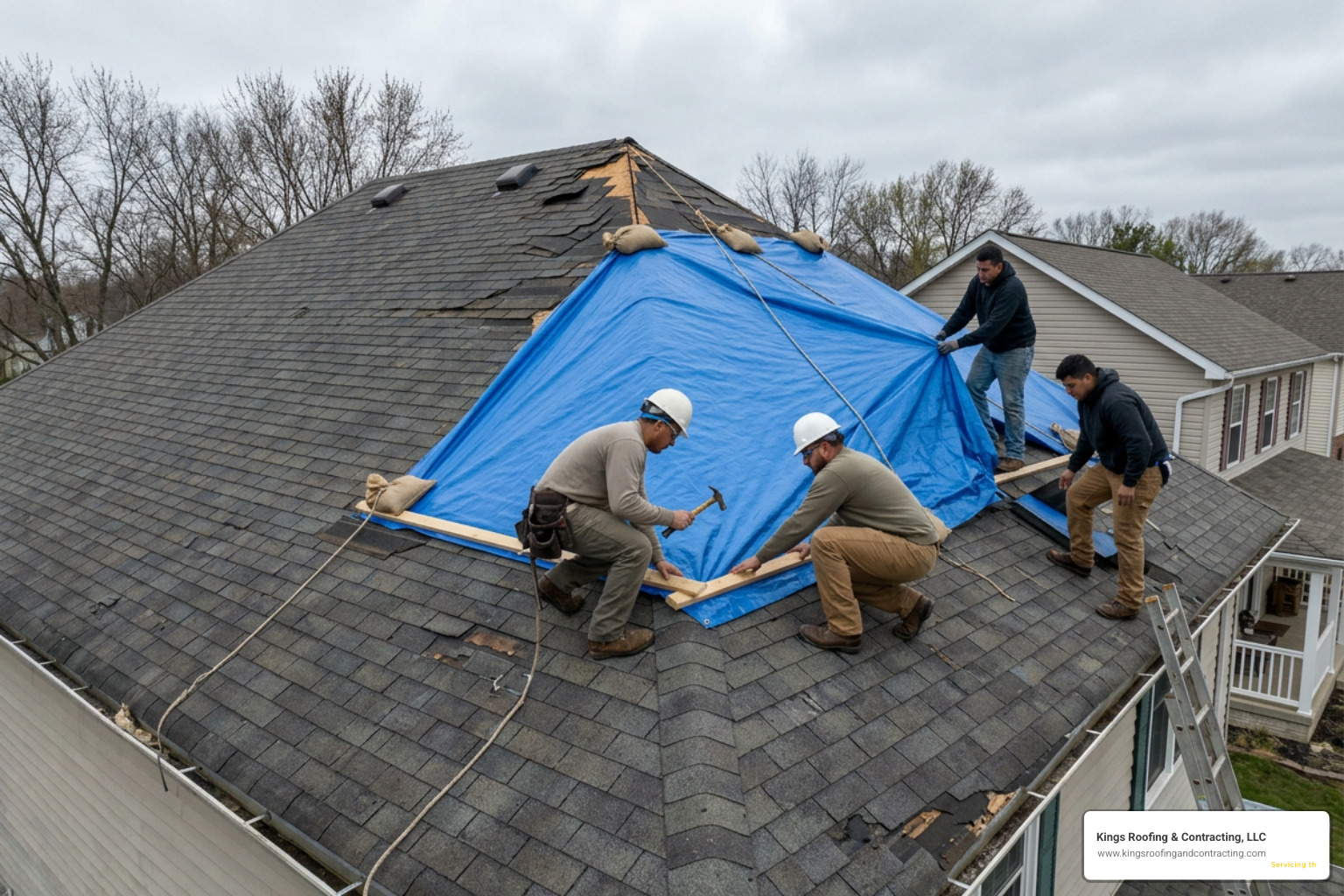
If a fallen tree limb or severe wind has opened up a hole in your roof, you must act quickly to prevent secondary water damage. Rainwater pouring into an unprotected opening can destroy your ceilings, walls, and personal belongings in a matter of minutes.
Emergency roof tarping and window board-ups are the standard methods for securing a compromised home. However, climbing onto a wet, storm-damaged roof is incredibly dangerous and should only be performed by licensed professionals equipped with proper fall protection gear.
If water has already entered your living spaces, you will also need immediate water extraction. Standing water must be pumped out, and wet carpets and drywall must be dried using industrial-grade dehumidifiers and air movers. Working with certified water extraction experts ensures that moisture is completely removed from your home’s structural framing, preventing long-term decay.
Navigating the Insurance Claims Process for Storm Damage
Filing an insurance claim for storm damage repair can feel like learning a foreign language while your house is leaking. However, understanding how the process works can save you thousands of dollars and endless headaches.
Most standard HO-3 homeowners insurance policies cover sudden and accidental damage caused by wind, hail, lightning, and falling objects. However, they do not cover damage caused by long-term neglect or normal wear and tear. This is why immediate documentation is so critical; it proves to your insurance carrier that the damage was a direct result of a specific storm event. The National Association of Insurance Commissioners homeowners insurance guide is a useful authority resource for understanding common policy terms before speaking with an adjuster.
Once you file a claim, your insurance company will assign an adjuster to inspect your property. It is highly beneficial to have your own contractor present during this adjuster meeting. A qualified roofing contractor can walk the roof with the adjuster to ensure that all damaged areas—including subtle hail bruises and compromised flashing—are documented in the official report. For professional support during this step, you can utilize our insurance claims assistance services to ensure nothing is overlooked.
The Role of Supplements in Insurance Claims
When your insurance adjuster writes their initial estimate, they are using standard industry software like Xactimate to calculate material and labor costs. However, these initial estimates are often incomplete. Adjusters cannot see through shingles to inspect the wood decking underneath, nor do they always account for local building code requirements.
This is where “supplements” come into play. A supplement is an additional claim filed by your contractor for necessary repairs, materials, or local code compliance items that were left off the adjuster’s initial estimate.
For example, if local building codes in the Treasure Valley require the installation of an ice and water shield along your roof’s eaves during a replacement, but your insurance company omitted it, your contractor will file a supplement to cover that cost. In our experience, roughly 60% to 70% of storm restoration projects require supplements to ensure the work is completed safely and legally.
The Risks of Storm Chasers vs. Local Licensed Contractors
In the wake of a major storm, out-of-state contractors—often referred to as “storm chasers”—frequently descend on affected neighborhoods. These companies travel from state to state following severe weather patterns, offering cheap bids, quick timelines, and door-to-door sales pitches.
While their offers may sound tempting, hiring an unlicensed or out-of-state contractor carries massive risks:
- No Workmanship Warranty Protection: If your roof begins to leak six months after a storm chaser leaves town, you will quickly find that their phone number is disconnected, and their physical address was a temporary P.O. Box.
- Liability Concerns: Unlicensed contractors often lack proper general liability and workers’ compensation insurance. If a worker falls off a ladder on your property, you could be held personally liable for their medical expenses.
- Permitting and Code Violations: Out-of-state crews are rarely familiar with local building codes or permitting processes. This can lead to failed municipal inspections and issues when you eventually try to sell your home.
Choosing a local, established company for your Boise storm damage repair ensures that you are working with professionals who are fully licensed, insured, and committed to supporting our local community long after the storm clouds have cleared.
Manufacturer Certifications and Warranties
When restoring your home, the quality of the materials and the credentials of the installer are just as important as the insurance coverage. Opting for manufacturer-certified contractors gives you access to extended warranties that uncertified contractors simply cannot offer.
As a GAF-certified contractor, we can install advanced roofing systems designed to withstand extreme weather. GAF offers highly durable roofing products that have passed rigorous UL 2218 Class 3 and Class 4 impact resistance testing.
These impact-resistant shingles are engineered to shrug off hail impacts that would shatter standard shingles. Even better, many insurance carriers offer premium discounts to homeowners who upgrade to Class 4 impact-resistant roofing. When it is time for a full roof replacement, choosing certified materials ensures your home is better protected against the next storm.
Frequently Asked Questions About Storm Restoration
How long does storm damage repair typically take?
The timeline for storm damage repair depends heavily on the extent of the damage and the speed of your insurance company’s approval process.
Once your insurance claim is approved and materials are delivered to your property, a standard residential roof replacement typically takes just 1 to 2 days to complete. A full exterior restoration—which may include replacing your roof, siding, and gutters—usually takes 3 to 5 days.
However, the planning, insurance adjusting, and material procurement phases can take anywhere from 1 to 3 weeks before physical work begins on your home.
Is storm damage always visible from the ground?
No, storm damage is rarely fully visible from the ground. While you might notice large areas of missing shingles, subtle wind uplift and hail impacts are almost impossible to spot without climbing onto the roof.
Hail bruising often appears as tiny, dark soft spots on your shingles that require physical touch to diagnose. To safely and accurately assess your roof’s condition, our team uses high-resolution drone photography and physical roof inspections to identify micro-cracks and hidden granule loss.
Does homeowners insurance cover the full cost of storm restoration?
In most cases, yes—minus your policy’s deductible. If you have a standard HO-3 replacement cost value (RCV) policy, your insurance company is responsible for covering the full cost of restoring your home to its pre-storm condition.
You are legally responsible for paying your deductible directly to your contractor. Be wary of any contractor who claims they can “waive” or “absorb” your deductible, as this is a form of insurance fraud and is highly illegal.
Conclusion
When severe weather strikes the Treasure Valley, your home’s first line of defense is its roof. Delaying repairs or hiring the wrong contractor can lead to active leaks, structural rot, and expensive out-of-pocket costs down the line.
At Kings Roofing & Contracting, LLC, we make the recovery process as simple and stress-free as possible. We offer GAF-certified workmanship, transparent pricing, and 24/7 availability to handle your emergency tarping and restoration needs. Whether you live in Boise, Meridian, Eagle, Caldwell, Nampa, Kuna, or Garden City, our local team is ready to stand by your side from the initial inspection to the final walkthrough.
Don’t wait for a minor leak to become a major headache. Contact us today to schedule your professional inspection, or visit our dedicated storm damage roofing page to learn more about how we can protect your home.