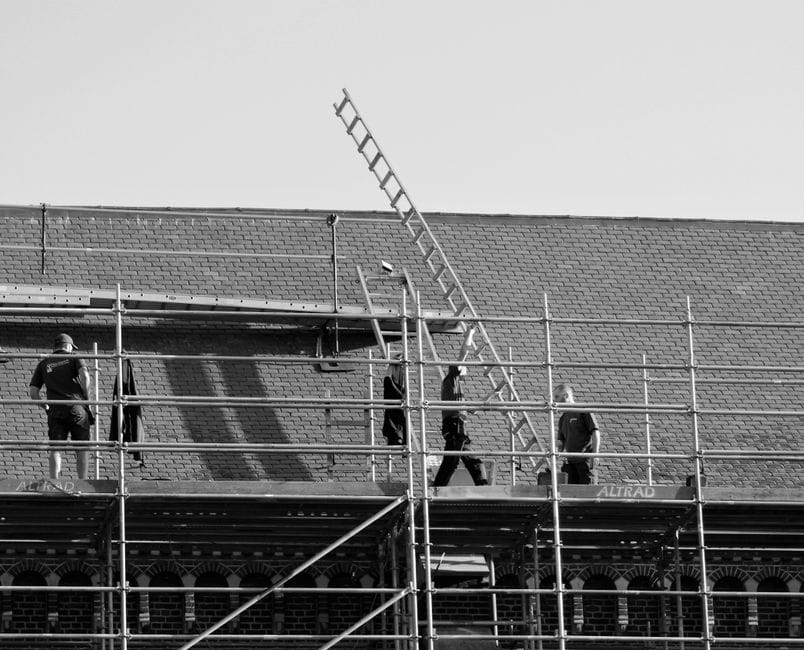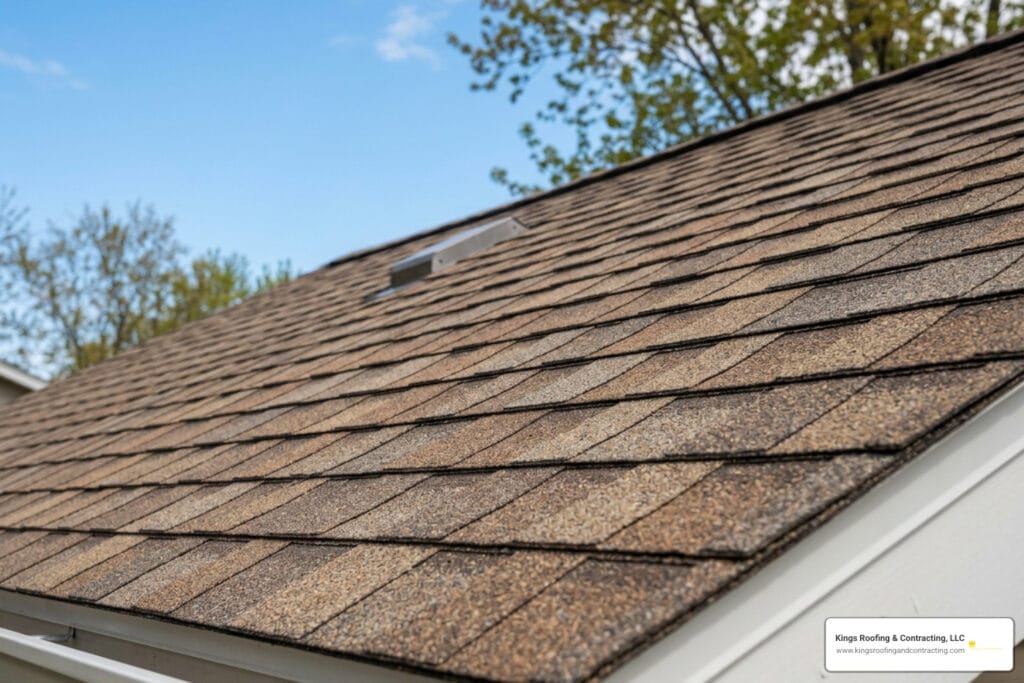
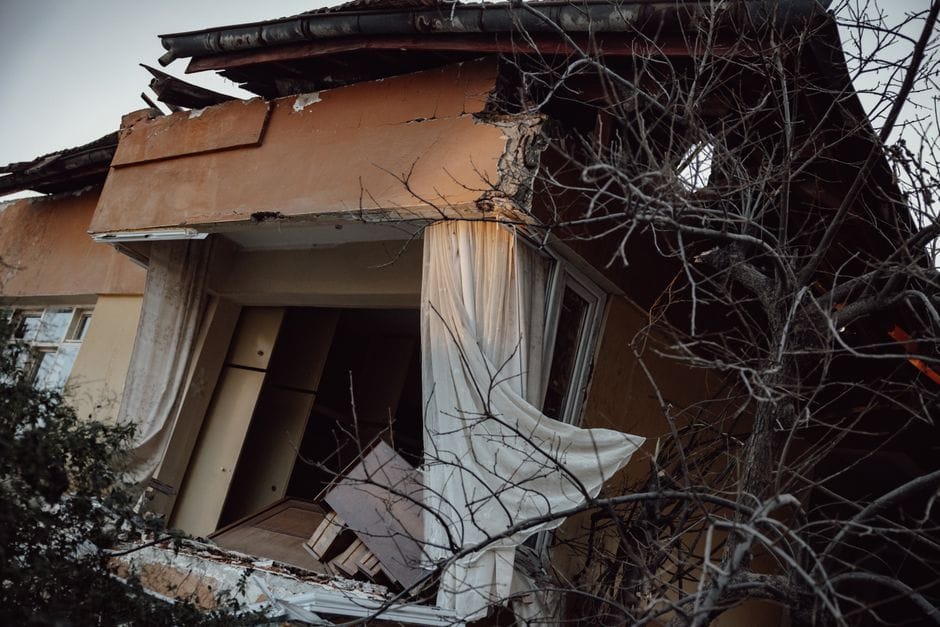
What Are Storm Damage Restoration Contractors — and Do You Need One?
If you’ve just been through a bad storm, here’s the short answer:
Storm damage restoration contractors are licensed professionals who assess, document, and repair property damage caused by severe weather — including hail, wind, flooding, and fallen trees. They also work directly with your insurance company to help cover the cost of repairs.
Here’s when you need one:
- Your roof has missing, cracked, or lifted shingles after a storm
- You notice leaks, water stains, or sagging ceilings indoors
- Hail hit your area (damage is often invisible from the ground)
- A tree or debris made contact with your roof or siding
- Your insurance company requires a professional damage assessment
A severe storm can turn a safe home into a serious liability — fast. Hail strips protective granules from shingles. High winds lift flashing and tear off siding. Heavy rain follows right behind, pushing moisture into the decking, insulation, and drywall. According to FEMA, the window between storm impact and secondary structural damage is narrow — and every hour of delay increases the total repair cost.
The challenge most homeowners face isn’t just the damage itself. It’s knowing who to call, what to ask, and how to avoid getting taken advantage of by out-of-state contractors who flood storm-affected neighborhoods and disappear after cashing an insurance check.
That’s exactly what this guide covers. At Kings Roofing & Contracting, we’ve seen how the right contractor — and the right process — makes the difference between a smooth insurance claim and a costly, drawn-out nightmare.
I’m Ryan Santoro, owner of Kings Roofing & Contracting, LLC, and with 24 years of hands-on construction experience spanning residential roofing, commercial builds, and storm damage restoration, I’ve helped Treasure Valley homeowners navigate the full restoration process from the first inspection through final sign-off. The information in this guide reflects what I’ve seen work — and what I’ve seen fail — in real storm recovery situations across Boise and the surrounding region.
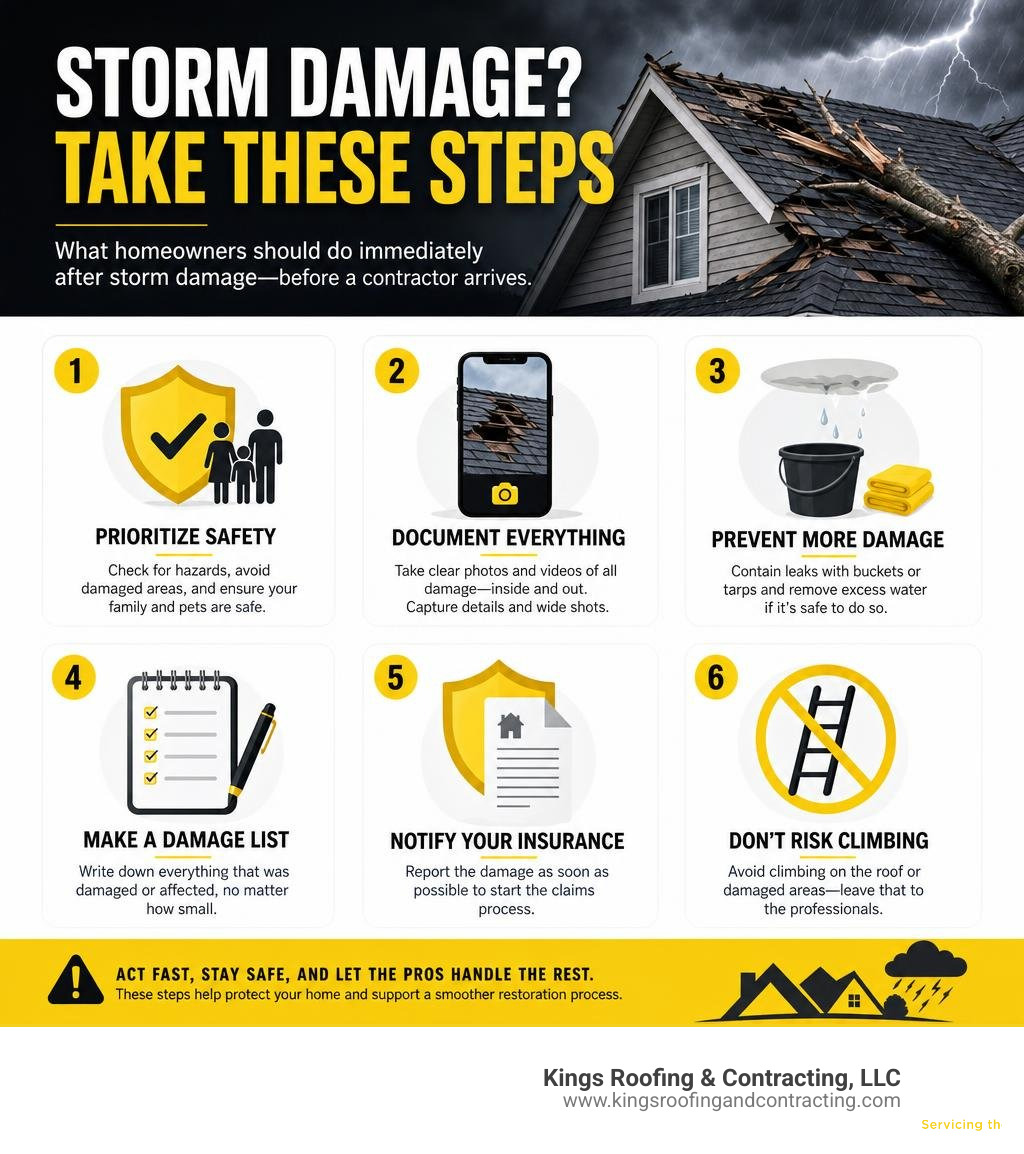
What to Look For in Professional Storm Damage Restoration Contractors
Finding the right team to rebuild your home is the single most important decision you will make following a severe weather event. In the chaotic days after high winds or heavy hail sweep through the Treasure Valley, homeowners are often overwhelmed by choices. Knowing how to filter out bad actors and identify true professionals is critical.
The Answer-First Rule of Hiring
“The most reliable way to identify a legitimate storm damage contractor is to verify their local physical address and active state license before signing any digital authorization forms.”
When you begin your search for storm damage restoration contractors, you must treat the process with the same diligence you would use when hiring a structural engineer.
Key Credentials to Verify
Never allow a contractor onto your roof or property without verifying the following foundational credentials:
- Active State Licensing and Registration: Idaho requires contractors to be registered. Always ask for their registration number and verify it on the state’s official registry.
- Comprehensive General Liability and Workers’ Compensation Insurance: If an uninsured worker falls off your roof, you could be held liable. Demand to see a current certificate of insurance (COI) sent directly from their insurance agency.
- Written Workmanship Warranties: A manufacturer warranty only covers material defects. You need a written workmanship warranty (ideally 2 to 3 years at minimum) that covers the actual installation labor.
- Manufacturer Certifications: Look for elite industry distinctions. For example, working with a GAF Certified Contractor ensures that the crew has been trained to install materials according to strict manufacturer specifications, unlocking extended warranty protections that uncertified contractors cannot offer.

Avoiding “Storm Chasers”
After a major storm, out-of-state repair companies — commonly known as “storm chasers” — flock to affected areas. They knock on doors, offer “free roofs,” and promise to waive your insurance deductible.
This practice is not only highly risky, but waiving deductibles is also illegal in many states. These companies operate on volume. They hire cheap, temporary local labor, collect the insurance payout, and move on to the next storm-ravaged city. When the roof begins leaking six months later, their phone lines are disconnected, leaving you with no recourse.
To protect yourself, focus on established local experts who have a deep stake in the community. If you live in Boise, ensure you are working with a dedicated partner specializing in Boise Storm Damage Repair who will be here to honor their workmanship warranty for years to come.
Types of Severe Weather Damage and Full-Service Restoration Solutions
Severe weather in Idaho is highly unpredictable. From sudden spring windstorms to heavy winter snow loads and localized hailstorms, your home’s exterior takes a beating. A professional restoration contractor must have the specialized knowledge to address each unique type of damage.
Hail Damage: The Silent Destroyer
Hail damage is notoriously deceptive because it is rarely visible from the ground unless the stones are golf-ball-sized or larger.
When hail strikes an asphalt shingle, it creates a circular bruise. This impact fractures the fiberglass shingle mat underneath and knocks loose the protective granules. Without these granules, the underlying asphalt is exposed to harsh UV rays, which rapidly degrade the shingle and lead to leaks.
If your home has been hit by a storm, securing a professional Hail Damage Roof Repair assessment is vital to prevent long-term rot.
Wind Damage: Physical and Structural Displacement
High winds cause physical tearing and lifting. When wind speeds exceed 50 to 60 mph, they can break the sealant strip that bonds shingles together.
Once this seal is broken, shingles begin to flutter, crease, or blow off entirely. Wind also pushes flashing away from chimneys and valleys, exposing raw wood to rain.
If you notice missing shingles or exposed underlayment, you must act quickly to schedule Wind Damage Roof Repair before the next rain system rolls through.
Water Mitigation & Emergency Tarping
When a storm breaches your home’s envelope, water mitigation becomes the top priority. Water is highly destructive; it ruins insulation, weakens structural framing, and fosters toxic mold growth within 24 to 48 hours.
Full-service storm damage restoration contractors do not just wait for sunny weather to start hammering shingles. They immediately deploy emergency tarping and board-up services to seal the building.
If you require urgent assistance, utilizing local resources such as 24/7 Emergency Restoration Services in Idaho – Call Now can stabilize your home while permanent repair plans are drafted.
Comprehensive Restoration Solutions
A complete storm restoration project often goes far beyond the roof. It involves gutters, siding, windows, and interior dry-out services.
Depending on your specific location within the Treasure Valley, you should partner with local experts who understand regional building codes. For comprehensive exterior care, look to specialized regional services like Storm Damage Roofing to ensure your entire home is returned to pre-storm condition.
The Step-by-Step Storm Damage Restoration Process and Timeline
Recovering from a severe storm is a marathon, not a sprint. However, understanding the timeline and sequence of events can significantly reduce your stress.

The Critical 24-48 Hour Window
Why is speed so important? Homeowners’ insurance policies contain a standard clause requiring the policyholder to take immediate action to prevent “secondary damage.”
If a storm blows three shingles off your roof, and you leave the wood exposed to three subsequent rainstorms without tarping it, your insurance carrier may deny coverage for the resulting interior water damage. Immediate mitigation is a legal and financial necessity.
The Restoration Timeline
While every storm event is unique, a standard restoration project generally follows this three-phase timeline:
Phase 1: Emergency Tarping & Mitigation (Hours 1–24)
As soon as it is safe to access the property, crews install heavy-duty, UV-resistant tarps over damaged roof sections and board up broken windows. If water has entered the home, commercial-grade dehumidifiers and air movers are deployed to dry out the structure.
Phase 2: Damage Assessment & Insurance Adjuster Meeting (Days 2–7)
The contractor performs a comprehensive physical inspection, documenting every instance of wind, hail, and water damage. They then meet your insurance adjuster on-site to walk the property together, ensuring all damage is noted on the initial scope of loss.
Phase 3: Material Delivery & Reconstruction (Days 7–14)
Once the insurance claim is approved and materials are selected, the physical reconstruction begins. A standard residential roof replacement typically takes only 1 to 2 days of active labor, while full siding and gutter replacement may add a few extra days.
Timeline Comparison Table
| Phase | Action Item | Typical Duration | Primary Goal |
|---|---|---|---|
| Mitigation | Emergency Tarping, Board-Up, Water Extraction | 1 – 24 Hours | Stop active leaks and prevent secondary mold or structural rot. |
| Assessment | Detailed Inspection, Drone Mapping, Adjuster Meeting | 2 – 7 Days | Reach agreement with insurance on the full scope of covered repairs. |
| Reconstruction | Material Delivery, Roof Repair, Siding & Gutter Installation | 7 – 14 Days | Rebuild the home to pre-storm condition using code-compliant materials. |
For homeowners in specific municipalities, utilizing localized mitigation and cleanup services is highly beneficial. If you are in Caldwell, you can access Water Damage Restoration Caldwell ID – Certified Response Experts for rapid water extraction.
Similarly, residents in surrounding areas can rely on Eagle Fire and Water Damage Restoration and Cleaning Services , Garden City Cleanup and Restoration , SERVPRO of Nampa / Caldwell , Meridian Fire and Water Damage Restoration and Cleaning Services , or Kuna – Dry Guys Restoration to handle immediate structural drying.
How Storm Damage Restoration Contractors Document and Navigate Insurance Claims
The physical repair of your home is only half the battle; the other half is navigating the complex insurance claims process. This is where professional storm damage restoration contractors prove their worth.
Advanced Documentation Methods
In June 2026, insurance adjusters require undeniable, photographic proof of damage before they will approve a claim. Gone are the days of a contractor simply pointing to a spot on the roof and saying, “Trust me, it’s damaged.”
Today, top-tier contractors utilize advanced technology to build ironclad claims:
- High-Resolution Drone Photography: Drones map the entire roof structure, capturing high-definition, close-up images of hail impacts, wind-torn shingles, and damaged flashing without risking safety.
- Xactimate Estimating Software: This is the exact same software used by major insurance carriers to calculate repair costs. By writing our estimates in Xactimate, we speak the insurance company’s language, which dramatically speeds up claim approvals.
- Satellite Aerial Measurements: Tools like EagleView provide precise, third-party measurements of your roof’s slope, valleys, and ridges, eliminating any disputes over material quantities.
Navigating the Claims Process
Once the damage is documented, your contractor should act as your guide. They will meet the insurance adjuster on your roof during the physical inspection. This is a critical step; insurance adjusters are often busy and may overlook soft-metal damage on vents or subtle hail bruising.
Furthermore, 60% to 70% of storm restoration projects require “supplements.” A supplement is an additional charge submitted to the insurance company for items that could not be seen until the old shingles were torn off (such as rotted roof decking) or for modern building code upgrades.
By utilizing professional Insurance Claims Assistance, you ensure that your insurance carrier covers these necessary expenses, keeping your out-of-pocket costs limited strictly to your deductible. For local support in your specific city, you can also reach out directly to our specialized teams for Boise Storm Damage Repair, Meridian Storm Damage Repair, Nampa Storm Damage Repair, Caldwell Storm Damage Repair, or Eagle Storm Damage Repair to manage the local inspection and claims process.
Frequently Asked Questions About Storm Damage Restoration
How do I verify the credentials of storm damage restoration contractors?
Homeowners should verify credentials by checking the contractor’s license number on the state’s official registry, confirming their physical local address, and checking their rating on the Better Business Bureau.
Always ensure they hold current general liability and workers’ compensation policies. Additionally, look for manufacturer certifications. Working with a certified installer allows you to secure extended warranties on your Roof Replacement, ensuring your investment is fully protected.
What hidden issues do storm damage restoration contractors look for?
Professional contractors look for sub-surface shingle bruising, compromised roof decking, micro-fractures in flashing, and trapped moisture that leads to mold growth.
While a roof may look perfectly fine from the driveway, a trained eye can spot the subtle signs of granule loss and fractured asphalt mats. Catching these issues early during a routine Roof Repair assessment prevents water from slowly rot-damaging your rafters and ceilings over the winter.
Does homeowners insurance cover the entire cost of storm restoration?
Standard homeowners insurance policies typically cover the full cost of storm restoration, minus your deductible, provided the damage was caused by a covered peril (like wind or hail) and mitigated promptly.
It is important to understand how your policy is structured. If you have a Replacement Cost Value (RCV) policy, the insurance company will pay the full cost to replace the damaged items with brand-new equivalents. If you have an Actual Cash Value (ACV) policy, they will deduct depreciation based on the age of your roof, meaning you will have to cover the difference out of pocket.
Always review your policy details with your contractor during your initial Storm Damage Roofing consultation.
Conclusion
When severe weather strikes the Treasure Valley, your home’s first line of defense is its roof. Recovering from a major storm can feel overwhelming, but you do not have to navigate the insurance paperwork and physical reconstruction alone. By partnering with a licensed, local, and certified contractor, you can protect your property, maximize your insurance claim, and restore your home’s safety and value.
At Kings Roofing & Contracting, LLC, we pride ourselves on providing GAF-certified workmanship, transparent pricing, and 24/7 availability to homeowners across Boise, Meridian, Nampa, Caldwell, Eagle, Garden City, and Kuna. We treat your home as if it were our own.
Ready to secure your peace of mind? Get started today by requesting a Free Roof Quote to connect with our local storm restoration experts.