Your Roof Is Cooking — Here’s What Actually Helps
Finding the best roof cooling paint can mean the difference between a home that stays comfortable all summer and one that turns into an oven by noon. Before we dig in, here’s a quick answer if you’re short on time. If you are looking to protect your home from extreme heat, partnering with a professional team for premier roofing services is the best way to ensure a flawless application.
Top Picks for Best Roof Cooling Paint (2026)
| Product | Best For | SRI Value | Lifespan |
|---|---|---|---|
| NanoTech Cool Roof Coat | Commercial flat roofs | High (CRRC-rated) | 10+ years |
| CoolTops ECO | Eco-conscious homeowners | 109 | 5 years |
| Excel Roof Cool Coat | Budget-friendly heat reflection | High | Varies |
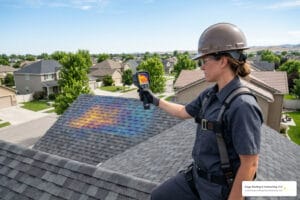
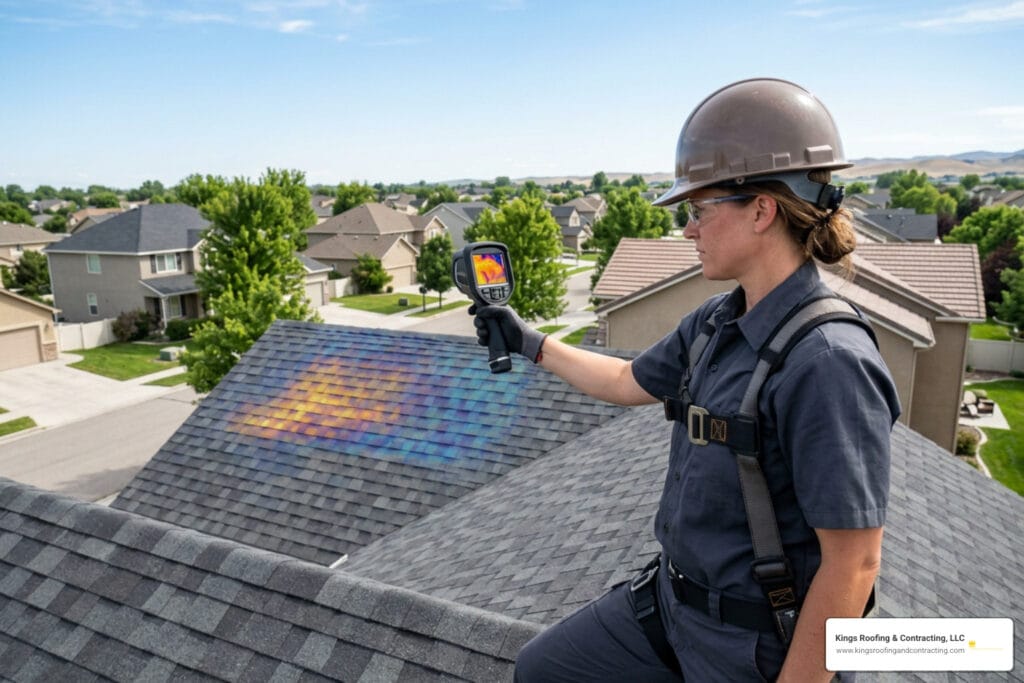
In peak summer, roof surface temperatures can climb to 60–70°C (140–158°F). That heat radiates straight down into your living space, forcing your air conditioner to work overtime and driving up your energy bills.
The good news: a quality cool roof coating can reflect 80–90% of the sun’s UV rays, lower your roof surface temperature by up to 30°C, and cut your cooling energy use by 10–30%. That’s a meaningful difference — without replacing your entire roof.
Whether you’ve got a flat commercial roof, a concrete terrace, or a metal surface baking in the Treasure Valley heat, the right coating can protect your home and your wallet. As Boise’s trusted roofing experts, we’ve seen how much of a difference the right roof treatment makes for homeowners across the region.
I’m Ryan Santoro, owner of Kings Roofing & Contracting LLC, with 24 years of construction experience across residential and commercial roofing systems — including flat roofs, metal roofing, and specialty coatings where choosing the best roof cooling paint is often the most cost-effective move a building owner can make. Below, I’ll walk you through exactly what works, what doesn’t, and which products stood out in 2026.
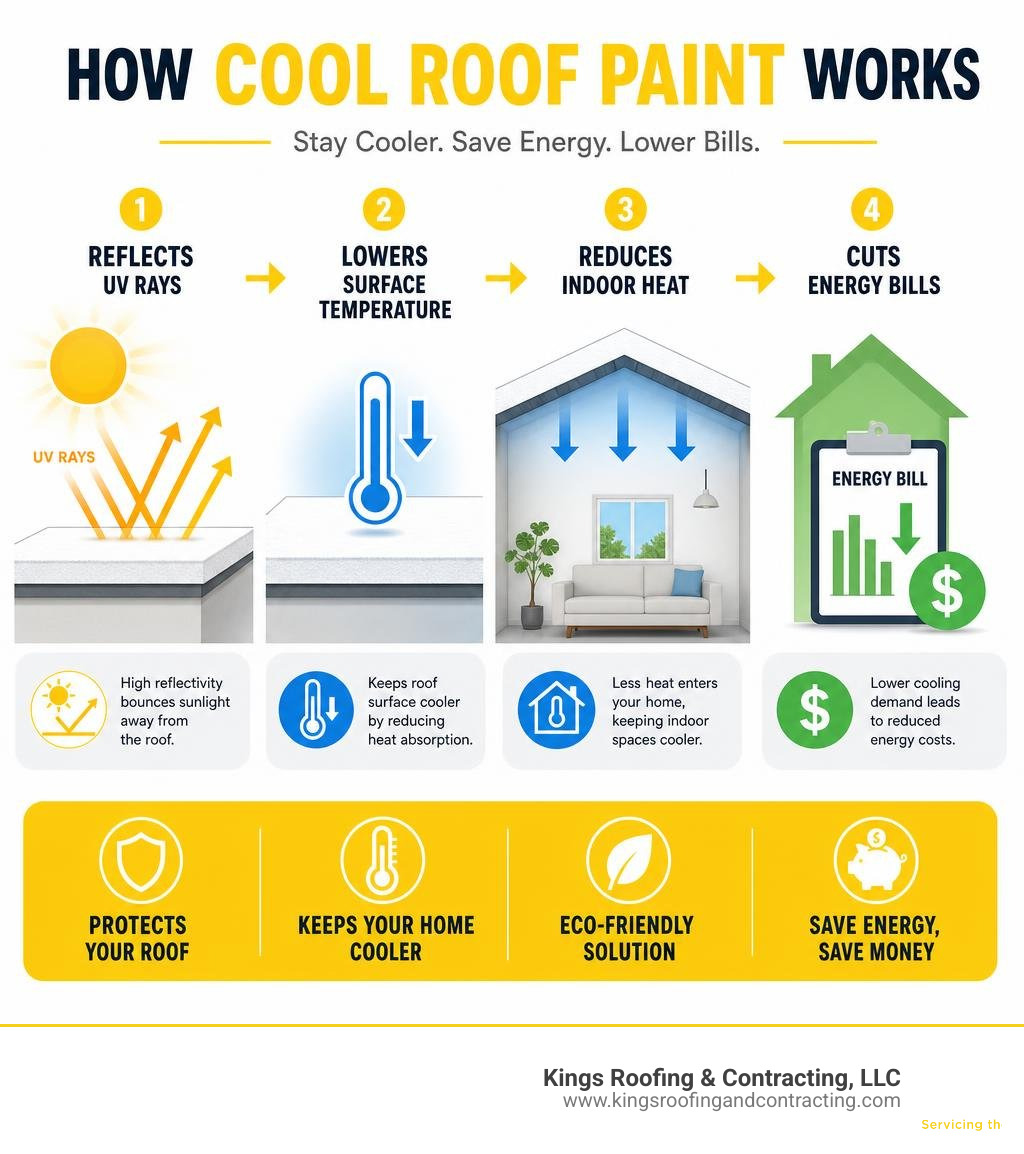
How Cool Roof Paint Works and the Main Coating Types
To understand how the best roof cooling paint keeps your building comfortable, you have to look at the physics of heat transfer. Cool roof coatings do not just act as a physical barrier; they actively manage solar energy through two key scientific principles: solar reflectance and thermal emittance.
- Solar Reflectance (Albedo): This is the fraction of solar energy reflected by the roof. High-quality white roof coatings can reflect 80–90% of the sun’s harsh UV and infrared rays, bouncing the energy back into the atmosphere before the roof structure can absorb it.
- Thermal Emittance: This measures how efficiently a surface radiates absorbed heat away from itself. A high thermal emittance means that the small amount of heat the roof does absorb is quickly released back into the air rather than radiating downward into your home or commercial space.
The combination of these two properties is represented by the Solar Reflectance Index (SRI). Calculated on a scale from 0 to 100 (and sometimes higher for advanced passive cooling technologies), a higher SRI indicates a cooler roof.
When choosing a cool roof coating, the base material determines how well the product performs, how long it lasts, and which substrates it can protect. Let’s break down the three most common coating bases used on flat roof systems and metal roofing today.
1. Acrylic Coatings
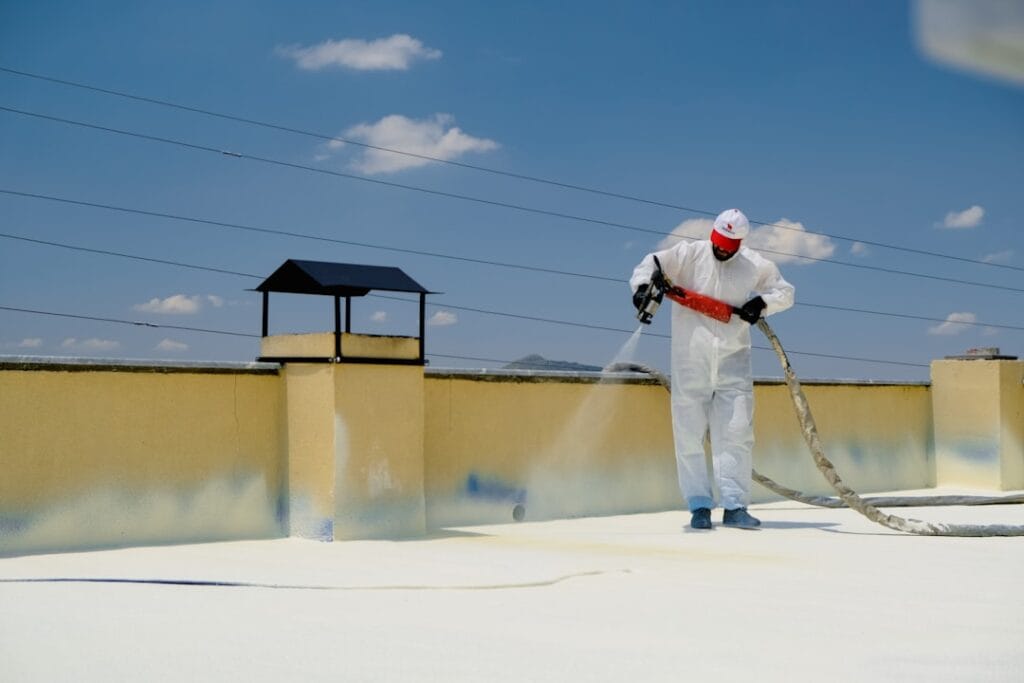
Acrylic roof coatings are water-based, highly reflective, and exceptionally cost-effective. They are easy to apply via brush, roller, or spray, making them a popular choice for both residential and commercial applications.
However, acrylics are highly sensitive to ponding water. If your roof has low spots where water sits for more than 48 hours, an acrylic coating will eventually re-emulsify, blister, and peel away. They are best suited for sloped roofs or flat roofs with positive drainage.
2. Silicone Coatings
Silicone coatings are the gold standard for flat roofs prone to ponding water. Because silicone is moisture-cured and naturally hydrophobic, it will not degrade under standing water.
Silicone coatings also boast high solids content (often exceeding 90%), meaning you need less wet material to achieve the desired dry film thickness (DFT). They offer excellent UV stability and do not become brittle over time. The main drawbacks are cost and dirt accumulation—silicone naturally attracts dust, which can degrade its solar reflectivity over time unless washed regularly.
3. Polyurethane (Urethane) Coatings
Urethane coatings are solvent-based and stand out for their incredible physical properties, particularly their high tensile strength and impact resistance. If your roof experiences regular foot traffic, mechanical maintenance, or hail storms, polyurethane is an excellent choice.
Urethanes also possess excellent elongation properties, allowing them to stretch and contract as the building shifts. However, they are more difficult to apply, emit stronger VOC odors during installation, and generally cost more than acrylics.
For a deeper dive into the chemical properties of these coatings, check out this technical guide on Cool Roof Coatings 101.
Coating Material Comparison Table
To help you weigh your options, here is a breakdown of how these three primary chemistries compare in key performance categories:
| Physical Property | Acrylic Coatings | Silicone Coatings | Polyurethane Coatings |
|---|---|---|---|
| Solar Reflectivity | High (Initial: 85%+) | High (Initial: 85%+) | Moderate to High |
| Ponding Water Resistance | Poor (Avoid on low-slope) | Excellent | Good to Very Good |
| Tensile Strength | Moderate (250–400 psi) | Moderate (250–500 psi) | High (800–1200 psi) |
| Elongation (Flexibility) | High (250–400%) | Moderate to High | Outstanding (400–900%) |
| Average Lifespan | 5 to 10 years | 10 to 20 years | 10 to 15 years |
| Relative Cost | $ (Budget-friendly) | $$$ (Premium) | $$$$ (High-end) |
Key Benefits of Applying the Best Roof Cooling Paint

Investing in the best roof cooling paint provides immediate, measurable benefits that extend far beyond simply lowering your thermostat.
Dramatic Temperature Reduction
On a scorching 95°F Idaho summer day, a standard dark asphalt or concrete roof can easily reach 150°F or hotter. Applying a high-SRI white coating can reduce that surface temperature by up to 30°C (54°F). This massive reduction in surface heat translates to an indoor ambient temperature drop of 2 to 5°C (4 to 9°F), transforming hot, unconditioned spaces like garages, attics, and warehouses into much more comfortable environments.
Substantial Energy and Cost Savings
Because your roof is no longer acting as a giant radiator, your HVAC system doesn’t have to work nearly as hard to maintain comfortable indoor temperatures. On average, reflective roof coatings cut cooling energy consumption by 10% to 30%. This reduction in peak electricity demand can lower your monthly utility bills and reduce wear and tear on your cooling equipment, preventing premature system failures.
Extended Roof Lifespan
Roofs fail primarily due to thermal shock—the constant expansion and contraction that occurs as temperatures cycle from hot daytime highs to cool nighttime lows. This movement stresses seams, joints, and fasteners.
By keeping the roof surface at a stable, cool temperature, a reflective coating eliminates thermal shock. Additionally, the coating shields the underlying roofing membrane from destructive UV radiation. Applying a coating system can prolong your roof’s serviceable life by 10, 15, or even 20 years, delaying a costly tear-off and replacement. In fact, a professional coating application typically costs 50–70% less than a full roof replacement. To ensure your roof is ready for a coating, review our roof maintenance checklist to identify any structural issues first.
Environmental Impact and UHI Mitigation
In urban areas like Boise, Meridian, and Nampa, dense concentrations of dark roofs and asphalt pavements absorb massive amounts of heat, creating “Urban Heat Islands.” By applying highly reflective coatings, we can bounce solar radiation back into space, helping to cool down our local microclimates. Furthermore, reducing energy usage directly lowers carbon emissions from local power grids. For cutting-edge projects, advanced materials like Pirta passive cooling paint are pushing the boundaries of passive cooling by dropping surface temperatures below the ambient air temperature without using any electricity.
Our Top Picks for the Best Roof Cooling Paint in 2026

When selecting the right product, it is critical to look for certifications from independent testing bodies. The Cool Roof Rating Council (CRRC) maintains a comprehensive CRRC Roof Directory that lists verified solar reflectance and thermal emittance values for rated products.
Below are our top three picks for the best roof cooling paint in 2026, selected for their specific performance characteristics, durability, and practical applications.
Why NanoTech Cool Roof Coat is the Best Roof Cooling Paint for Commercial Properties
For commercial buildings, industrial warehouses, and low-slope flat roofs, NanoTech Cool Roof Coat is an outstanding choice.
This premium, CRRC-rated ceramic coating features a high-solids formulation (71.8%) infused with proprietary ceramic microspheres. Unlike standard paints that rely solely on surface reflection, NanoTech’s ceramic technology combines high solar reflectivity with extremely low thermal conductivity. This dual-action barrier prevents heat from penetrating the building even when the surface becomes weathered or dusty.
- Key Features: Resists extreme temperatures from -22°F to 212°F, offers excellent hail impact resistance, and can reduce HVAC energy consumption by up to 50% under optimal conditions.
- Application: It can be applied via airless sprayer or roller, requiring no primer on many clean substrates. A standard application of 2.5 gallons per 100 square feet yields a robust 20-mil dry film thickness, backed by a 10-year manufacturer warranty.
Why CoolTops ECO is the Best Roof Cooling Paint for Eco-Conscious Homeowners
If you are looking to maximize your home’s energy efficiency while minimizing your environmental footprint, CoolTops ECO is a top-tier option.
This high-performance elastomeric coating features an impressive Solar Reflectance Index (SRI) of 109. It is certified by Green Pro and complies with major international green building standards, including LEED and GRIHA.
- Key Features: Uses advanced infrared (IR) reflection and nanotechnology to block heat transfer. It features excellent crack-bridging abilities, allowing it to stretch over minor hairline fractures in concrete and masonry roofs without tearing.
- Application: It is water-based, ultra-low VOC, and highly resistant to dirt pick-up and algae growth. The typical system includes a diluted primer coat followed by two perpendicular finish coats, providing a reliable 5-year service life.
Excel Roof Cool Coat for Budget-Friendly Heat Reflection
For residential concrete patios, flat terraces, or outbuildings where cost is a primary constraint, Excel Roof Cool Coat offers a highly effective, budget-friendly solution.
This water-based acrylic/PUD hybrid formulation incorporates “Triple Action Technology,” combining solar reflection, nano-insulation, and fiber-reinforced waterproofing in a single product.
- Key Features: It keeps interior spaces up to 20°C cooler during peak summer heat while providing basic waterproofing protection. Its nano-UV inhibitors prevent the polymer chain from breaking down under intense sunlight.
- Application: Highly versatile, Excel Cool Coat can be applied to RCC (reinforced concrete), tiles, asbestos sheets, and metal roofing. A 10-liter container covers approximately 250 square feet with the recommended double-coat application.
Frequently Asked Questions About Roof Cooling Paint
How long do cool roof coatings typically last?
On average, a professionally applied cool roof coating will last 10 to 25 years, depending on the chemistry used, the application thickness, and local weather conditions. Acrylic coatings typically require a refresher coat every 5 to 7 years, whereas high-quality silicone and polyurethane systems can easily last 15 to 20 years before requiring a recoat.
To maximize longevity, ensure the roof is thoroughly cleaned, repaired, and primed before application, and perform annual inspections to clear away debris and standing water.
Can you apply cool roof paint on asphalt shingles?
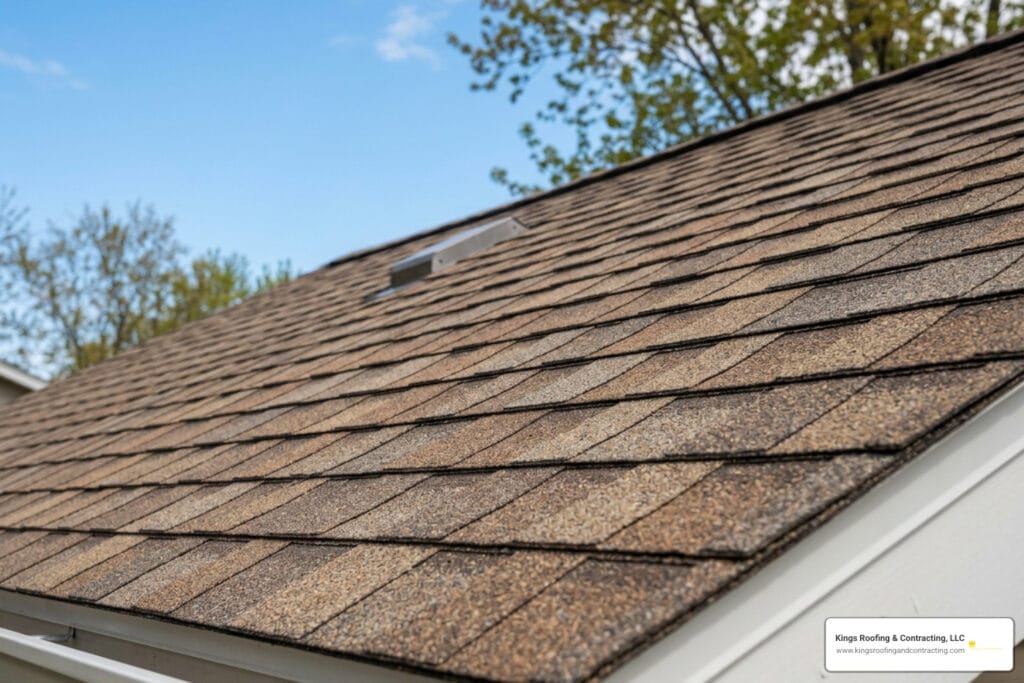
While it is technically possible to coat asphalt shingles with specialized elastomeric paints, it is generally not recommended as a DIY project. Asphalt shingles are designed to shed water individually; coating them with a continuous membrane can trap moisture underneath, leading to wood rot in your roof deck.
Additionally, shingles naturally shed granules over time, which can cause the coating to peel. If you are dealing with hot asphalt shingles in Boise, improving your attic ventilation or replacing old shingles with lighter-colored, high-reflectivity options is usually a safer, more effective solution.
What are the main limitations of reflective roof coatings?
Cool roof coatings are highly effective, but they are not a cure-all. Their primary limitations include:
- Ponding Water: Acrylic coatings will fail rapidly if water pools on the roof surface.
- Dirt Accumulation: Dust, pollen, and pollution will settle on white coatings, gradually reducing their reflectivity. Regular washing is required to maintain peak thermal performance.
- Winter Heat Loss (The Heating Penalty): In cold climates, a highly reflective roof prevents beneficial solar heat gain during winter, slightly increasing heating costs. However, because the summer sun is much stronger and higher in the sky, the summer cooling savings almost always outweigh the winter heating penalty.
- Condensation Risks: In certain climates, drastically lowering the temperature of a metal roof can shift the dew point, leading to moisture issues inside the building. Understanding how to manage this is crucial for preventing metal roof condensation and protecting your structural decking.
Conclusion
Applying the best roof cooling paint is one of the smartest, most cost-effective ways to beat the summer heat, lower your energy bills, and extend the life of your existing roof. However, prep work and proper material selection are everything. If applied to a damaged, dirty, or damp substrate, even the most expensive premium coating will peel and fail.
At Kings Roofing & Contracting, LLC, we help property owners across Boise, Meridian, Nampa, Caldwell, Eagle, Kuna, and the surrounding Treasure Valley select and install high-performance roofing systems tailored to our unique Idaho climate. Whether you need a professional cool roof coating application, a flat roof restoration, or a quick repair, our GAF-certified team is here to help with transparent pricing and dependable workmanship.
Don’t let the summer heat bake your home and drain your wallet. Contact us today for an expert Boise roof repair consultation, or request a free roof quote online.