Why Roof Inspections Matter for Boise Homes
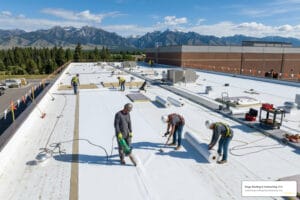
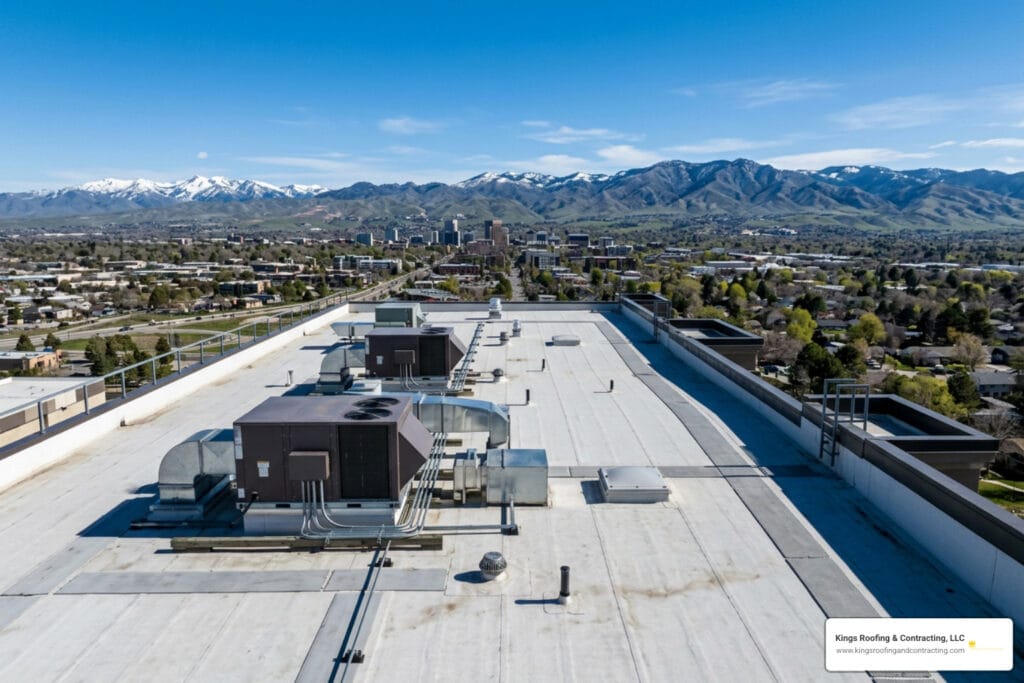
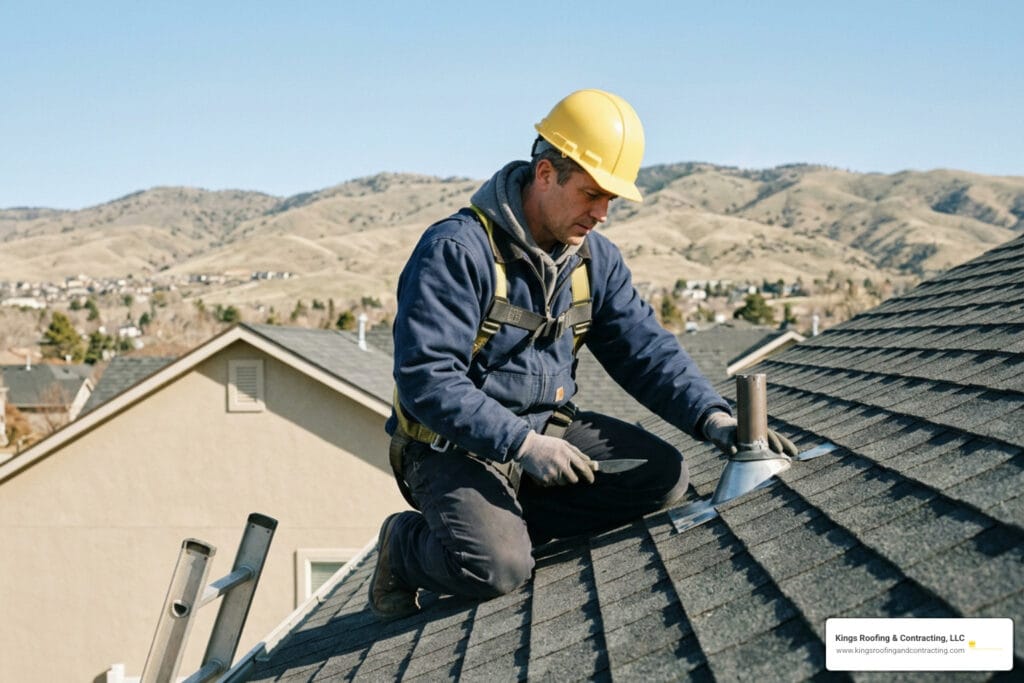
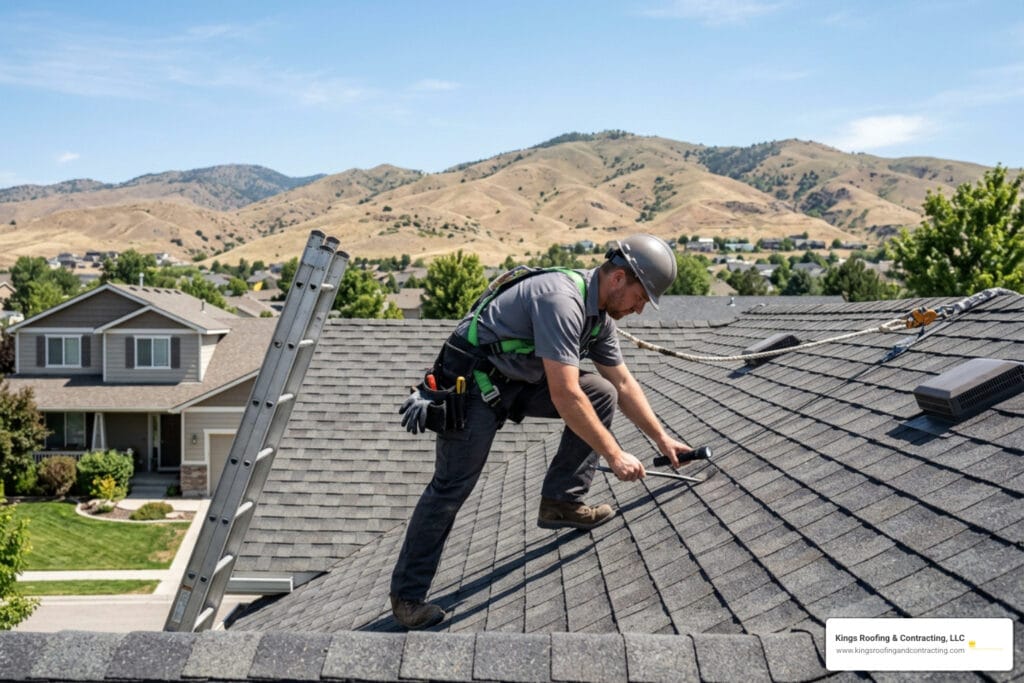
A roof inspection finds early signs of leaks, storm damage, failing flashing, worn shingles, and attic moisture before they become expensive repairs. In Boise, schedule one at least once a year, after major spring wind or hail events, and before winter. A qualified Boise roofing team should assess the roof surface, drainage, flashings, penetrations, and attic – not just scan shingles from the ground.
Treasure Valley roofs face high-desert UV, wide temperature swings, spring wind, snow loads, and ice dams. These conditions can loosen shingles, crack pipe boots, strain flashing, and push water beneath the roof covering. If repairs become a replacement or structural project, Ada County permit requirements should also be confirmed before work starts.
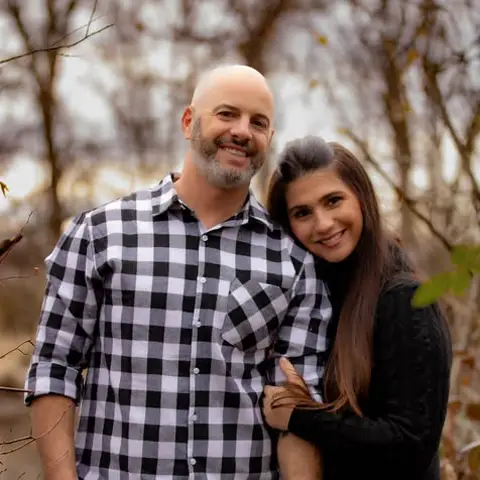
I am Ryan Santoro, owner of Kings Roofing & Contracting, LLC, with 24 years of construction experience across residential, commercial, remodeling, and multiple roofing systems. That building-system perspective guides our roof inspections, helping homeowners understand the cause of a problem instead of treating only the visible symptom.
Understanding Professional Roof Inspections: The Five-Zone Assessment
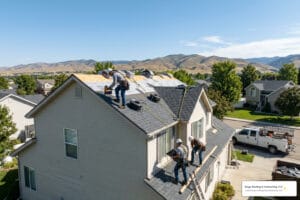
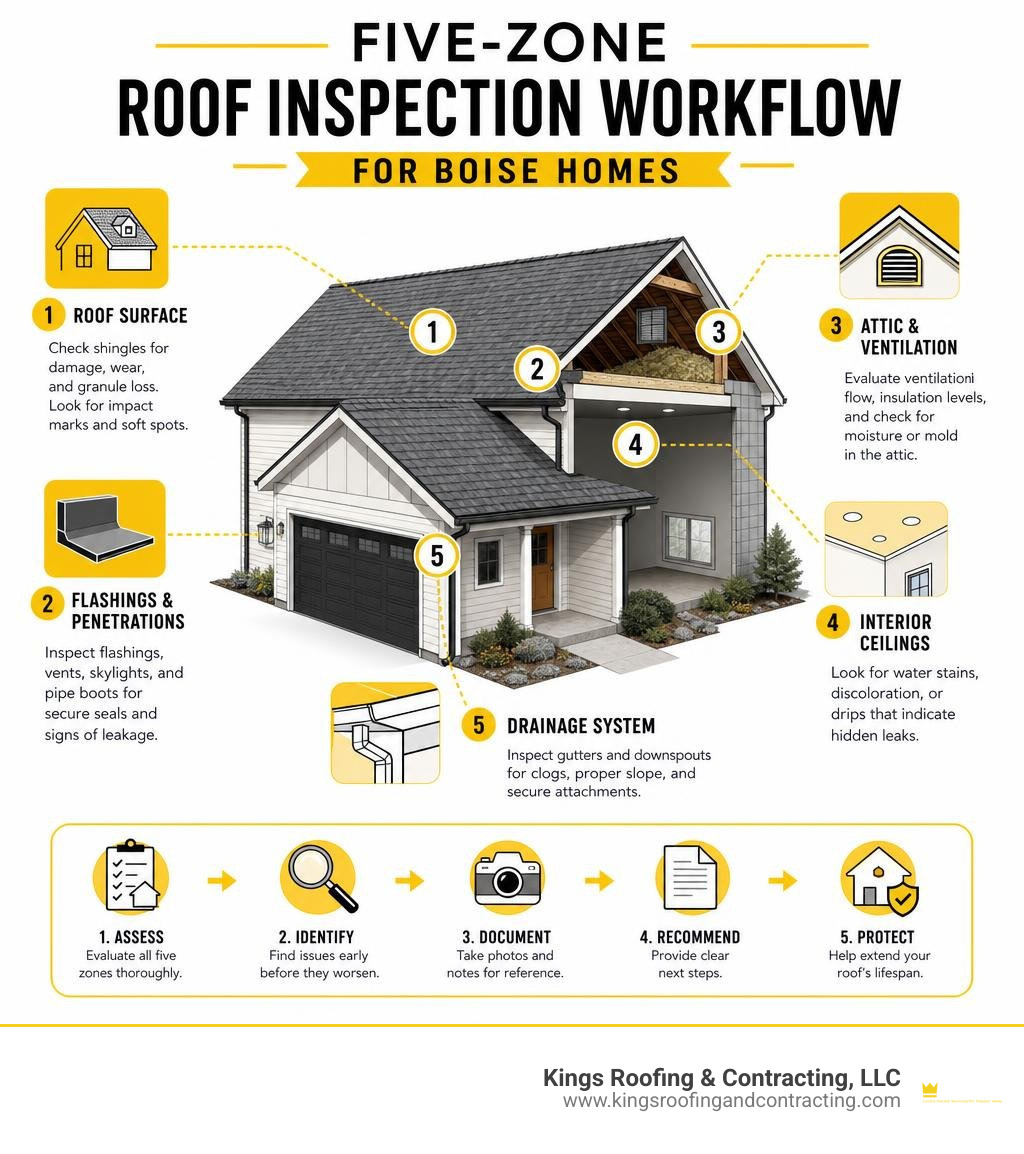
A comprehensive roof evaluation examines the entire building envelope, evaluating structural decking, interior ceilings, ventilation airflow, and exterior surface transitions. When our team at Kings Roofing & Contracting, LLC conducts professional roof inspections, we do not stop at counting missing shingles. We follow a systematic multi-zone process that assesses how each component interacts to protect your home.
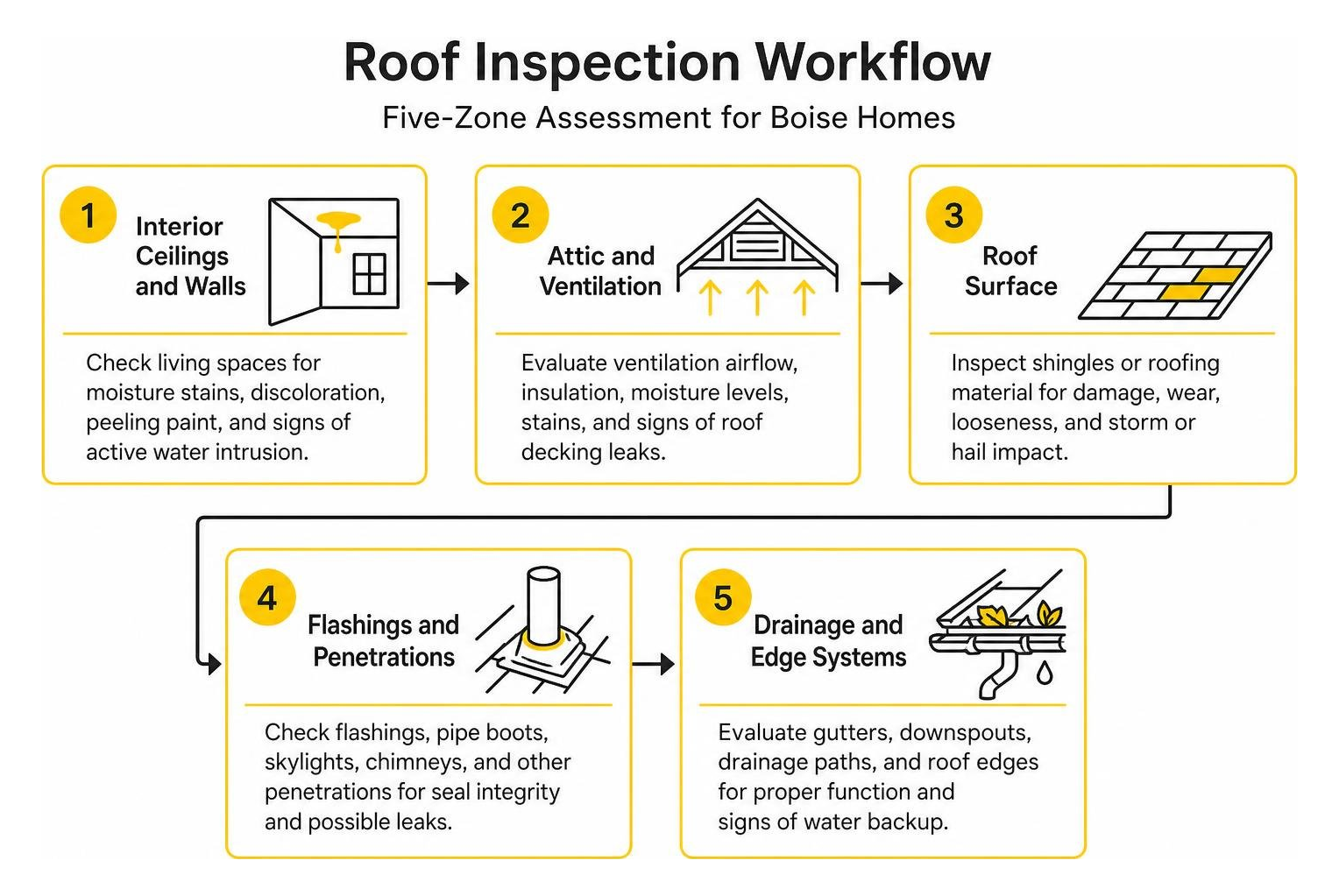
The Five Distinct Assessment Zones
A proper evaluation inspects five vital areas across the structure:
- Zone 1: Interior Ceilings and Walls. We check living spaces for hidden moisture stains, drywall discoloration, peeling paint, and signs of active water intrusion.
- Zone 2: Attic Space and Decking. We evaluate the underside of the roof sheathing for moisture damage, rafter rot, insulation saturation, daylight infiltration, and mold growth.
- Zone 3: Roof Perimeter and Drainage. We inspect soffit vents, fascia boards, gutters, and downspout slope to ensure water directs away from your foundation.
- Zone 4: Garage and Outbuilding Structures. Attached garages and overhangs often reveal early signs of structural shifting or unaddressed condensation.
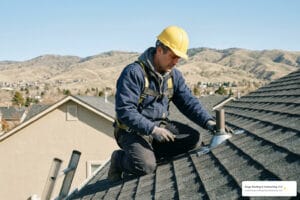
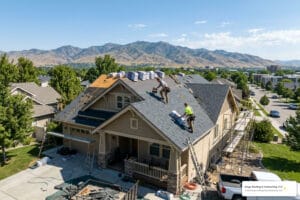
- Zone 5: The Exterior Rooftop. We assess field shingles, step flashing, valley metal, chimney counter-flashing, plumbing pipe boots, and ridge vents according to established InterNACHI roof inspection standards.
Advanced Drone Roof Inspections and Aerial Diagnostics
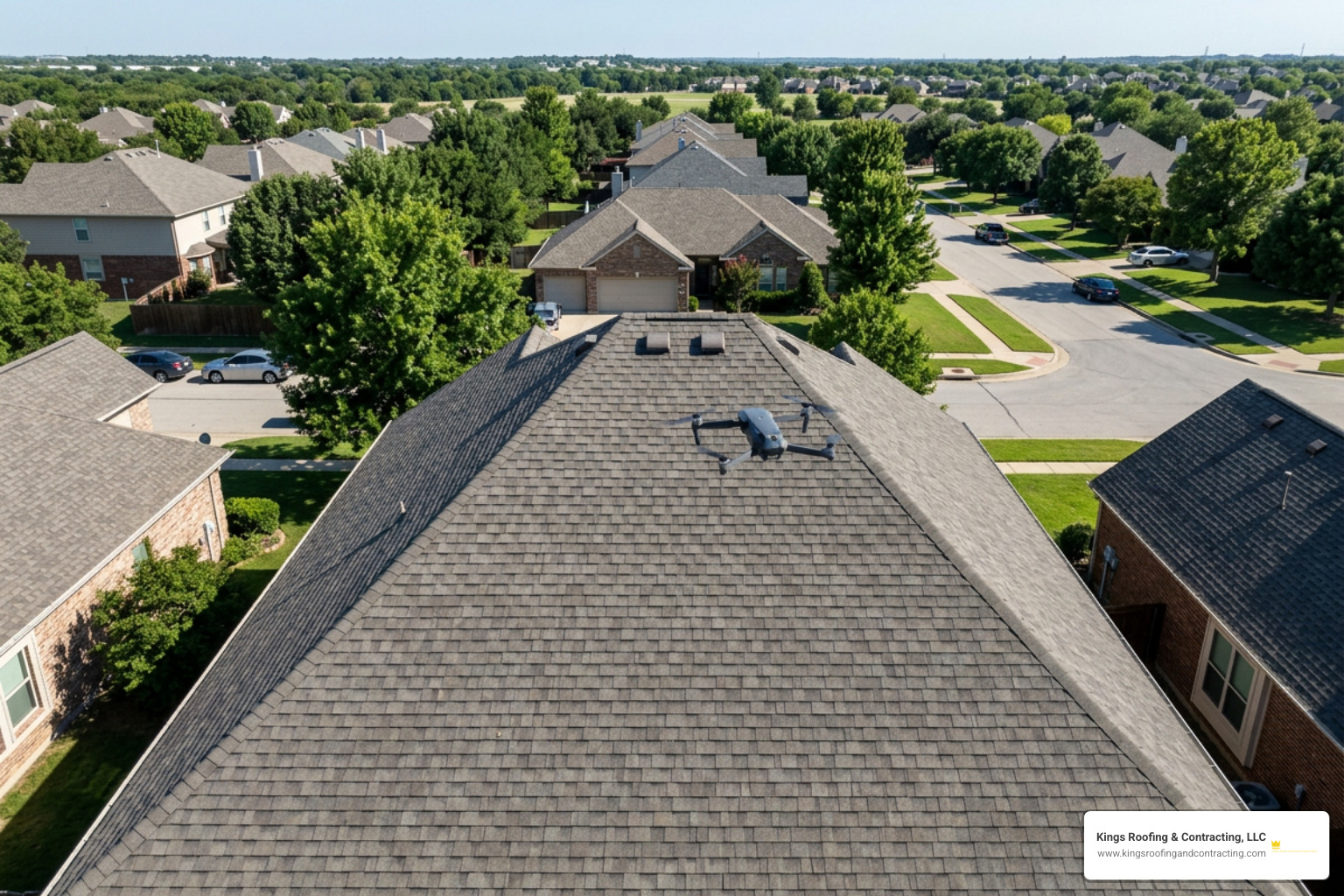
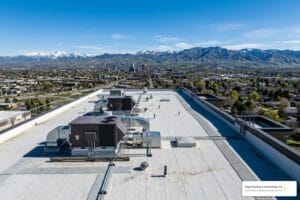
A drone roof inspection utilizes high-resolution 4K cameras and thermal sensors to capture granular structural data without subjecting steep or fragile materials to foot traffic. High-pitch roofs, multi-story turrets, and delicate tile surfaces present safety hazards during manual walks.
Our FAA Part 107-compliant drone flights capture aerial orthomosaic mapping and close-up diagnostics. Thermal infrared imaging reveals hidden pockets of trapped moisture beneath the roofing membrane long before water drips through your ceiling.
Why Boise Weather Demands Regular Roof Assessments
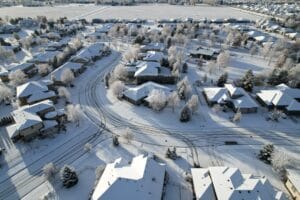
Boise experiences extreme climate shifts that wear down building components faster than moderate coastal climates. High-desert summer heat brings intense UV radiation that dries out asphalt oils, while winter delivers freezing temperatures, heavy snow accumulation, and ice damming along eaves.
Spring storms across the Treasure Valley generate wind gusts that lift shingle tabs and drive rain beneath underlayments. Ensuring your home is ready for these seasonal swings means weathering the storm with a Boise roof inspection before minor wear turns into extensive water damage.
Treasure Valley Seasonal Timing and Shingle Thermal Sealing
Schedule roof evaluations during early autumn and mid-spring. Fall assessments are essential because asphalt shingles require ambient warmth to activate their internal adhesive sealant strips. If cold winter weather arrives with temperatures below 45°F, newly installed or repaired shingles cannot bond properly, leaving them vulnerable to wind blow-offs during winter freezes.
Early Leak Detection to Prevent Costly Escalation
A minor leak never resolves on its own; it expands silently. When water penetrates your outer roof covering, it saturates attic insulation, degrades structural framing, and creates electrical hazards.
| Water Infiltration Timeline | Structural Impact | Estimated Repair Escalation |
|---|---|---|
| First 24 Hours | Saturated insulation, damaged drywall, electrical hazards | ~$5,000 |
| 1 to 2 Weeks | Mold colonization, rafter rot, delaminated sheathing | ~$15,000 |
| 1 Month+ | Structural truss compromise, foundation settling, denied claims | $50,000+ |
Catching hidden water intrusion during an annual check saves tens of thousands of dollars in emergency restoration costs.
DIY Checklists vs. Professional Assessments
Homeowners can easily monitor visual changes from the ground, but climbing ladders and walking steep surfaces introduces serious fall hazards and can inadvertently damage brittle shingles. A safe evaluation begins at ground level.
Safe Ground-Level DIY Roof Inspections Checklist
You can safely monitor your roof from the yard using a pair of binoculars and our routine maintenance checklist:
- Scan for curled, cupped, cracked, or missing shingle tabs across all slopes.
- Check gutters and downspout discharge zones for heavy accumulations of gravel-like asphalt granules.
- Look for dark water stains, peeling paint, or rotting wood along fascia boards and soffits.
- Inspect roof penetrations, chimneys, and skylights for visible flashing separation.
- Identify hail impact bruising or wind-creased tabs by referencing our guide on spotting hail damage on your roof.
Independent Inspectors vs. Certified Roofing Contractors
Understanding the difference between an independent home inspector, an uncertified sales contractor, and a factory-certified roofing professional ensures you receive actionable, accurate data.
| Feature | General Home Inspector | Uncertified Sales Contractor | GAF-Certified Roofing Professional |
|---|---|---|---|
| Inspection Scope | Basic ladder-eave visual scan | Exterior sales check | Forensic 5-zone multi-system review |
| Attic & Moisture Check | Basic overview | Rarely performed | Moisture meters & airflow analysis |
| Primary Goal | Real estate overview | Selling a replacement | Accurate diagnosis & structural life |
| Repair Capability | None (Code prohibited) | Limited or subcontracted | Comprehensive repairs & restoration |
| Certification Level | State home inspector license | General contractor license | Factory-certified & InterNACHI compliant |
Review our consultation guide expectations to know exactly what an ethical evaluation looks like before opening your doors.
Navigating Real Estate Transactions and Insurance Claims
Mortgage underwriters and property insurers routinely require certified roof condition reports before approving loans or issuing hazard policies. In Ada County, property transactions frequently depend on proving that a roof has a minimum remaining useful life and adheres to local municipal codes.

Overcoming Denied Property Claims with Forensic Evidence
Property insurance carriers often reject roof claims following hail or wind storms by asserting that the damage is merely standard cosmetic wear. A certified assessment provides date-stamped photographic evidence, micro-fracture analysis of the shingle fiberglass mat, and historical storm tracking records. Our detailed diagnostic reports supply the forensic verification adjusters need to approve legitimate claims.
Pre-Purchase Certifications and Ada County Building Standards
Ada County and local municipal building codes restrict residential roofs to a maximum of two roofing layers. When buying an older home in Boise, Meridian, or Caldwell, an inspection confirms whether existing shingles were installed over an older layer. If two layers already exist, any future replacement requires a full tear-off down to the wood decking, impacting negotiation leverage and purchase terms.
Expected Costs and Selecting a Trusted Local Contractor
Professional roof assessment pricing varies depending on roof size, pitch, accessibility, and the diagnostic technology employed:
- Standard Visual Inspection: $75 to $250 for residential properties.
- Professional Drone Roof Inspection: $150 to $400 for comprehensive high-definition aerial imaging.
- Infrared Thermal Diagnostic Inspection: $250 to $675 for full thermal mapping and interior moisture readings.
- Repair Estimates: Reputable contractors generally provide visual estimates for straightforward repairs at no charge.
Key Criteria for Selecting a Qualified Boise Inspector
When selecting an inspector in the Treasure Valley, verify the following credentials:
- Local Physical Presence: Work with established Boise roofers who understand regional high-desert weather conditions and local municipal building codes.
- Manufacturer Certifications: Hire contractors holding GAF-certified status to ensure high-standard installations.
- Verified Reputation: Look for a track record backed by a 4.9/5 customer rating and over 1,800 completed inspections.
- Comprehensive Diagnostics: Choose a team that checks both the roof exterior and the attic space rather than offering a quick sales quote.
Frequently Asked Questions About Boise Roofing Evaluations
How often should a residential roof be inspected in Boise?
Roofs in the Treasure Valley should be inspected at least once a year. For roofs older than five years, schedule assessments twice annually: once in the spring to evaluate wind and freeze-thaw wear, and once in the autumn to prepare for winter snow loads.
What are the earliest visible signs that a roof is failing?
Early indicators include granular buildup inside your gutters, cracked neoprene plumbing boots, lifted or wind-creased shingle tabs, rusted chimney flashing, and daylight showing through attic decking boards.
Can a general home inspector provide an official roof certification?
A general home inspector performs a broad visual check, often limited to the ladder eave. Most mortgage lenders and insurance companies require a certified roofing contractor to provide formal leak-free certifications and forensic damage verifications.
Protect Your Investment with Kings Roofing & Contracting, LLC
Your roof represents the primary shield protecting your home, personal belongings, and family from Idaho’s harsh seasonal elements. Proactive maintenance catches minor component degradation before it evolves into catastrophic water damage.
At Kings Roofing & Contracting, LLC, we bring 24 years of construction expertise and GAF-certified precision to every residential and commercial evaluation across Boise, Meridian, Eagle, Nampa, and Caldwell. Schedule your comprehensive evaluation by contacting our team directly at Kings Roofing & Contracting.