What You Need to Know About Flat Roofing Before You Choose a System
Flat roofing is one of the most practical and cost-effective options available from a professional roofing contractor — yet it’s also one of the most misunderstood.
Here’s a quick overview of what flat roofing actually means and which systems are most common:
| System | Lifespan | Best For |
|---|---|---|
| EPDM Rubber | 30–50 years | Residential & commercial |
| TPO Single-Ply | 10–25 years | Commercial, energy efficiency |
| PVC Single-Ply | 20–30 years | Restaurants, chemical exposure |
| Modified Bitumen | 15–20 years | Budget-friendly, versatile |
| Built-Up Roof (BUR) | 15–30 years | High-traffic commercial roofs |
| Spray Polyurethane Foam | 50+ years | Seamless, high insulation |
| Metal (low-slope) | Up to 50 years | Long-term durability |
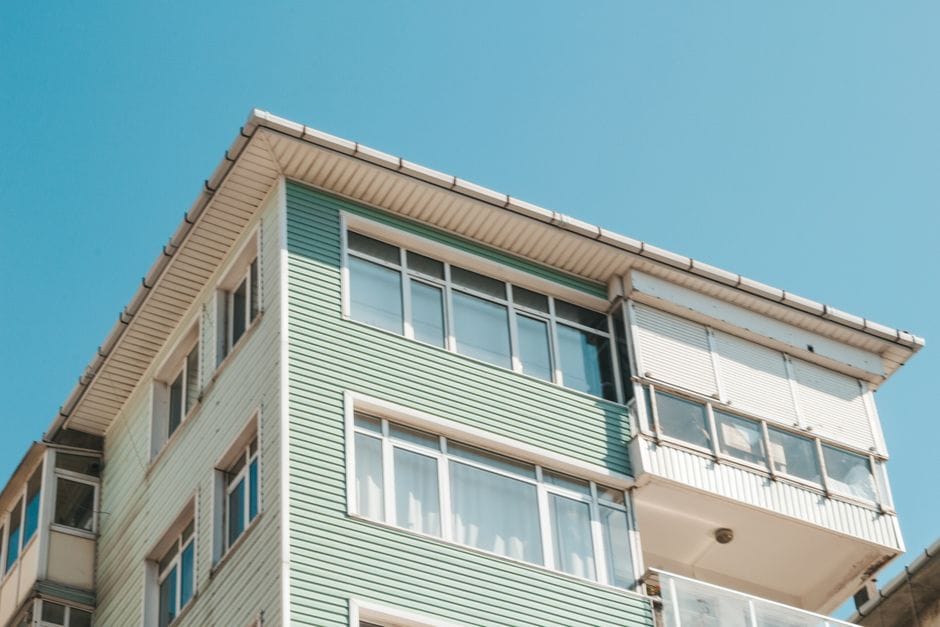
A flat roof is not perfectly level. It has a slight pitch — typically no more than 10 degrees — to allow water to drain. The National Roofing Contractors Association (NRCA) defines a low-slope roof as anything with a slope of 3 in 12 (1:4) or less.
Flat roofs are standard on commercial buildings and increasingly popular on modern homes. They cost less to install than pitched roofs, make solar panel placement easier, and open up usable rooftop space. But they do come with real trade-offs: drainage must be engineered carefully, and the wrong material or a poor installation can lead to pooling water, leaks, and early failure.
The famous Villa Savoye — designed by modernist architect Le Corbusier — began leaking almost immediately after the family moved in, nearly resulting in a lawsuit. It’s a reminder that even well-intentioned flat roof designs fail without the right materials and execution.
I’m Ryan Santoro, owner of Kings Roofing & Contracting, LLC, and with 24 years of construction experience including flat roofing systems across residential and commercial projects in the Treasure Valley, I’ve seen what separates a roof that lasts decades from one that fails in a few years. This guide covers everything you need to make a confident, informed decision.
What is Flat Roofing and How Does It Differ From Pitched Roofs?
To understand flat roofing, you must first understand that “flat” is a bit of a misnomer. In the roofing industry, we refer to these systems as low-slope roofs. According to Wikipedia’s entry on Flat Roofs, a flat roof is almost level, featuring a pitch of up to approximately 10 degrees to ensure that gravity can still do its job.
Unlike pitched roofs, which rely on steep angles to shed rain and snow instantly, flat roofs must be completely watertight. On a sloped roof, water runs off immediately; on a low-slope roof, water moves slowly toward designated drainage points. This fundamental difference means flat roofs require specialized membranes rather than traditional shingles to prevent moisture from finding its way into your building.
To handle water runoff, flat roofs utilize three main drainage systems:
- Gutters: Mounted along the roof edges, just like on a pitched roof, to catch water as it rolls off the slight incline.
- Scuppers: Outlets cut into the perimeter parapet walls that allow water to shoot off the edge into downspouts.
- Internal Drains: Placed at the lowest points of the roof, routing water through internal pipes down through the building’s interior.
Because water lingers longer on a flat surface, choosing high-performance flat roof systems that are properly sealed and sloped is critical to protecting your property.
The Main Types of Flat Roof Materials and Systems
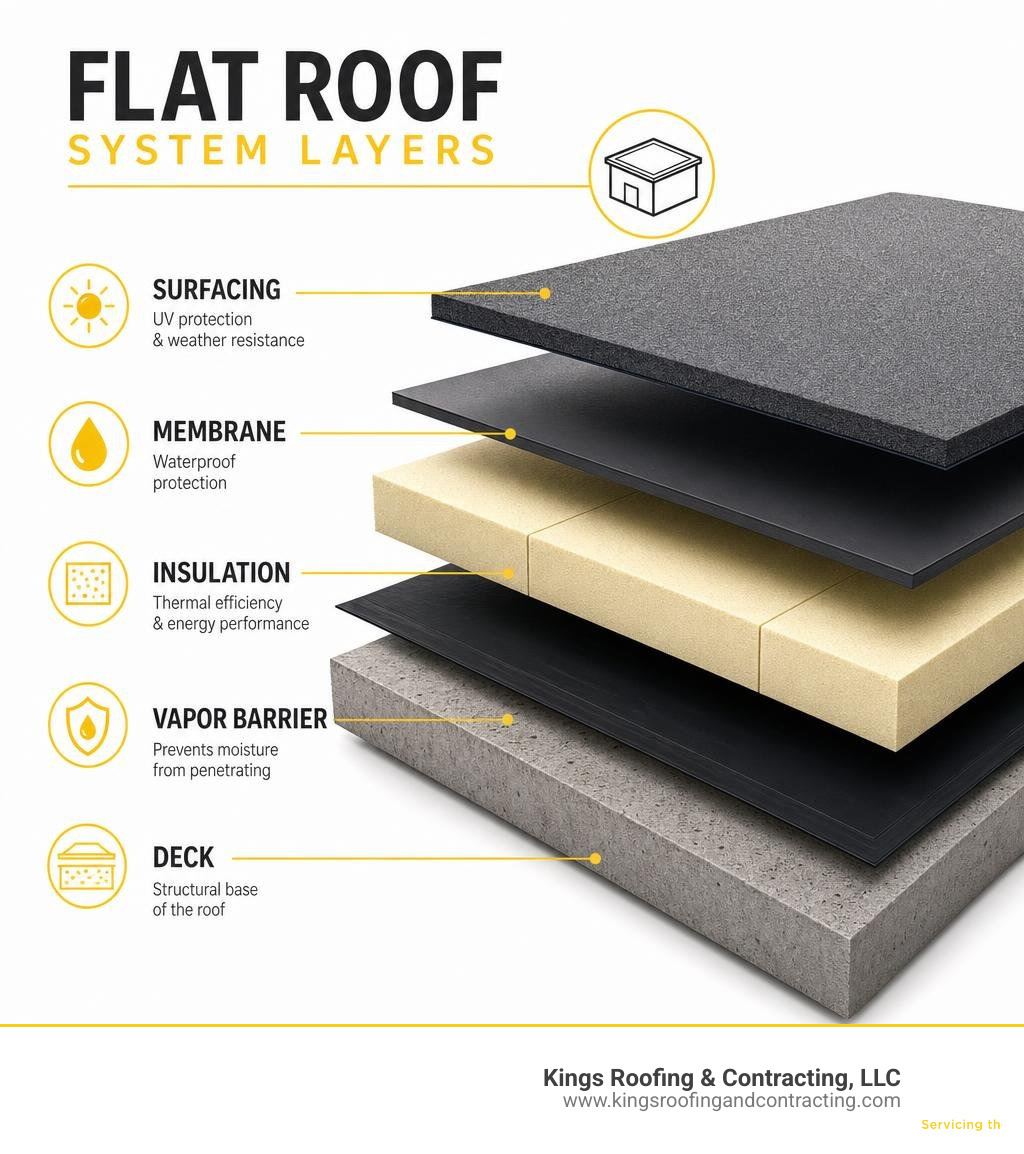
Designing a successful flat roof requires selecting the right combination of structural deck materials, vapor barriers, rigid insulation, and waterproof membranes.

EPDM Rubber Flat Roofing
Ethylene Propylene Diene Monomer (EPDM) is a highly durable synthetic rubber roofing membrane widely used in both residential and commercial roofing applications.
EPDM is known for its incredible lifespan and cold-weather flexibility. When properly applied, EPDM rubber roofing has an expected lifespan of 50 years and a typical warranted life-span of 30 years. It retains its elasticity even in the freezing winter temperatures of the Treasure Valley.
For maximum durability, we recommend reinforced membranes. Factoring in material strength, fleece-backed 1.1mm EPDM is 180% stronger than 1.5mm bare EPDM, boasting a tear strength of 39.9 kN/m compared to just 13.1 kN/m for non-reinforced alternatives.
TPO and PVC Single-Ply Flat Roofing
Thermoplastic Polyolefin (TPO) and Polyvinyl Chloride (PVC) are single-ply thermoplastic membranes that have revolutionized the industry. TPO has seen explosive growth; reported sales of TPO roofing products by major manufacturers quadrupled those of all other flat roofing materials from 2007 to 2012.
Both TPO and PVC feature heat-welded seams. When installed during a new roof installation, a hot-air welder melts the overlapping seams together, creating a single, continuous, and exceptionally strong waterproof sheet.
- TPO is highly reflective, lightweight, and resistant to UV rays, chemicals, and bacterial growth.
- PVC is inherently fire-retardant and highly resistant to chemicals, oils, and animal fats, making it the premier choice for restaurants with rooftop exhaust vents.
Modified Bitumen and Built-Up Roofs (BUR)
If you prefer traditional, multi-ply protection, Built-Up Roofing (BUR) and Modified Bitumen are time-tested options.
- Built-Up Roofing (BUR): Often referred to as “tar and gravel” roofs, BUR systems have been used for over a century. They consist of alternating layers of asphalt (bitumen) and reinforcing fabrics, topped with a layer of gravel to protect the underlying materials from UV degradation and physical damage.
- Modified Bitumen: This system uses asphalt modified with plastic or rubber polymers (such as SBS or APP) to increase flexibility and tear resistance. It is typically applied in rolls using heat welding (torch-down), cold adhesives, or self-adhering backing.
For detailed guidelines on domestic flat roof design, the NFRC Householder’s Guide to Flat Roofing highlights the importance of converting older “cold roof” systems (where insulation sits below the roof deck) into “warm roof” systems (where insulation sits above the deck) to prevent condensation and structural rot.
Spray Polyurethane Foam (SPF) and Metal Systems
For a truly seamless barrier, Spray Polyurethane Foam (SPF) is sprayed on as a liquid, expanding into a solid, monolithic foam layer that conforms to every penetration on your roof. A properly maintained SPF roof can last over 50 years when protected with regular elastomeric coatings.
Alternatively, low-slope metal roofing provides incredible longevity. Metal roofs are 100% recyclable and typically contain 30–60% recycled content, making them a highly sustainable choice.
While metal has a higher initial cost, its long-term economic value is clear. A study by Ducker International in 2005 identified the average cost per year of a metal roof to be just $0.30 per square foot ($3.2/m²), while single-ply roofs stood at $0.57 per square foot ($6.1/m²) and built-up roofing at $0.37 per square foot ($4.0/m²). Whether you choose metal or single-ply, applying high-quality protective roof coatings can extend the lifetime of your existing roof by 10 to 20 years.
Performance, Lifespan, and Cost Comparison
Choosing the right material requires balancing upfront installation costs against the expected lifespan and maintenance requirements.
| Material | Expected Lifespan | Upfront Cost | Primary Advantage | Primary Disadvantage |
|---|---|---|---|---|
| EPDM Rubber | 30–50 Years | Moderate | Exceptional durability & cold flexibility | Black surface absorbs heat unless coated |
| TPO Single-Ply | 15–25 Years | Moderate | High solar reflectance, budget-friendly | Newer technology; quality varies by brand |
| PVC Single-Ply | 20–30 Years | High | Superior grease & chemical resistance | Higher upfront material cost |
| Modified Bitumen | 15–20 Years | Low to Moderate | Excellent puncture & tear resistance | Shorter lifespan; seam maintenance required |
| Built-Up (BUR) | 15–30 Years | Moderate | Highly durable, multi-layer redundancy | Extremely heavy; complex installation |
| SPF (Spray Foam) | 50+ Years | High | Completely seamless; high insulation | Requires specialized installation & recoating |
| Metal (Low-Slope) | 50+ Years | High | Lowest annual lifecycle cost; recyclable | High upfront cost; complex expansion joints |
Common Causes of Failure, Maintenance, and Leak Repair
Flat roofs are highly durable, but they are not “set-it-and-forget-it” systems. If neglected, they typically last only 10–15 years. The most common causes of flat roof failure include:
- Ponding Water: Water that remains on a roof for more than 48 hours. Ponding water strains the structural deck, accelerates UV degradation, and promotes algae growth.
- UV Degradation: Intense solar radiation breaks down asphalt and chemical plasticizers, leading to cracking, splitting, and “alligatoring.”
- Membrane Punctures: Caused by foot traffic, fallen tree branches, or windblown storm debris.
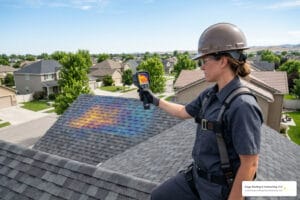
To prevent these issues, active roof maintenance is essential. We recommend scheduling professional roof inspections at least twice a year — once in the spring and once in the fall — to clear drains, check flashings, and identify potential weak spots before they become expensive leaks.
How to Locate and Repair Leaks
Locating a leak on a flat roof requires patience. Because flat roofs have a very slight slope, water can penetrate the outer membrane in one spot, travel horizontally through the insulation layers, and drip into your ceiling several yards away from the actual puncture.
To find the source of a leak:
- Start your inspection at the interior drip point and work your way backward on the roof surface.
- Inspect high-risk areas first, including pipe penetrations, HVAC curbs, perimeter flashings, and membrane seams.
- Look for signs of seam separation, cracked caulking, or physical punctures.
Once located, an expert roof repair should be performed immediately. If you are dealing with ponding water, membrane damage, or leaks in Caldwell, Nampa, or Meridian, our team provides rapid-response services to restore your system’s integrity before structural damage occurs.
When to Repair vs. Replace Your Roof
Deciding whether to patch a leak or invest in a full roof replacement depends on the age of your roof, the extent of the damage, and the condition of the underlying insulation.
- Repair or Restore: If your roof is relatively young, the structural deck is dry, and the damage is isolated to a single puncture or seam, a repair is the most cost-effective path. You might also consider a fluid-applied restoration coating to add 10–20 years of life to your system.
- Replace: If your roof is approaching the end of its expected lifespan, has widespread seam failures, or has saturated insulation, a full replacement is necessary.
For property owners in Eagle, Garden City, or Boise, local weather patterns can accelerate wear on low-slope systems. Our team provides specialized Boise roof repair services to help you evaluate the structural integrity of your roof and choose the most economical long-term solution.
Advanced Flat Roof Technologies: Cool Roofs and Green Roofs
Modern innovations have turned flat roofs from simple protective barriers into active, energy-saving assets.
- Cool Roofs: Traditional dark roof surfaces can reach temperatures up to 50°C (122°F) higher than the surrounding air under full sun. Highly reflective “cool roofs” (such as white TPO or reflective elastomeric coatings) increase only 5–14°C, dramatically reducing building cooling costs during hot Idaho summers.
- Green Roofs: Green roofs incorporate plants, soil, and specialized drainage layers over a waterproof membrane. They act as natural insulation, reduce stormwater runoff by absorbing rainwater, and mitigate the urban heat island effect.
- Solar Integration: Because flat roofs offer wide-open, easily accessible spaces, they are ideal for solar panel installations, allowing for optimal tilt angles regardless of the building’s orientation.
To see how these advanced systems can be integrated into your home or commercial building, explore our full range of specialized roofing services.
Frequently Asked Questions about Flat Roofs
What is the best material for a flat roof?
There is no single “best” material for every application; selection should be made on a case-by-case basis. EPDM is highly recommended for residential flat roofs due to its outstanding durability and cold-weather flexibility. TPO is the most popular choice for commercial properties seeking energy-efficient, heat-reflective performance on a budget.
How long does a flat roof typically last?
A flat roof typically lasts 15 to 30 years depending on the material, local weather conditions, and how regularly it is maintained. High-performance systems like EPDM and spray polyurethane foam (SPF) can easily exceed 50 years of protective service when properly installed and maintained.
Are flat roofs more prone to leaks than pitched roofs?
No, flat roofs are not inherently more prone to leaks than pitched roofs when they are installed correctly. However, because they rely on a minimal slope to drain water, any installation defect, poor drainage design, or lack of regular maintenance will lead to ponding water and eventual leaks faster than on a steep-slope roof.
Conclusion
Whether you are looking to install a highly reflective TPO membrane on a commercial facility, lay down a durable EPDM system on a modern residential garage, or perform a critical repair before the winter snow hits, the team at Kings Roofing & Contracting, LLC is here to help.
As a GAF-certified contractor, we bring elite workmanship, transparent pricing, and 24/7 emergency availability to homeowners and businesses throughout Boise, Meridian, Nampa, Caldwell, Eagle, Garden City, and Kuna.
Ready to secure your property’s future? Schedule a flat roof consultation with our expert team today to request your free quote!