When a Treasure Valley Storm Hits Your Roof, Every Hour Counts
If you need storm roof repair in Boise ID, here’s what to do right now:
- Stay off the roof — assess damage from the ground only
- Document everything — photograph shingles, gutters, and any hail accumulation with timestamps
- Call a licensed professional roofing contractor in Boise, ID first — before you call your insurance company
- Request emergency tarping if there is any active water intrusion
- File your insurance claim with the contractor’s written damage report in hand
Boise and the broader Treasure Valley take a serious beating from severe weather every year. The region sees an average of 3 to 5 significant hail events annually, with foothills windstorms regularly pushing gusts past 70 mph. That combination — hail stripping granules off shingles, wind breaking sealant bonds — is exactly what sends water through ceilings and into wall cavities. And here’s the part most homeowners don’t realize: the damage often isn’t visible from the ground until weeks or months later, when a leak finally shows up as a ceiling stain.
The stakes are real. Homeowners in the Treasure Valley who delay repairs beyond 48 hours face a 2 to 3 times higher risk of secondary water damage and mold remediation costs. Partnering with a trusted local roofing team as quickly as possible after a storm is the single most important step you can take to protect your home and your insurance claim.
I’m Ryan Santoro, owner of Kings Roofing & Contracting, LLC, and with 24 years of construction experience — including extensive storm roof repair in Boise, ID and across the Treasure Valley — I’ve walked hundreds of homeowners through everything from emergency tarping to full insurance-backed restorations. This guide gives you the exact framework we use so you can act fast, document correctly, and avoid the costly mistakes that follow most major storm events.
Understanding Local Weather Vulnerabilities in the Treasure Valley
The unique geography of the Treasure Valley makes our homes particularly vulnerable to fast-moving, high-intensity weather systems. Situated between the Owyhee Mountains to the southwest and the Boise Mountains to the northeast, the valley acts as a natural corridor for severe weather.
Wind Vulnerabilities
Foothills wind patterns regularly produce localized wind shear and severe downslope windstorms. During these events, wind speeds in the Boise foothills residential areas frequently exceed 70 mph. This extreme wind creates massive uplift pressure across a home’s roofline, focusing on vulnerable areas like the eaves, rakes, and ridge caps. When wind gets underneath the edges of asphalt shingles, it breaks the manufacturer’s thermal sealant bond, causing shingles to lift, crease, or tear away entirely.
Hail Frequency
Many homeowners think of Idaho as too mild for severe hail, but Ada and Canyon counties actually rank among the most hail-active areas in the Pacific Northwest. Boise experiences an average of 3 to 5 significant hail events per year, with hailstones regularly exceeding 1 inch in diameter (roughly the size of a quarter). Our peak hail season spans from April through September, a window during which local storm damage insurance claims routinely surge by over 40%.
Meteorological Patterns
The primary driver of these intense storms is the rapid transition of Pacific storm systems over our surrounding mountain ranges. As cool, moist air from the Pacific Ocean collides with warm air rising from the high-desert valley floor, it creates severe atmospheric instability. This dynamic leads to rapid barometric pressure drops, dry microbursts, and highly localized wind shear that can devastate a single neighborhood while leaving adjacent blocks completely untouched.
To stay informed and prepare your home before severe weather strikes, you can track historical storm data and active weather alerts via the National Weather Service – Boise Office. Understanding these regional wind and hail patterns is key to identifying when your roof has likely sustained damage.
Identifying Hail, Wind, and Water Damage on Your Roof
Recognizing roof damage early is the difference between a simple patch job and a massive interior home restoration project. Because many forms of storm damage are invisible from ground level, knowing what to look for—and where to look—is essential.
Key Indicators
Hail Damage
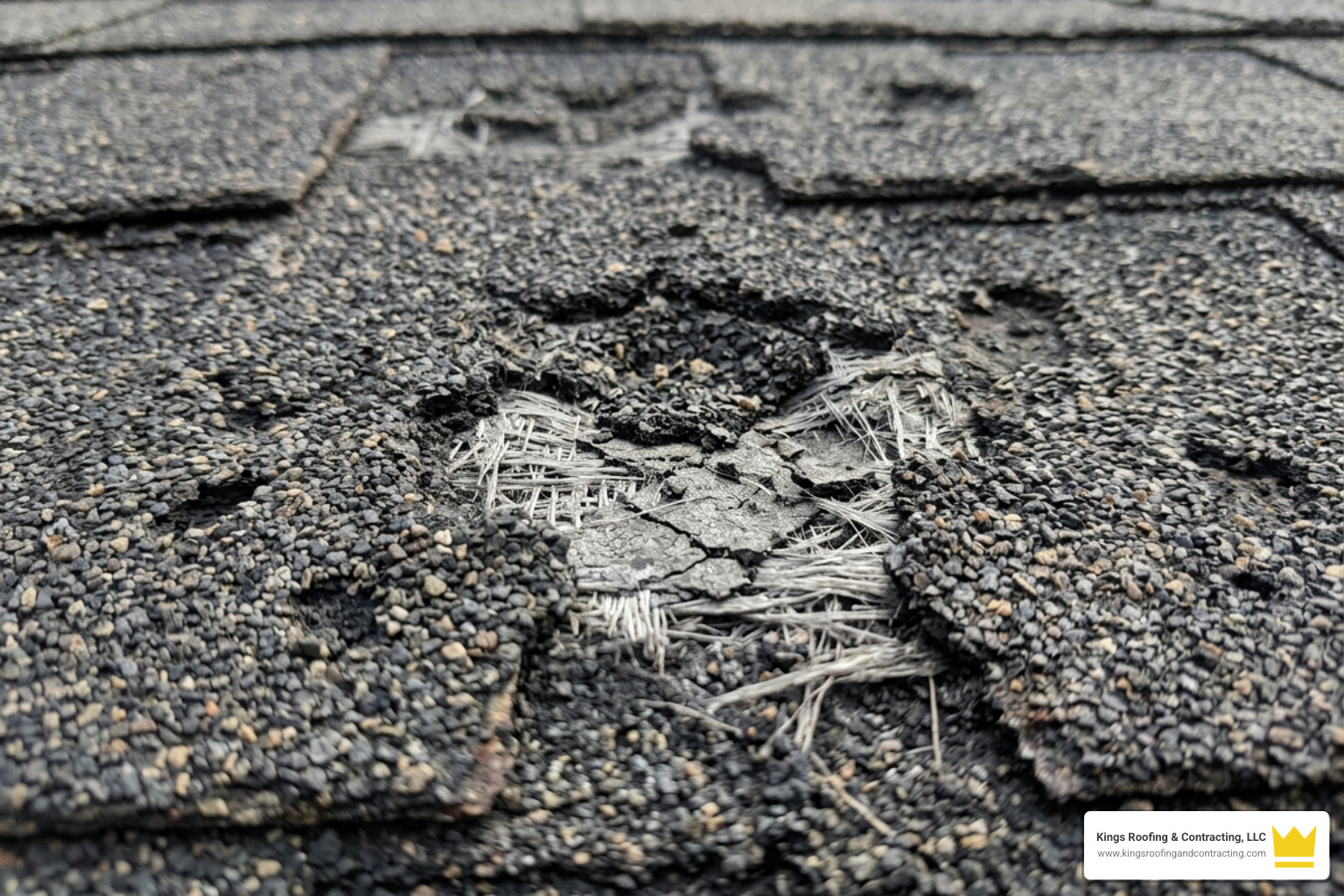
Hail impacts act like miniature hammers hitting your roof. On asphalt shingles, hail damage presents as circular bruises or dark, soft spots where the protective mineral granules have been violently dislodged. If you notice a heavy accumulation of granules collecting in your gutters or washing out of your downspouts after a storm, it is a primary indicator that your shingles have lost their protective UV coating. On metal roof components, hail will leave distinct, round dents on vents, valley flashing, and metal ridge caps.
Wind Damage
Wind damage is characterized by structural displacement. Look for creased shingles (where the shingle has been folded backward by the wind and left a dark line where the granules cracked), lifted tabs that no longer adhere to the roof deck, and entirely missing shingle sections. Wind also targets critical transition areas, often ripping away metal rake flashing, tearing off ridge cap shingles, and loosening chimney counter-flashing.
Water Damage
Water rarely travels in a straight line. Once water penetrates a compromised shingle layer, it can run horizontally along the roof decking and framing rafters for 10 to 15 feet before finally dripping onto your ceiling. This horizontal water travel makes tracing leaks difficult. During the winter and shoulder seasons, this trapped moisture refreezes along the cold eaves of your roof, creating severe ice dams that back up under the shingles and rot the underlying wooden fascia and soffits.
If you suspect your roof has been compromised, it is critical to act quickly. You can address these issues immediately with specialized hail damage roof repair and targeted wind damage roof repair to prevent structural rot from setting into your home’s attic.
How Hidden Hail Damage Leads to Storm Roof Repair Boise ID
The most dangerous roof damage is the kind you cannot see from your driveway. When a large hailstone strikes an asphalt shingle, it creates a localized depression. This impact fractures the underlying fiberglass mat on the backside of the shingle without necessarily tearing or breaking the surface asphalt layer.
Over the following months, the compromised shingle is exposed to Boise’s intense high-desert UV radiation and extreme temperature swings. Without the protective granule layer, the asphalt oil in the bruised spot dries out, cracks, and washes away. What started as a seemingly harmless storm in May becomes a major attic leak by November.
Studies show that unchecked hail bruising reduces an asphalt roof’s overall lifespan by 20% to 40%. Because these micro-fractures are deeply embedded in the shingle’s structure, a professional physical inspection—which involves manually feeling the shingles for soft, bruised spots in the decking—is required to accurately diagnose the damage.
Recognizing Wind Damage and Lifted Shingles
Asphalt shingles are designed to work as a cohesive, overlapping system held together by a continuous strip of thermal adhesive. High-velocity winds create a powerful aerodynamic lift across the slope of your roof. Once wind speeds exceed 50 to 60 mph, this uplift pressure can easily break the self-sealing adhesive bond on older or improperly installed shingles.
Once this seal is broken, the shingle flap is free to flutter in the wind. This constant movement creases the shingle material, weakening its structural integrity until it eventually tears away. Even if the shingle settles back down and looks flat from the ground, the adhesive bond is permanently broken. The next minor rainstorm will drive water straight up and under the unsealed shingle, bypassing the watershed system and soaking your underlayment.
Immediate Steps to Take After a Severe Storm Hits Boise
When a severe storm passes through the Treasure Valley, taking immediate, structured action will protect both your physical property and your financial interests.
Step 1: Safety First
Never climb onto your roof immediately after a storm. Wet shingles, loose debris, compromised decking, and downed power lines create highly hazardous conditions. Conduct all initial assessments safely from the ground using a pair of binoculars or your smartphone camera’s zoom lens.
Step 2: Documentation
Before any cleanup begins, document the storm’s impact. Take high-resolution, timestamped photos and videos of your yard, any fallen tree limbs, hail accumulation next to a tape measure, dented garage doors, and damaged window screens. This circumstantial evidence is incredibly valuable when substantiating a claim with your insurance carrier.
Step 3: Emergency Mitigation
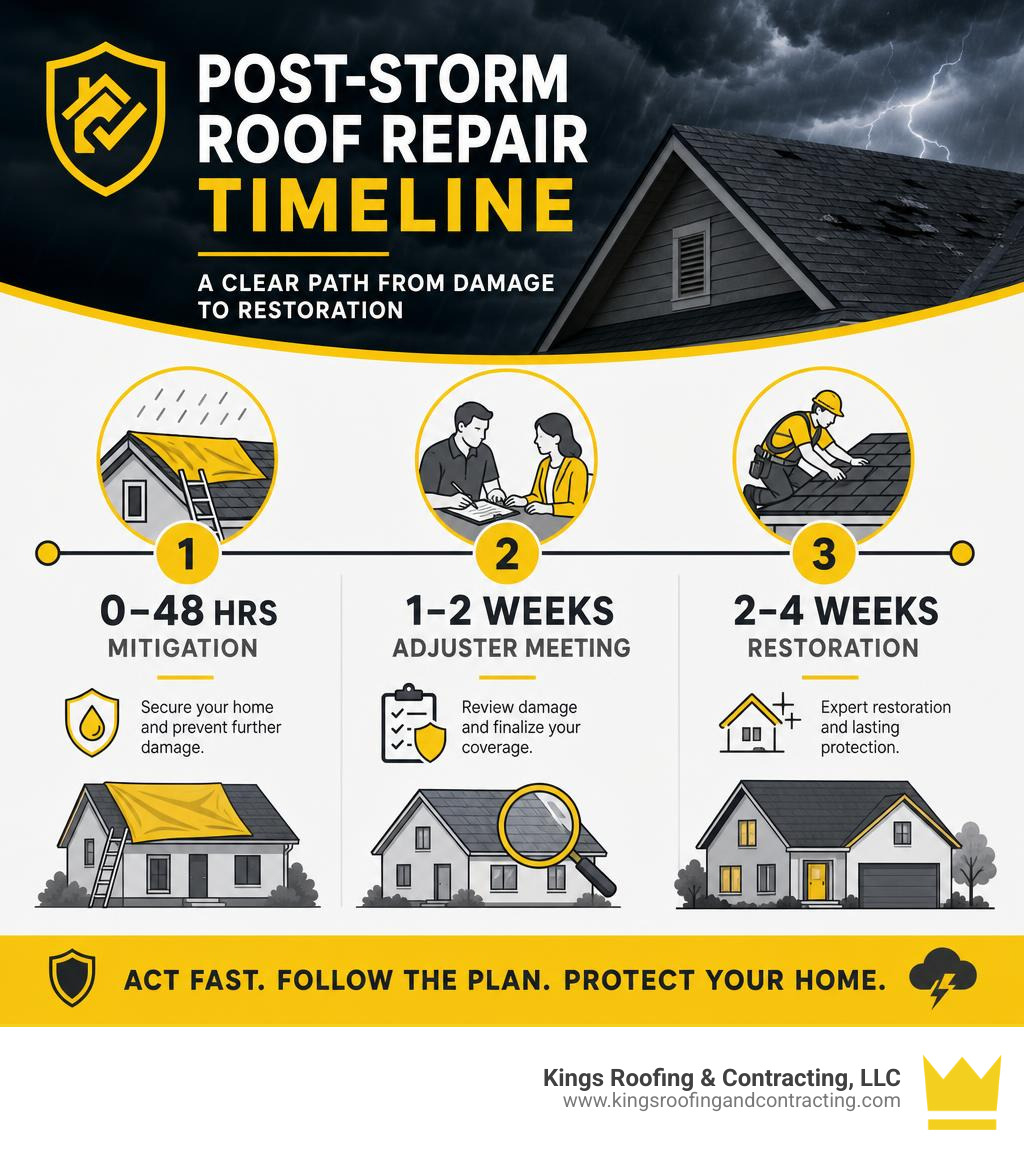
If you discover active leaks or missing roof sections, you must secure the property immediately. Homeowners insurance policies contain a “mitigation clause” requiring you to take reasonable steps to prevent further damage. Installing heavy-duty, professional-grade temporary tarps over exposed areas within a 24 to 48-hour window is critical to preventing secondary water damage, ruined insulation, and rapid mold growth.
To secure your home’s interior and prevent costly structural issues, utilize professional leak detection services and emergency roof repair protocols to stabilize your property.
Navigating the Insurance Claims Process for Storm Roof Repair Boise ID
Filing a roof damage insurance claim can feel overwhelming, but understanding the workflow ensures you receive the full coverage you are entitled to under your policy.
| Feature | Localized Storm Repair | Full Storm Restoration |
|---|---|---|
| Scope of Work | Spot fixes, minor shingle replacement, flashing resealing | Complete system tear-off, decking replacement, code upgrades |
| Typical Cost | $350 to $1,500 | $8,000 to $20,000+ |
| Insurance Coverage | Often falls below or near deductible limits | Typically fully covered (minus your deductible) |
| Structural Impact | Addresses immediate leaks; doesn’t extend roof life | Rebuilds entire roof system to current building codes |
The Insurance Workflow
- Comprehensive Damage Assessment: Before contacting your insurance carrier, have a certified roofing contractor perform a detailed inspection. They will provide a written report, a repair estimate, and comprehensive photo documentation of all storm-related damage.
- Filing the Claim: Contact your insurance company’s claims department and provide them with your contractor’s inspection report, the date of the storm, and your photo documentation. The carrier will assign a claim number and an insurance adjuster to your case.
- The Adjuster Meeting: The insurance adjuster will schedule an on-site inspection of your roof. It is highly recommended to have your roofing contractor present during this meeting. Your contractor will walk the roof with the adjuster to ensure all damaged areas, code requirements, and necessary line items are accurately documented and included in the adjuster’s scope of work.
Statute of Limitations
Under Idaho law, property damage claims generally carry a specific filing window. However, to ensure your claim is not denied due to delayed reporting or “neglect,” we highly recommend filing your claim within the first 365 days of the storm event. Waiting too long makes it difficult to prove the damage was caused by a specific meteorological storm rather than gradual wear and tear.
To streamline this complex process, you can work with our team for professional insurance claims assistance. We handle the detailed paperwork, submit necessary supplement requests, and negotiate directly with adjusters to ensure your roof is restored correctly.
Roof Repair vs. Full Roof Replacement After Storm Damage
Deciding whether to patch a few damaged areas or replace your entire roof system depends on several technical and economic factors.
The 30% Rule
As a general rule of industry practice, if storm damage affects more than 30% of the total roof surface, a full roof system replacement is the most cost-effective and structurally sound option. In fact, over 30% of hail-damaged roofs in southeastern Idaho and the Treasure Valley require a complete replacement rather than spot repairs due to widespread granule loss and shingle bruising that compromises the entire system’s integrity.
Material Matching
Aged asphalt shingles naturally fade over time due to UV exposure, meaning new replacement shingles will never perfectly match your existing roof’s color. Furthermore, manufacturers frequently discontinue specific shingle colors and styles.
If your roof has matching line-item clauses in your homeowners insurance policy, the inability to find a reasonable aesthetic match for localized repairs can justify a full roof replacement paid for by your carrier.
Whether you need targeted roof repair or a complete, code-compliant roof replacement, choosing a qualified local contractor is essential to securing your investment.
Selecting a Qualified Local Storm Damage Contractor in Boise
After a major hail or wind storm hits the Treasure Valley, out-of-state “storm chasers” flood our local market. These door-to-door sales teams use high-pressure tactics, collect insurance deposits, perform subpar work using cheap materials, and disappear as soon as the storm season ends. When workmanship leaks develop during the next winter freeze, these companies are long gone, leaving homeowners with no recourse.
To protect your home, always verify that your contractor is truly local:
- Ensure they have a permanent, physical office address in the Boise area (not a temporary hotel room or P.O. Box).
- Verify they use local crews who understand Idaho’s unique climate challenges, such as heavy snow loads and ice damming.
- Check that they carry active liability insurance and worker’s compensation policies.
You can verify any contractor’s license status and credentials directly through the Idaho Division of Occupational and Professional Licenses. Partnering with an established local team ensures you receive dedicated Boise roof repair services backed by a company that will be here to honor its warranties for decades to come.
Essential Warranties and Certifications for Storm Roof Repair Boise ID
When investing in a roof repair or replacement, the quality of the installation is just as important as the materials used.
Manufacturer Certifications
Always look for a contractor with elite manufacturer credentials, such as GAF-certified status. Only certified installers can offer upgraded, extended manufacturer warranties that cover both material defects and installation workmanship for up to 50 years.
Warranty Types
It is important to understand the difference between your warranty options:
- Manufacturer Material Warranties: These cover defects in the shingle manufacturing process (such as premature granule loss or cracking) but do not cover installation errors.
- Workmanship Warranties: These are provided directly by your contractor and cover any leaks or failures caused by improper installation techniques.
By working with certified installers of top brands like GAF, Owens Corning, or CertainTeed, you can secure comprehensive system warranties that protect your home against both material and installation failures.
Frequently Asked Questions About Storm Roof Repair
How much does storm damage roof repair cost in the Treasure Valley?
Minor wind or hail repairs typically range from $350 to $1,500, depending on the number of shingles affected and whether flashing needs to be replaced. Full storm restoration projects generally cost between $8,000 and $20,000+, depending on the square footage of your home, the roof’s pitch, and the materials selected (such as architectural asphalt shingles or metal roofing).
If the damage was caused by a covered storm event, the vast majority of this cost is covered by your homeowners insurance policy, leaving you responsible only for your policy’s deductible.
Does homeowner’s insurance cover storm damage in Idaho?
Yes, standard homeowners insurance policies in Idaho cover sudden and accidental damage caused by wind, hail, lightning, and fallen debris (such as a tree limb falling onto your roof).
However, insurance policies specifically exclude coverage for pre-existing wear and tear, damage caused by a lack of basic maintenance, or gradual rot that occurred over several years. This is why having professional documentation immediately after a storm is so critical to proving the damage was sudden and accidental.
How quickly should storm damage repairs begin?
Emergency mitigation, such as professional tarping, must occur within 24 to 48 hours of the storm to prevent secondary water damage, mold growth, and structural wood rot.
Once your home is temporarily stabilized, permanent repairs should be initiated within 30 to 60 days. This timeline keeps you in compliance with your insurance policy’s mitigation requirements and ensures that minor shingle damage does not escalate into a major structural leak during the next rain or snow event.
Conclusion
When severe weather strikes the Treasure Valley, your roof is your home’s first and most important line of defense. Delaying inspections or choosing an uncertified, out-of-state contractor can lead to denied insurance claims, structural decay, and thousands of dollars in out-of-pocket repairs.
At Kings Roofing & Contracting, LLC, we deliver GAF-certified workmanship, transparent pricing, and rapid emergency response across Boise, Meridian, Eagle, Nampa, Caldwell, Garden City, and Kuna. We are committed to restoring your home to pre-storm condition with the highest quality materials and unmatched local expertise.
Protect your home and secure your peace of mind. Schedule your comprehensive storm damage roofing restoration assessment or get a free roof quote today.